
A pool is rarely a stand-alone purchase. It changes the grading, drainage, patio layout, fencing, utility planning, and daily use of your backyard. When comparing fiberglass versus concrete pools, the right choice is not simply the one with the lower initial quote. It is the pool system that fits your property, design expectations, construction timeline, and willingness to maintain it over the years.
For homeowners in York Region, the GTA, and Ontario cottage country, winter conditions add another practical consideration. A properly designed pool of either type can perform well through freeze-thaw cycles, but the installation details, site preparation, and ongoing care need to be handled correctly from the start.
Fiberglass Versus Concrete Pools: The Main Difference
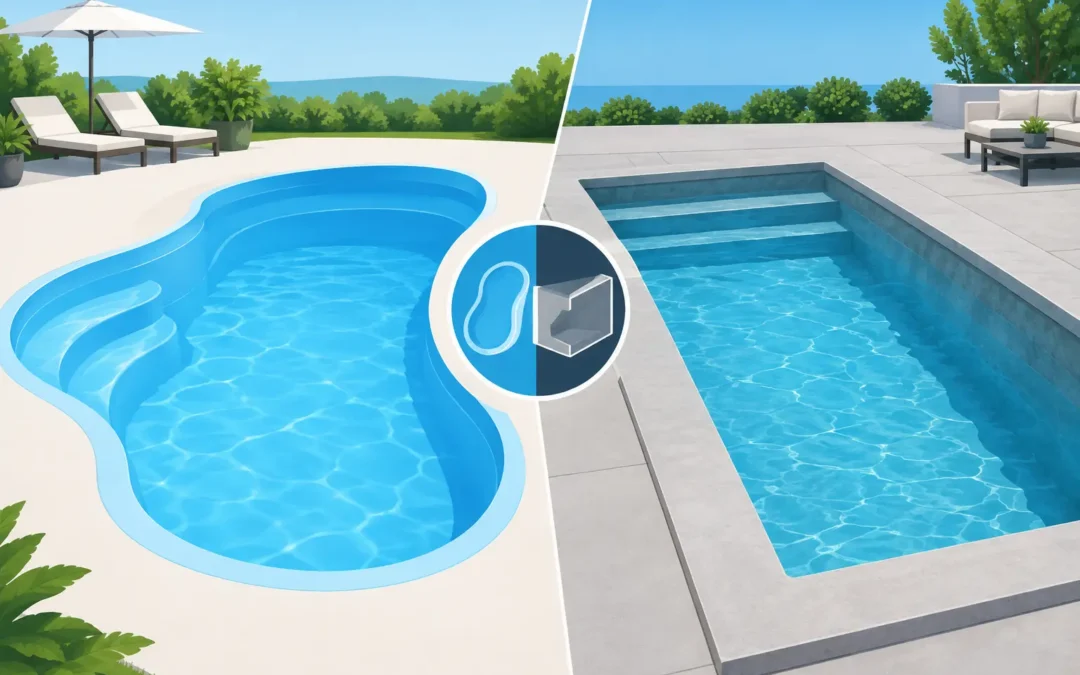
A fiberglass pool arrives as a factory-built shell. The excavation is completed to match the selected model, a prepared base is installed, and the shell is set into place before plumbing, backfilling, coping, and surrounding landscape work begin. It is a controlled process, but the pool’s size, depth, shape, steps, benches, and tanning ledges are generally limited to the manufacturer’s catalogue.
A concrete pool is built on site. Its structure is formed around the exact layout developed for the property, then finished with a chosen interior surface. This allows far more freedom in shape and detail, especially where the pool needs to work around an existing home, slope, mature trees, cabana, retaining wall, or extensive outdoor kitchen.
That distinction affects almost every part of the project: schedule, design flexibility, long-term maintenance, repair options, and how the pool integrates with the rest of the yard.
Installation Timeline and Site Conditions
Fiberglass is often the faster route once the shell is available and site conditions cooperate. Because the basin is manufactured before it reaches the property, there is less on-site structural work than with a concrete build. A straightforward project can move efficiently from excavation to pool placement, followed by the work required to complete the deck, equipment area, fencing, and landscaping.
“Faster,” however, does not mean instant. Access for the delivery truck and crane must be confirmed. Narrow lots, overhead wires, heavily treed properties, and constrained side yards can make shell delivery difficult or impossible. Groundwater, poor soils, rock excavation, and drainage requirements can also affect the schedule and cost of either pool type.
Concrete pools require a longer construction window because the structure is built and cured on site. This can be worthwhile when the site is complex or the design needs to be highly specific. A concrete pool can follow an irregular property line, incorporate a raised spa, use custom depths, or connect naturally to stonework and grade changes. For a complete backyard renovation, that flexibility can avoid the compromises that sometimes come with fitting a pre-made shell into a custom plan.
Ontario weather matters to both systems. Pool construction is best planned early enough in the season to allow proper sequencing of excavation, plumbing, concrete work, patios, and landscaping. Starting design and permitting well before spring gives the project a better chance of being completed without rushing important site work.
Design Freedom and Backyard Integration
Fiberglass pools have come a long way. Many available models include built-in steps, seating, tanning ledges, deep ends, and modern rectangular profiles. For a homeowner who likes one of the standard shapes, this can be an efficient and attractive solution.
Concrete is the better fit when the pool itself is the centrepiece of a custom outdoor environment. It allows the builder to create proportions that suit the house and property instead of selecting the closest available shell. This matters on ravine-adjacent lots, cottage properties with grade changes, and mature urban yards where every foot of usable space counts.
Consider how the pool will work with the features around it. A broad sun shelf may suit a family with young children. A lap-friendly layout may matter more to an active household. A raised wall with water features can create separation between the pool and a dining area. If you want the pool to align precisely with an existing deck, cabana, patio doors, or natural stone terrace, concrete offers more control.
The surrounding hardscape should be planned at the same time as the pool. Coping, interlock or stone patios, drainage channels, retaining walls, fencing, equipment screening, and landscape lighting all affect the finished result. Treating them as afterthoughts can create avoidable rework and a backyard that feels pieced together.
Upfront Cost and Long-Term Value
There is no single price that applies to every fiberglass or concrete pool. Access, soil conditions, rock, groundwater management, utility relocation, permits, equipment, heating, safety fencing, decking, and landscaping can materially change a project budget.
In many standard installations, fiberglass has a lower and more predictable construction cost than a fully custom concrete pool. The shell is a defined product, and the installation process is comparatively standardized. It can be a sensible option when the chosen shape fits the yard and the homeowner wants to control the initial investment.
Concrete usually carries a higher upfront cost because it involves custom engineering, on-site forming, structural work, and specialized finishes. Its value is in the ability to build exactly what the property requires. On a high-value property or a backyard renovation with extensive stonework, structures, and grade work, the additional design freedom can justify the investment.
A quote should clearly separate the pool itself from the full project scope. Ask what is included for excavation, disposal, base preparation, drainage, electrical, gas, equipment, coping, patio work, fencing, permits, startup, and restoration. A low pool price can become less meaningful when major site and finish requirements are left out.
Maintenance, Surfaces, and Repairs
Fiberglass has a smooth gel-coated surface. This can make it less prone to algae attachment than rougher finishes, and many owners find routine brushing easier. The shell does not require the same type of interior resurfacing associated with concrete pools. Proper water balance remains essential, since poor chemistry can damage equipment and affect the pool surface over time.
Concrete pools typically require more attentive surface care. Their interior finish may need periodic renewal depending on the material used, water chemistry, use level, and maintenance practices. The benefit is choice: finishes can range from simple and functional to highly customized in colour and texture.
Concrete is also straightforward to alter or repair as part of a future renovation, although structural work should always be assessed by qualified professionals. Fiberglass repairs are possible, but matching a gel-coat finish and addressing structural concerns require specialized work. Neither pool is maintenance-free. Both need filtration, circulation, chemical balance, cleaning, seasonal opening, and careful winterization.
Winter Performance in Ontario
A well-built pool is designed to handle Ontario winters through correct installation and winter closing procedures, not through wishful thinking. Drainage is particularly important. Water that collects around a pool, patio, or retaining wall can create pressure and movement when temperatures change.
For fiberglass pools, correct base preparation, backfill, water management, and anchoring considerations are critical, particularly where groundwater is present. For concrete pools, proper structural design, plumbing installation, and protection of surrounding deck surfaces are equally important. The pool type matters, but workmanship and site preparation matter just as much.
Homeowners should also budget for a proper safety cover and winter closing. A cover selected for the pool layout can improve safety, reduce debris, and simplify spring opening. If a pool has raised features, unusual geometry, or an integrated spa, those details should be considered before construction rather than solved afterward.
Which Pool Is Right for Your Property?
Choose fiberglass when you want a proven standard shape, a potentially shorter installation process, a smooth interior surface, and a more controlled initial budget. It is often a strong choice for accessible lots with a layout that suits available shell dimensions.
Choose concrete when custom shape, exact dimensions, special features, or site-specific design are priorities. It is often the stronger option for complex properties and homeowners planning a fully integrated outdoor living space rather than installing a pool in isolation.
The most useful next step is to plan the entire backyard before selecting the pool. A clear design that accounts for access, grades, drainage, patios, safety requirements, utilities, and how your family will use the space will make the final choice much easier – and help ensure the pool feels built for your property, not simply placed in it.