
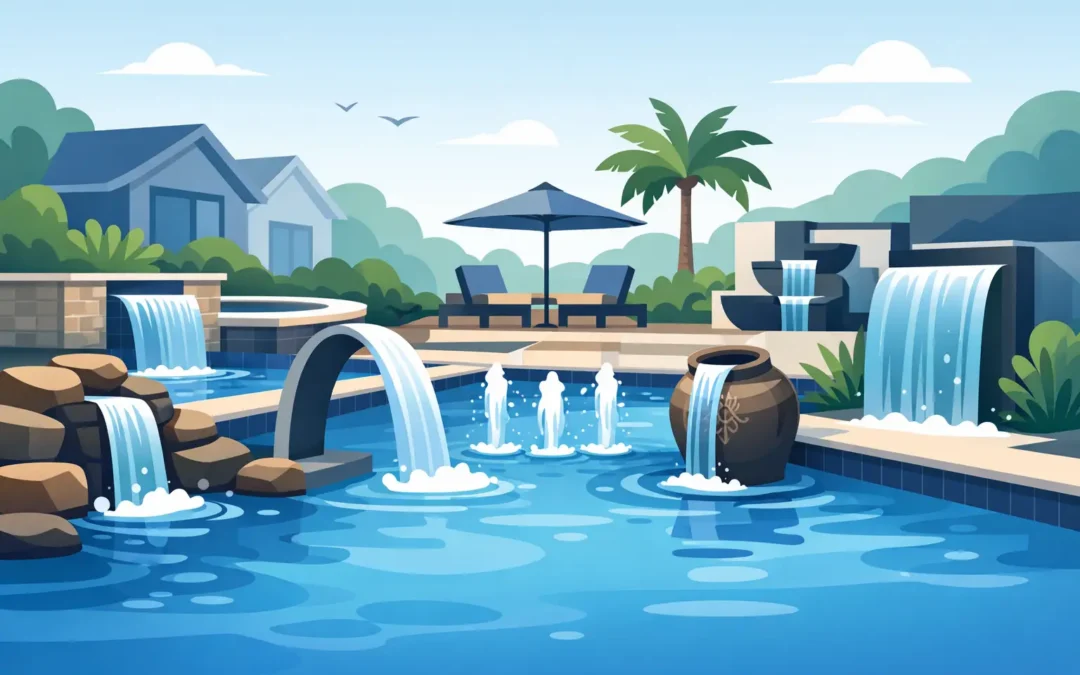
A pool can look finished on paper and still feel flat once it is built. The right water feature adds movement, sound, and a focal point that makes the pool area feel intentional. The best pool water features are not simply the biggest or loudest options. They are the ones that suit how the space will be used, the architecture of the home, and Ontario’s seasonal conditions.
For a family pool in York Region or a cottage property used for entertaining, a feature must also be built for long-term service. Plumbing access, winterization, pump capacity, drainage, and the materials around the pool all matter as much as the visual effect.
What Makes a Pool Water Feature Worth Adding?
Water features do more than decorate the pool. A well-planned feature can mask traffic or neighbour noise, create a calmer seating area, give children a shallow place to play, or turn a retaining wall into a defining part of the yard. At night, integrated lighting can make the feature visible from inside the home and extend how the outdoor space is used.
There are trade-offs. More water movement can mean more pump demand, more evaporation, and more noise. Features with complicated stonework or concealed plumbing need careful installation and a practical service plan. The best choice is usually one feature done properly, rather than several competing elements added without a clear design purpose.
9 Best Pool Water Features to Consider
1. Sheer Descents
A sheer descent creates a clean, flat sheet of water from a wall, raised bond beam, or pool structure. It is one of the strongest choices for contemporary homes because the appearance is controlled and architectural rather than overly decorative.
The sound can be adjusted by changing the water flow. A lower flow offers a quiet ripple, while a stronger flow creates more presence and helps cover nearby noise. Sheer descents work especially well when incorporated into a stone or porcelain-clad feature wall that also provides privacy or frames an outdoor kitchen.
They need accurate levelling and proper drainage behind the wall. If the lip is not installed precisely, the water sheet will break unevenly and the clean effect is lost.
2. Deck Jets
Deck jets send narrow arcs of water from the pool deck into the water. They are subtle in the daytime and become much more dramatic with lighting at night. Because they can be set into interlocking, stone, or concrete decking, they do not take up visual space around the pool.
This is a good option for homeowners who want movement without building a large wall or rock feature. Deck jets suit modern rectangular pools, but they can also soften the edge of a freeform design. They are best placed where the arcs will not cross a main walking route or spray directly onto lounge furniture.
Wind exposure matters. On an open cottage lot or a yard with little shelter, gusts can push the water outside the pool and create unnecessary wet areas on the deck.
3. Bubblers and Sun Shelf Fountains
Bubblers are low fountains installed in shallow water, most often on a tanning ledge or sun shelf. They create a soft column of water that is attractive for children, relaxing for adults, and visible without dominating the entire backyard.
They are a practical feature for families because the shallow ledge already provides a place for young children to sit and play under supervision. For entertaining, the ledge can hold in-pool loungers and become a social area rather than unused square footage.
Bubblers work best when the pool design includes a sun shelf from the start. Retrofitting is possible in some cases, but it is usually far more efficient to plan the plumbing, lighting, and shelf depth during the initial pool build.
4. Spillover Spas
A raised spa with a spillover edge is both a water feature and a four-season amenity. Water flows from the spa into the pool, providing sound and a clear visual connection between the two bodies of water. When the pool is closed for the season, a properly designed spa may still extend outdoor use during cooler months.
This option requires more than attractive tile. The spa structure, heating equipment, controls, and winter operation all need to be considered early. It is a larger investment, but it gives the property a second purpose beyond summer swimming.
For a clean result, the spa should feel integrated with the pool coping, patio elevation, and surrounding landscaping. A spa that appears added as an afterthought can interrupt traffic flow and make the deck feel crowded.
5. Rain Curtains
Rain curtains use evenly spaced streams of water falling from a pergola, cabana, beam, or custom structure. The effect is more refined than a conventional waterfall and works particularly well in formal or modern outdoor living spaces.
A rain curtain can define the transition between a patio and pool area without creating a solid visual barrier. It also becomes a strong evening feature when paired with warm lighting. The surrounding structure must be designed to carry water lines, allow access for maintenance, and direct splash safely back into the pool or a suitable catch basin.
This is not the best choice for every yard. It needs height, a strong architectural element, and enough space that the feature will not feel cramped or create constant overspray near dining areas.
6. Natural Stone Waterfalls
For cottage-country properties and naturalized landscapes, a properly constructed stone waterfall can make a pool feel connected to the site. Boulders, planted pockets, and varied water paths create a more organic result than a straight wall feature.
The quality of construction is critical. A natural waterfall should not look like a pile of stone placed beside the pool. It needs a stable base, concealed plumbing, correct water circulation, and careful stone selection so the scale suits the property. The water must also return to the pool without excessive splash-out.
Natural stone features can require more cleaning than smooth architectural finishes. Leaves, debris, and organic material tend to collect in crevices, especially beneath mature trees. For the right setting, however, the character they add is difficult to match.
7. Scuppers
Scuppers are short spouts that project water from a raised wall into the pool. They provide a more traditional, formal look than a sheer descent, particularly when finished in stone, tile, stainless steel, or copper.
Several scuppers in a row can create rhythm along a feature wall. They are often easier to service than a continuous water blade and can be turned on independently, depending on the plumbing layout. Their compact size also makes them useful where there is not enough room for a larger waterfall.
The key is proportion. Small scuppers on a large wall can look insignificant, while oversized spouts can overwhelm a compact pool. Their spacing should align with the wall joints, lighting, and other architectural details.
8. Laminar Jets
Laminar jets produce clear, glass-like streams of water that hold their shape as they travel through the air. With colour-changing lights, they can create a dramatic evening effect for a pool used for hosting.
Unlike deck jets, laminar streams are designed to remain smooth and precise. This makes them a good fit for clean-lined, contemporary projects where the goal is a controlled visual statement. They are generally quieter than more turbulent features, which can be useful on tighter suburban properties.
They need protection from wind and accurate installation. Even a premium feature can look inconsistent if the equipment is poorly calibrated or the nozzles are affected by shifting deck materials.
9. Water Walls
A water wall combines vertical hardscaping with a controlled water feature. The wall may be faced in natural stone, porcelain, concrete, or tile, with a sheer descent or scuppers installed near the top. It is one of the most effective ways to solve several site needs at once: privacy, elevation change, seating definition, and visual impact.
For many GTA backyards, a water wall is more practical than a large freestanding waterfall. It can screen a fence line, hold integrated lighting, and create a finished backdrop for the pool without consuming a large section of the patio.
Because it combines masonry, waterproofing, drainage, electrical work, and pool plumbing, this is a feature that benefits from a coordinated design/build approach. The wall must perform structurally before it can perform visually.
Choosing the Right Feature for Your Pool Design
Start with how you want the space to feel. A quiet backyard retreat may call for a low-flow sheer descent, bubbler, or spillover spa. A property designed for large gatherings may benefit from illuminated deck jets, laminars, or a rain curtain that becomes more noticeable after dark.
Then consider the physical site. A narrow lot may benefit from a water wall that also creates privacy. A sloped yard may already require retaining walls, making a built-in sheer descent or scuppers a logical addition. On a cottage property, natural stone may suit the setting better, provided the feature can be serviced and winterized without difficulty.
Budget should include more than the visible finish. Ask about the required pump capacity, valves, automation, electrical work, access panels, drainage, and seasonal closing requirements. A water feature with independent controls can help manage energy use because it does not need to run at full output every time the pool is in use.
Plan Water Features Before Construction Starts
The best time to select a feature is during the pool and landscape design stage. That is when equipment locations, patio elevations, retaining structures, lighting, and planting can be coordinated instead of forced into place later. It also prevents common problems such as exposed pipes, inaccessible valves, awkward splash zones, and walls that do not match the finished deck.
Green Machine Inc. approaches pool areas as complete outdoor construction projects, so the pool, stonework, patios, cabanas, and landscape details can be planned as one finished environment. A well-chosen water feature should earn its place every day, whether it is adding calm to a quiet evening outdoors or giving the whole property a stronger sense of completion.