
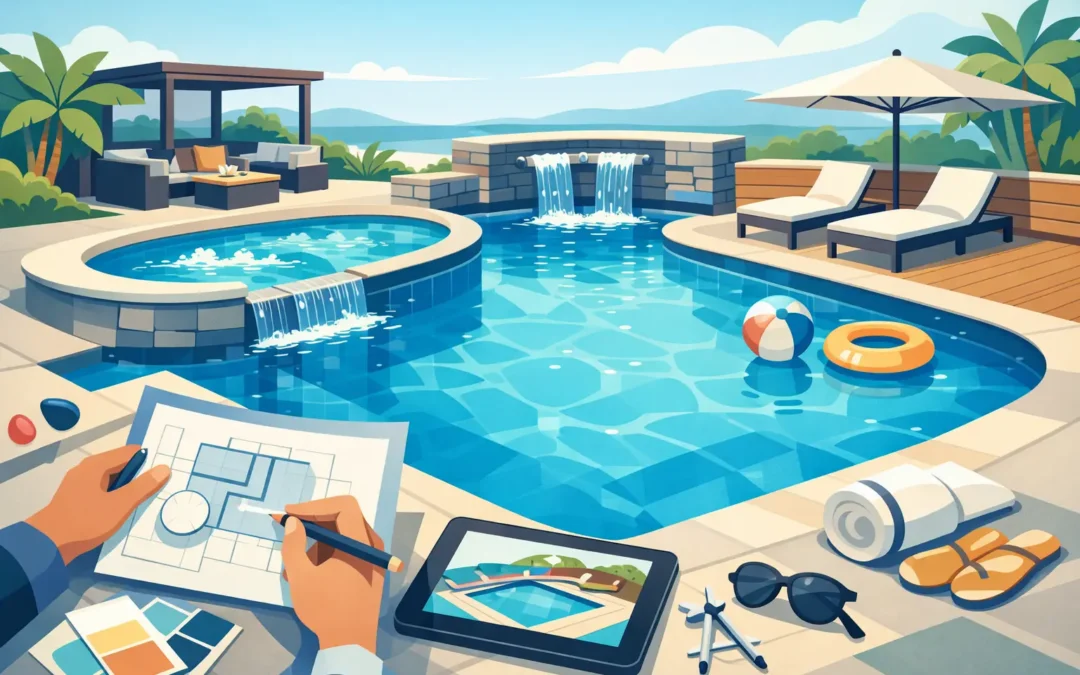
A pool that was built 15 or 20 years ago can still have a sound shell and a good location, yet feel dated, difficult to maintain, or disconnected from the rest of the property. A well-planned swimming pool upgrade corrects those issues without automatically requiring a full rebuild. The right work can reduce operating headaches, improve safety, and turn an underused backyard into a space that works for family time, entertaining, and long-term property value.
For homeowners in York Region, the GTA, and Ontario cottage country, the best upgrade usually starts with a practical question: what is actually limiting the pool today? It may be aging equipment, cracked coping, poor drainage, limited deck space, or a layout that does not suit how the property is used now. Solving the real problem first leads to a better result than choosing features one at a time.
Start Your Swimming Pool Upgrade With the Existing Conditions
A pool renovation is rarely only about the pool. The condition of the surrounding hardscape, grading, fences, electrical service, and landscaping affects the scope, budget, and lifespan of the finished project. Before selecting finishes or water features, inspect the structure and supporting systems.
For concrete pools, look for cracking, hollow-sounding areas, deteriorated tile, coping movement, and signs of water loss. Vinyl-lined pools need an assessment of the liner, track, walls, stairs, plumbing, and the condition of the floor beneath the liner. Fibreglass pools may require attention to plumbing, coping, deck settlement, or surface finish rather than structural work.
The surrounding patio matters just as much. Interlock that has settled toward the pool, loose natural stone, failing concrete, or poor drainage can create safety concerns and cause water to move where it should not. If the deck is being removed for repairs, it may be the right time to improve the pool’s shape, access points, or outdoor living layout.
A full site review also identifies work that homeowners do not always see at first: electrical upgrades for new equipment, gas planning for a heater, proper bonding, permit requirements, and safe fencing. Addressing these items in the design stage prevents expensive changes once construction has started.
Choose Upgrades That Improve How You Use the Pool
The most valuable improvements are not always the most visible. A new liner or fresh stone coping creates an immediate visual change, but upgraded circulation and heating equipment may deliver more day-to-day benefit. The best selection depends on the pool type, its age, the household’s priorities, and how long the owners plan to stay in the home.
Modernize the pool surface and edge details
A liner replacement is a straightforward way to refresh many older pools. Current liner patterns can make the water appear brighter and cleaner, while a properly fitted liner protects the pool structure and restores a finished appearance. For concrete pools, new plaster, tile, or an updated interior finish can address wear while changing the colour and character of the water.
Coping is another high-impact detail. Replacing dated or damaged coping with natural stone, precast concrete, or a coordinated material that matches the patio can make an older pool feel integrated with a new landscape. The material must suit Ontario freeze-thaw conditions and be installed with correct support, joints, and drainage. Appearance matters, but durability matters more.
Improve circulation, filtration, and heating
Older pumps, filters, heaters, and plumbing can make a pool noisy, costly to operate, and harder to keep clear. Variable-speed pumps use less energy than many older single-speed units because they can run at a lower rate for routine circulation. A properly sized filter and updated plumbing can also improve water quality and reduce service issues.
Heating is often worth considering when the goal is to extend the swimming season. Gas heaters provide quick temperature recovery and work well for homeowners who use the pool selectively. Heat pumps can be efficient in the right conditions but typically heat water more slowly. The appropriate option depends on usage patterns, available utility service, the pool volume, and site conditions.
Automation can bring equipment control into one manageable system. Timers, lighting, heating, water features, and some cleaning functions can be scheduled or operated from a control panel or app. It is useful when it simplifies routine maintenance, but it should not be added simply because it is new. Reliable equipment, good installation, and accessible service locations remain the priority.
Add lighting and safety features
Pool lighting changes how a backyard functions after sunset. Recessed LED lights can improve visibility in the water and create a cleaner look than older fixtures. Path lighting, step lights, and carefully placed landscape lighting help people move safely between the home, patio, and pool area.
Safety upgrades should be part of every serious renovation. Depending on the property and local requirements, that may include self-closing gates, compliant fencing, updated handrails, secure covers, non-slip walking surfaces, and clearly defined steps. These are practical additions that protect children, guests, and anyone using the pool area after dark.
Make the Pool Area Work as One Outdoor Space
An upgraded pool can still feel incomplete if the patio is too small, the seating area is poorly placed, or the yard lacks shade and storage. This is where a complete design/build approach makes a difference. The pool, hardscaping, planting, structures, and utilities should be planned as a single outdoor environment.
A larger patio may create room for loungers, a dining table, or a fire feature without crowding the pool edge. A cabana can provide shade, storage, change space, and a protected place for equipment. An outdoor kitchen may make sense for households that regularly host, while a simple built-in bench or pergola may be a better investment for a smaller yard.
Drainage deserves special attention. Patio slopes, channel drains, retaining walls, and grading need to direct water away from the house and avoid sending runoff into the pool. In Ontario, poor drainage can contribute to frost movement, settled pavers, ice hazards, and unnecessary repair work. It is not an optional technical detail. It is part of making the renovation last.
Landscaping should frame the pool without creating excessive debris or maintenance. Choose plants based on mature size, root behaviour, privacy needs, and sunlight, not just appearance at installation. A well-designed planting plan can soften stonework, provide screening, and improve the view from inside the house without filling the skimmer with leaves every week.
Set a Realistic Budget and Construction Scope
Pool upgrade costs vary widely because the work can range from an equipment change to a full backyard reconstruction. A liner, pump, or light replacement is a contained project. New coping, a rebuilt patio, drainage improvements, a cabana, and equipment relocation involve several trades and a much larger construction scope.
The most reliable way to control cost is to establish priorities before design begins. Separate must-have repairs from desired features. If the pool shell, plumbing, or deck base requires work, those items should take precedence over decorative extras. A beautiful water feature will not compensate for a leaking line or unstable patio.
Ask for a clearly defined scope that identifies demolition, disposal, site preparation, material allowances, equipment, drainage, electrical work, restoration, and what is excluded. Existing backyard conditions can reveal surprises once materials are removed, especially around older pools. A contractor should explain where contingencies may be needed rather than presenting a number with no context.
Timing also matters. Major renovations are generally easier to plan before the peak summer season. Early design decisions allow time to order materials, coordinate trades, and complete work without rushing key steps. If the goal is to enjoy the upgraded space next summer, the planning should begin well before spring.
Know When an Upgrade Is Better Than a Rebuild
An upgrade is often the sensible choice when the pool structure is sound, the location works, and the main concerns are finishes, equipment, safety, or the surrounding landscape. It preserves a usable asset while bringing the backyard up to current expectations.
A rebuild may be the better path when there are extensive structural concerns, repeated leaks, major wall failure, or a layout that cannot support the way the property is used. The same applies when a homeowner wants to significantly change the pool size, depth, shape, or placement. Trying to force a limited renovation into a fundamentally unsuitable structure can cost more over time.
A qualified contractor can assess these trade-offs and coordinate the pool work with stonework, interlock, landscaping, cabanas, fencing, and other construction needs. For complex properties, one accountable team reduces the burden of scheduling separate contractors and helps ensure that each part of the project supports the next.
A swimming pool should earn its place in the yard. Whether the priority is simpler maintenance, safer access, a longer season, or a complete backyard refresh, start with the conditions that affect performance and build outward from there. Green Machine Inc. has delivered integrated landscape, pool, and construction projects since 1999, helping property owners plan improvements that look finished and perform properly for years to come.