
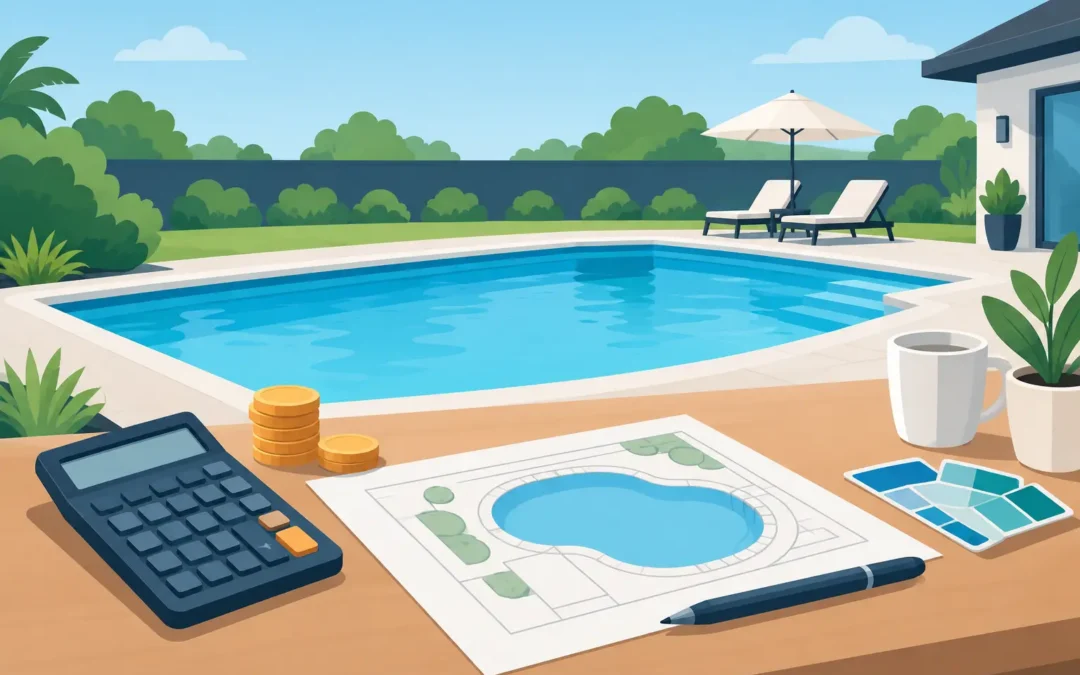
A pool quote can look straightforward until the work behind it is considered: excavation, access, drainage, electrical, concrete, fencing, grading, and the outdoor space that makes the pool usable. Knowing how to budget pool construction means planning for the complete property project, not simply choosing a pool shell and expecting the rest to fall into place.
For homeowners in York Region, the GTA, and cottage-country properties, site conditions can change the scope quickly. A narrow side yard, sloped lot, rock excavation, conservation restrictions, or a long run to electrical service may matter as much as the pool size. A practical budget accounts for those variables before construction starts.
Start With the Right Project Scope
The first decision is not the finish colour or water feature. It is determining what the pool needs to do for your household and property. A compact pool for cooling off and entertaining has a different budget profile than a large family pool with a spa, sun ledge, cabana, outdoor kitchen, and full landscape rebuild.
Set a clear priority list before requesting pricing. Consider the pool type, dimensions, depth, expected number of users, heating requirements, safety needs, and the amount of patio required around it. Be honest about whether you are building a pool only or creating a complete backyard environment. Both are valid projects, but they should not be budgeted the same way.
A good design/build process helps identify conflicts early. For example, adding a future cabana may affect where equipment, drainage lines, utility runs, and access routes should go today. Planning those items during pool construction is usually more cost-effective than tearing up finished hardscape later.
Build Your Pool Construction Budget in Categories
A reliable budget separates the major parts of the work. This gives you a clearer view of where money is going and makes it easier to compare contractor quotes properly. Do not compare one lump-sum number with another unless both scopes include the same work.
Your preliminary budget should include these core categories:
- Pool structure and equipment: The pool shell, liner or interior finish, circulation system, pump, filter, plumbing, lights, heater, automation, and standard installation work.
- Site preparation and excavation: Layout, machine access, excavation, soil removal, rock handling if encountered, base preparation, backfill, and any required shoring or protection work.
- Electrical and safety requirements: Electrical service upgrades where needed, bonding, lighting connections, permits, barriers, gates, and code-required safety measures.
- Hardscape and landscape restoration: Coping, decking, interlock or stone patios, retaining walls, stairs, grading, sod, planting, drainage, and repairs to areas affected by construction.
This breakdown also prevents a common mistake: budgeting for the pool but overlooking the finished yard. A new pool surrounded by temporary gravel, poor drainage, and a narrow concrete strip may technically be complete, but it will not deliver the outdoor living space most homeowners expect.
Leave Room for Site Conditions and Change Orders
No responsible contractor can promise that every condition below grade is visible before excavation. Soil, buried debris, groundwater, rock, existing utility lines, old foundations, and drainage issues can all affect the final scope. The goal is not to assume the worst. It is to carry a realistic contingency so an unexpected condition does not force poor decisions mid-project.
For a straightforward site with good access and known conditions, the contingency may be modest. For a sloped lot, waterfront property, older neighbourhood, or yard with limited access, allow more room. Your contractor should explain the known risks, what has been included, and what conditions could result in additional work.
Ask how surplus soil is handled. Soil removal can be a significant cost, particularly where access is limited or material cannot remain on site. Also confirm whether the estimate includes restoration after machinery has moved through the yard. Restoring turf, fences, gardens, and driveways can be part of a complete scope, but it should never be assumed.
Understand What Drives the Price Up or Down
Pool construction costs are not determined by size alone. Shape, access, grade, finish selections, equipment, and the amount of surrounding construction all influence the number. A simple rectangular layout is generally easier to build and cover than a highly customized design with multiple curves, elevations, and water features.
Equipment choices also deserve careful attention. Variable-speed pumps, efficient heaters, salt systems, automation, lighting, and winter covers can add to the initial investment while improving convenience, operating efficiency, or long-term enjoyment. The right choice depends on how often you will use the pool, whether you plan to heat it through shoulder seasons, and how much hands-on maintenance you want.
Do not automatically remove every upgrade to reach a target number. Some items are difficult or expensive to add later, including additional electrical capacity, conduit for future features, proper drainage, structural footings for a cabana, and adequate patio space. Other selections, such as furniture, some planting, or certain decorative features, can be phased without disrupting the core construction.
Price the Backyard as a Finished Space
The pool is the centrepiece, but the finished hardscape determines how comfortably the yard works. Plan for circulation around the pool, seating areas, access to the house, storage, shade, and drainage away from structures. If your family entertains, include enough space for dining, lounging, and safe movement around wet surfaces.
In Ontario, grade and drainage deserve particular attention. Pool decking and patios must direct water appropriately while maintaining practical transitions at doors, steps, and existing structures. Retaining walls or grading changes may be needed to create a level, usable pool area on a sloped property. These are construction requirements, not optional finishing touches.
Consider the sequence of work as well. Completing the pool, patios, landscaping, fencing, and service connections under one coordinated plan can reduce rework and scheduling gaps. Green Machine Inc. approaches these projects as full outdoor construction scopes, which is especially useful when a pool build involves interlock, stonework, retaining walls, decks, fencing, or a cabana.
Ask for a Detailed, Comparable Quote
The lowest quote is useful only if it covers the work you need. Request written details on materials, allowances, equipment models, site preparation, disposal, permits, electrical work, safety requirements, patio quantities, restoration, and warranty responsibilities. If an item is excluded, identify whether you will handle it separately or add it to the contractor’s scope.
There are several questions worth asking before signing a contract. What assumptions were made about access and excavation? What is the process if rock, groundwater, or unsuitable soil is found? Which permits are included, and who coordinates inspections? What is the payment schedule tied to? How will change orders be priced and approved?
Clear answers protect both the homeowner and contractor. They also make it easier to distinguish a realistic price from one that leaves major components to be addressed later.
Plan Cash Flow, Not Just the Total
A pool project is paid for in stages, so your budget must account for timing as well as total cost. Review the deposit, construction milestones, equipment payments, holdback requirements where applicable, and final completion payment. Make sure financing, savings, or a line of credit is arranged before work starts rather than relying on last-minute decisions when a milestone arrives.
Keep your contingency separate from your upgrade allowance. Contingency is for unknown site conditions or necessary changes. An upgrade allowance is for choices you may make, such as a larger patio, upgraded coping, additional lighting, or a landscape feature. Combining the two makes it easy to spend the reserve before it is needed.
A Better Way to Budget Pool Construction
The strongest pool budgets are based on priorities, a detailed scope, and honest allowances for the property itself. Start with the complete backyard plan, identify what must be built now and what can wait, then choose a contractor that can explain the construction process without vague allowances or missing pieces.
A well-planned pool should feel like a lasting improvement to the property, not a series of expensive surprises after excavation begins. Give the design, site work, and finishing details the same attention as the pool itself, and your budget will support a yard that works properly from the first season onward.