
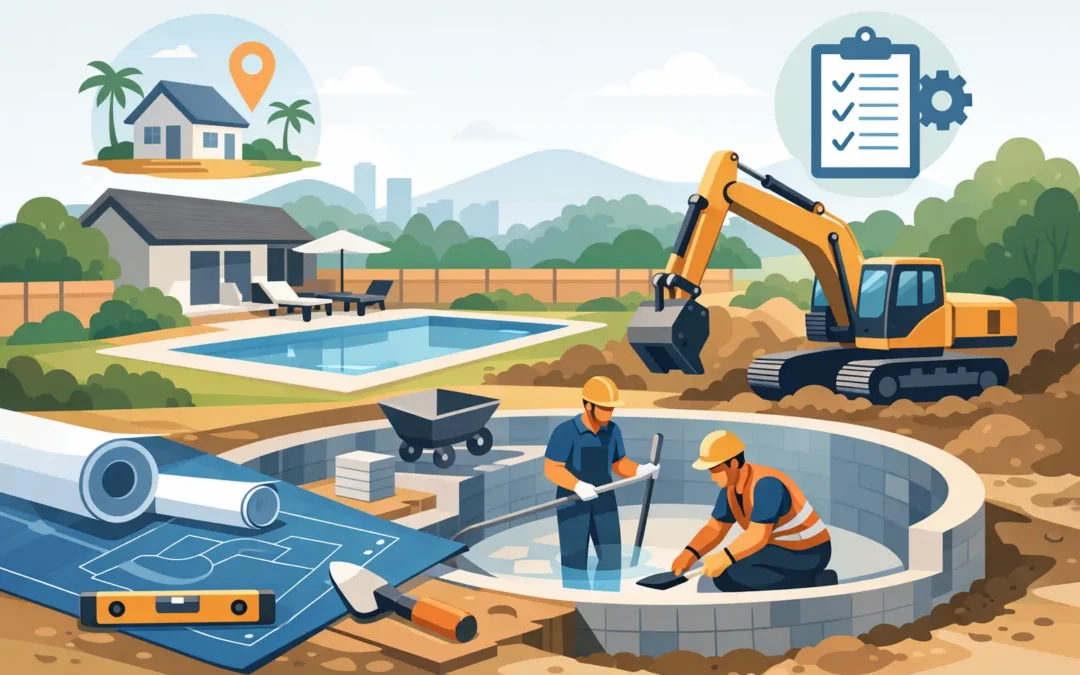
A backyard pool looks simple when it is finished. The hard part is everything that happens before the water goes in. With East Gwillimbury pool construction, the difference between a smooth project and a frustrating one usually comes down to planning, site conditions, and choosing a contractor that can handle more than the shell.
In this area, a pool is rarely a stand-alone feature. It affects grading, drainage, access, fencing, patios, steps, retaining walls, outdoor kitchens, cabanas, and the overall layout of the yard. If those pieces are treated as separate jobs, timelines stretch, costs move, and the final result can feel disconnected. That is why homeowners planning a serious backyard upgrade should think beyond the pool itself from day one.
What East Gwillimbury pool construction really involves
The first misconception is that pool construction starts with excavation. It does not. It starts with the property. Lot shape, elevation changes, soil conditions, access for equipment, setback requirements, and how the pool will relate to the house all shape the job before any digging begins.
A flat, open lot with straightforward machine access is one thing. A backyard with limited entry, mature trees, drainage issues, or a steep grade is another. Both can support a quality pool build, but they need different planning and different budgets. This is where experience matters. A builder should be able to look at the whole property and identify what the pool will trigger around it, not just where it will sit.
For many homeowners, the real value is not only having a pool. It is getting a finished outdoor space that works as one complete project. That can include interlock, stonework, privacy features, retaining walls, deck connections, lighting, and usable circulation around the water. If those elements are considered late, they often feel like add-ons instead of part of the original design.
Start with the full yard, not just the pool
A pool can dominate a backyard if the layout is rushed. It can also leave the space feeling smaller than expected. Good design solves that by balancing the pool with surrounding hardscape and practical use areas.
Before settling on size or shape, think about how the yard will actually be used. Some families want room for lounging and entertaining. Others need open lawn space for kids, a dining area near the house, or a quieter zone away from the water. A long rectangular pool may suit one property perfectly, while a compact shape with strong patio planning may work better on another.
This is also the stage where homeowners should think about future additions. If you know a cabana, pergola, outdoor kitchen, or hot tub may come later, plan for it now. Even if that part of the build is phased, the grading, servicing, and layout should support it. Otherwise, you risk tearing up finished work to add infrastructure later.
Site conditions can change the budget fast
One of the biggest variables in East Gwillimbury pool construction is the site itself. Homeowners often focus on finishes, but the hidden work below and around the pool can have a bigger impact on cost.
Excavation access is a common issue. If equipment cannot reach the backyard easily, labour goes up and the schedule can tighten. Grade changes can require retaining walls or additional drainage planning. If the yard holds water or drains toward the home, that needs to be corrected before the surrounding landscape is finished. Ignoring drainage is one of the easiest ways to create expensive problems after the build.
There is also the matter of how the pool connects to the rest of the property. Existing decks, fences, walkways, and gardens may need to be removed, protected, rebuilt, or reworked. That is why quote comparisons should be read carefully. A lower number can look attractive until you realize key scope items are missing.
Permits, safety, and local requirements
A professional pool build is not just a construction job. It is also a code and compliance job. Permits, fencing requirements, and safety standards need to be handled properly, and those details should not be left for the homeowner to piece together alone.
The exact approvals and requirements can vary depending on the property and project scope. That is another reason to work with a contractor who is used to managing complete builds instead of only handling one portion of the work. When the same team can coordinate the pool, surrounding hardscape, and related site work, there is usually less confusion and less rework.
The practical side matters here. Pool fencing, gates, grading, and access routes are not small details. They influence how the finished yard functions every day. A good plan addresses safety without making the backyard feel boxed in or awkward to move through.
Choosing materials that hold up
Finish selections matter, but not every material is right for every yard. Homeowners should think in terms of durability, maintenance, and how the surfaces will perform around water, not only how they look on day one.
For patios and pool surrounds, slip resistance, heat retention, and long-term wear all matter. Interlock and stone can create a strong, finished look, but the base preparation underneath is what determines whether that surface stays level over time. If the installation around the pool is rushed, movement and settling can show up later.
Coping, steps, retaining walls, and transitions to decks or grass should also be treated as part of one system. The best-looking backyard is usually the one where materials are coordinated without being overdesigned. Clean lines, proper installation, and sensible layout choices tend to age better than trend-driven details.
Why one contractor can make the job easier
Pool projects become stressful when too many trades are working in isolation. One company excavates. Another installs the pool. Another handles the fence. Another comes later for interlock. If one delay happens, everything behind it moves. If one contractor blames another for a problem, the homeowner gets stuck in the middle.
That is where a full-service design/build contractor can save time and frustration. When one team manages the pool, landscaping, hardscaping, and structural site features, the project is easier to coordinate and easier to budget properly. It also gives the builder a better chance to produce a finished result that feels intentional.
For larger properties or more complex backyards, this integrated approach is often the smarter route. Green Machine Inc., for example, handles pool construction alongside landscape and construction services, which is useful when the pool is only one part of a bigger property upgrade.
Questions worth asking before you sign
Not every pool quote covers the same scope, and that is where homeowners can get caught. Ask what is included beyond the pool itself. Does the proposal account for grading, drainage, access limitations, removals, fencing, electrical coordination, and the finished hardscape around the pool? If not, those costs may still be coming.
It also helps to ask who is managing the project from start to finish. A builder with a broad service range is usually in a better position to deal with surprises on site. That matters because almost every major construction job has some level of unknown once excavation starts.
You should also ask how the contractor approaches the overall yard. A good answer will not stop at pool dimensions and finishes. It should cover how the space will function, how the build will tie into the house and property, and how each construction element will be staged.
A pool should improve the property, not complicate it
The best pool projects do more than add a place to swim. They make the backyard more usable, more attractive, and more valuable over the long term. That only happens when the pool is planned as part of the full property, with proper attention to grading, safety, access, hardscaping, and how the space will be lived in once construction is over.
If you are considering East Gwillimbury pool construction, think like a property owner first and a shopper second. The right build is not always the cheapest or the fastest. It is the one that solves the site properly, fits the way you use your yard, and leaves you with a finished space that works as well in five years as it does on handover day.
A well-built pool should feel like it belonged there from the start.