
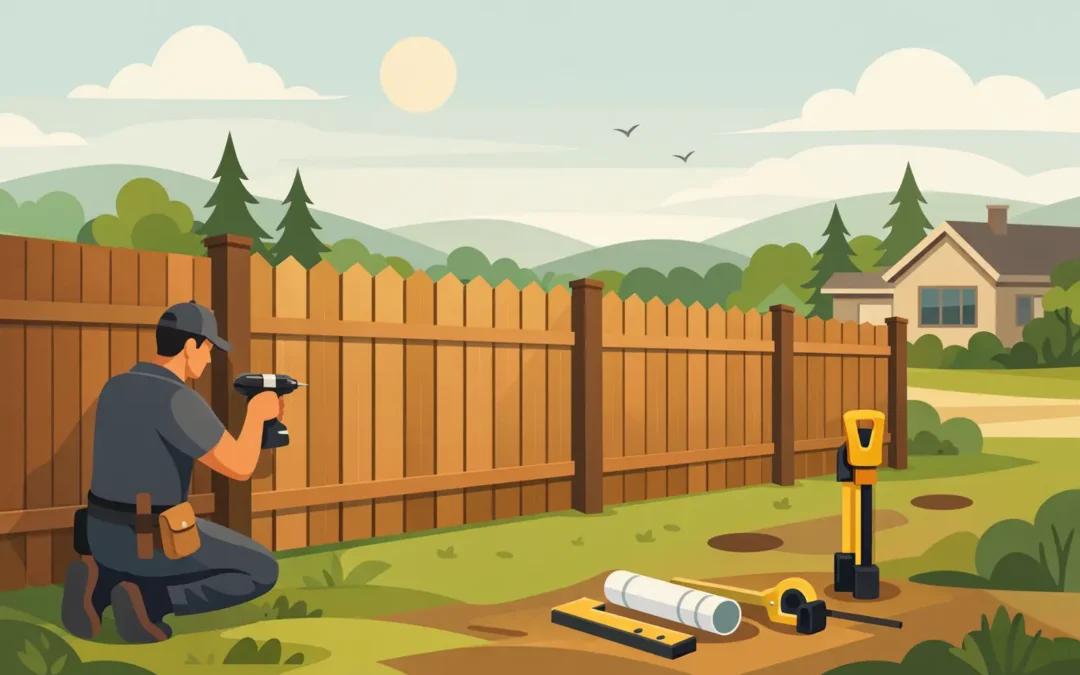
A fence can be the finishing line around a property, or the first decision that affects every project behind it. A properly planned east gwillimbury fence installation establishes privacy, contains pets, defines usable space, and gives patios, pools, gardens, and outdoor kitchens a more complete setting. A poorly planned one can create drainage problems, block access for construction, or need to be moved when the next phase of the yard begins.
For homeowners planning a substantial exterior upgrade, fencing should be treated as part of the site plan, not as an afterthought. The best result comes from matching the fence to the property, the intended use of the yard, local requirements, and the work that may follow.
Start With the Property, Not the Fence Style
Before choosing boards, panels, or posts, confirm where the fence can go. A clean-looking line is not necessarily the legal property line. A survey is the most reliable reference where boundaries are unclear, particularly on older properties, lots with irregular shapes, or properties where existing fences do not align.
Underground utilities also need to be located before digging begins. This applies to more than gas and hydro. Irrigation lines, landscape lighting, pool equipment connections, drainage pipes, and communication cables can all be affected by post-hole work. Utility locates and a review of the site plan help prevent expensive repairs and avoidable delays.
Grade matters just as much. East Gwillimbury properties can vary from relatively level suburban lots to larger rural or estate-style sites with slopes, swales, mature trees, and uneven ground. On a sloped lot, a fence may follow the grade, step down in sections, or use a combination of approaches. Each option changes the look, the gap at the bottom of the fence, and the amount of material required.
Following the grade generally gives the fence a continuous top line but can leave larger openings below. Stepping produces a level top within each section and can work well with a more formal landscape, although it may require careful detailing at transitions. The right choice depends on privacy needs, pet containment, drainage, and the design of adjacent structures.
Choose Materials for How You Use the Yard
There is no single best fence material. Budget matters, but so do maintenance expectations, exposure to wind and moisture, and the character of the home and landscaping.
Pressure-treated wood remains a practical option for many residential fences. It is adaptable, readily repairable, and can suit everything from straightforward privacy runs to custom board patterns. It does require ongoing attention. Boards can weather, shrink, twist, or fade, and staining or sealing may be needed to maintain the desired appearance.
Cedar offers a more refined natural finish and can perform well when built with appropriate spacing, drainage, and post support. It costs more than pressure-treated lumber, and it still needs maintenance if the goal is to preserve a consistent colour. Left untreated, cedar will naturally weather to a grey tone.
Vinyl provides a clean, uniform appearance and reduces routine maintenance. It can be a good fit for homeowners who want privacy without painting or staining. However, panel design, colour options, and repair methods are less flexible than wood, and lower-quality systems may not handle impact or harsh exposure as well as a properly built wood fence.
Aluminum is commonly selected around pools, along ravines, or where a more open view is wanted. It is durable and low maintenance, but it does not provide privacy on its own. Chain link remains useful for functional enclosures, larger properties, and commercial applications, especially when privacy slats or landscaping will provide screening over time.
A material decision should also account for gates. Gates receive more movement and stress than fixed fence sections. A wide gate, a double gate for equipment access, or a gate beside a pool area needs stronger framing, reliable hardware, and posts designed to carry the load without sagging.
Footings, Posts, and Drainage Determine Service Life
The part of a fence that fails first is often the part nobody sees. Posts need to be installed to a depth and method appropriate for Ontario conditions, the selected fence height, soil conditions, wind exposure, and gate loads. A contractor should assess whether conventional post installation is suitable or whether engineered details, larger posts, or alternative support methods are required.
Water management deserves equal attention. Fences should not dam water against a patio, driveway, foundation, or neighbouring property. Where a yard has a swale or drainage route, the fence layout may need clearance below, a carefully planned opening, or another approach that maintains the movement of surface water.
This is especially relevant when fencing is installed near retaining walls, interlock, decks, or new landscaping. Post holes dug after finished hardscaping can disturb compacted base material and create weak areas. In many cases, it is more efficient to coordinate fencing before final surface finishes are installed, while still planning exact elevations and access routes in advance.
East Gwillimbury Fence Installation and Project Sequencing
An east gwillimbury fence installation often happens alongside a larger property improvement project. That is where sequencing makes a measurable difference in cost and finish quality.
If a new pool, patio, cabana, deck, driveway, or retaining wall is planned, the fence location should be established during design. Construction access may be needed for excavation equipment, stone delivery, concrete work, or pool installation. Building a fence too early can limit access and result in sections being removed and rebuilt later.
At the same time, waiting until every other element is complete is not always ideal. Fence posts may need to be set before final sod, garden beds, and some hardscape edges are finished. The work should be staged around the site rather than handled as an isolated job.
A coordinated contractor can review the full scope and determine a practical order of operations. Typically, that means confirming layout and utilities, completing major excavation and structural work, setting posts at the appropriate stage, then finishing fencing, grading, planting, and surface details in an order that protects completed work. The exact sequence changes with the project, but the planning principle does not.
Privacy, Pool Safety, and Neighbour Considerations
Privacy is often the main reason for installing a fence, but a six-foot solid wall is not always the best answer. On a smaller yard, full privacy fencing can make the space feel enclosed. A combination of lower fencing, decorative screens, planting, and strategic solid sections can create privacy where it is needed most without closing off the entire property.
Pool enclosures require particular care. Pool fencing must meet applicable municipal and safety requirements, including gate and latch details. Requirements can change, and site conditions matter, so confirm the current rules before construction rather than relying on a neighbour’s older installation or a general online diagram.
Neighbours should be part of the conversation early when a fence sits on or near a shared boundary. Confirming the proposed line, height, style, cost arrangement, and gate locations before materials arrive can prevent disputes. Even when one owner is paying for the work, clear communication is worth the effort.
For commercial sites, the priorities may be different: access control, equipment security, durable gates, visibility, and separation of customer and service areas. The fence design should respond to how the site operates, not simply copy a residential solution.
What to Confirm Before Approving a Fence Quote
A fence quote should explain what is being built, not only give a total price. Compare proposals based on material specifications, post size and spacing, board or panel style, gate construction, removal of existing fencing, disposal, and site restoration. Two quotes can look similar at first glance while allowing for very different levels of workmanship.
Ask how slopes will be handled, where gates will be located, and whether the layout has been checked against planned landscaping or construction. If the fence joins a deck, retaining wall, garage, or pool enclosure, ask how those transitions will be finished. Details at the ends and corners are where a fence can either look intentional or look added on.
It is also sensible to clarify responsibility for permits or approvals where required, utility locates, property-line confirmation, and any work needed to remove roots, rock, old concrete, or unsuitable material encountered during excavation. These are common variables in real-world installations, not minor fine print.
Build the Fence Into the Whole Property Plan
A fence is more than a boundary. It affects views from the house, how people enter the yard, where snow is stored, how water drains, and how future work can be completed. Green Machine Inc. approaches exterior projects with that broader construction view, coordinating fencing with landscape, pool, stonework, deck, and structural work when the scope calls for it.
The strongest fence projects are not necessarily the most elaborate. They are the ones with a verified layout, suitable materials, properly planned posts and gates, and a construction sequence that respects the rest of the property. Start with the full yard plan, and the finished fence will support it for years rather than limit what comes next.