
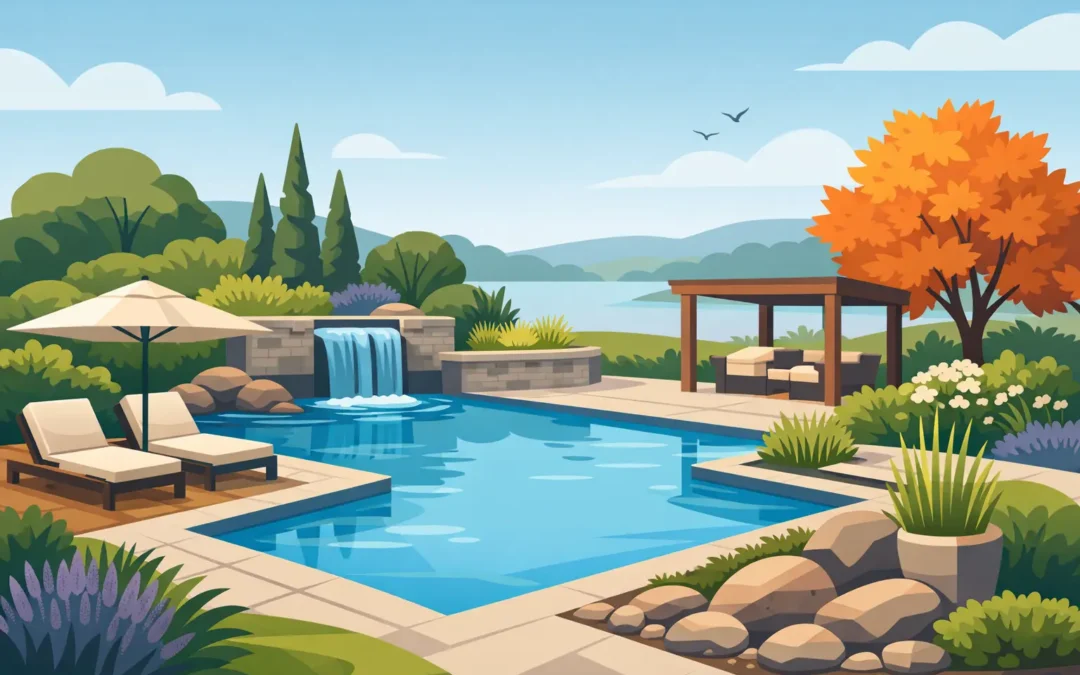
A pool can look finished on installation day and still feel incomplete the first full summer you use it. That usually comes down to the surrounding space. Good pool landscaping is what turns a pool into a usable backyard – one that handles foot traffic, drainage, privacy, entertaining, and day-to-day maintenance without constant fixes.
In Ontario, that matters even more. Freeze-thaw cycles, spring runoff, heavy summer sun, and compact suburban lots all affect how a pool area should be designed and built. What looks great in a photo is not always what performs well through a few seasons. The right approach balances appearance with grading, material selection, and how people will actually move through the yard.
What pool landscaping really includes
When people hear pool landscaping, they often think plants and patio stone. Those are part of it, but the scope is bigger. The pool area needs hard surfaces for circulation, safe transitions between the house and water, drainage that moves water away from structures, and enough privacy to make the space comfortable.
It may also include retaining walls, fencing, cabanas, outdoor kitchens, lighting, decks, and utility access. On many properties, especially in the GTA and York Region, the pool sits inside a larger redesign that has to solve multiple issues at once – tight lot lines, awkward grades, old concrete, poor drainage, or a backyard that was never planned for entertaining.
That is why pool landscaping works best when it is treated as part of the full build, not as decoration added after the fact.
Start with function before style
The most successful pool yards usually look simple because the planning was done properly. Before choosing coping, plants, or feature walls, it helps to answer a few practical questions.
How will people enter the space from the house? Where will wet traffic move? Do you need dining space, lounge space, or a quiet area away from the water? Is equipment screened but still accessible? Will runoff move toward the pool, the foundation, or a neighbour if the grading is not corrected?
Those questions shape the layout more than any colour palette will. A clean design with the right circulation pattern will feel better to use than a more expensive yard that forces everyone through one narrow path or leaves furniture floating in leftover corners.
There is also a budget trade-off here. Homeowners often want to spend heavily on visible finishes, but sub-base preparation, drainage, and retaining structures are what protect the investment. If those are ignored, premium stone and planting beds will not stay looking premium for long.
Hardscape choices around the pool
For most pool projects, the hardscape does the heavy lifting. It carries furniture, handles water, affects heat underfoot, and ties the entire backyard together.
Interlock remains a common choice because it offers flexibility in design and can be repaired more easily than poured surfaces if movement occurs over time. Natural stone brings a high-end finish and strong visual character, but it needs to be selected carefully for slip resistance and durability. Poured concrete can work well in the right application, though cracking and surface wear are real considerations in our climate.
The best material is not universal. It depends on the size of the area, exposure to sun, the style of the home, and how much maintenance the owner is willing to accept. A cottage-country property may call for a more natural, rugged finish that suits the landscape. A tighter suburban yard may benefit from cleaner lines and materials that help the space feel larger.
What should stay consistent is build quality. Proper excavation, compacted base, edge restraint, and attention to slopes matter far more than brochure-level descriptions of the product.
Pool landscaping and drainage go hand in hand
A beautiful pool area can fail quickly if water is allowed to collect where it should not. Drainage is one of the least visible parts of pool landscaping, and one of the most important.
Deck surfaces need enough slope to move water away without feeling awkward underfoot. Downspouts, lawn grades, and adjacent structures all have to be considered together. In some yards, especially where elevation changes are tight, drainage solutions may include channel drains, catch basins, swales, or retaining walls that control runoff before it reaches the pool surround.
This is one of the clearest examples of why a single design/build team can save time and avoid problems. If one contractor installs the pool, another handles stonework, and a third deals with grading later, responsibility can get blurry fast. On complex projects, coordination is not a bonus – it is the difference between a clean result and a yard that needs corrections.
Planting around a pool needs restraint
Planting matters, but not every garden idea belongs beside a pool. The wrong plant choice creates debris in the water, root issues near hardscape, and a constant maintenance cycle right where people want the yard to feel easy.
In most cases, pool planting should be structured and controlled. Evergreens can help with privacy and year-round screening. Ornamental grasses and hardy perennials can soften stone edges without creating excessive leaf drop. Low-maintenance shrubs often perform better than fragile or messy species that struggle with reflected heat and splashing water.
There is also a spacing issue. Plant beds that are too tight to the pool edge can make the entire area feel crowded, especially on smaller lots. Leaving enough breathing room around the water often improves both the look and the function of the yard.
A good landscape plan does not try to fill every inch. It uses planting where it earns its place.
Privacy, comfort, and how the yard feels to use
Pool projects are rarely just about swimming. Most homeowners want a space that feels private and comfortable enough for everyday use, not only for occasional guests.
That can mean fencing that works with the design instead of interrupting it, strategic tree placement, privacy screens, pergolas, cabanas, or outdoor kitchens that define different zones. It can also mean reducing visual exposure from neighbouring second-storey windows, which is a common challenge in newer subdivisions.
Comfort also comes from shade and seating. A pool deck with no shaded area may photograph well in June and feel punishing by July. Adding a covered structure or planning for umbrellas early in the layout can make the space more usable across the season.
This is where custom design matters. Every property has different sightlines, setbacks, and usage patterns. Copying a layout from another yard rarely produces the same result.
Pool landscaping for smaller Ontario backyards
Not every pool project has a large footprint. In places like Newmarket, Aurora, Markham, and Richmond Hill, many homeowners are working with compact lots where every square foot counts.
In those settings, pool landscaping has to be efficient. The deck width should feel generous enough for safety and furniture, but not oversized. Retaining walls may be used to solve grade changes without eating up too much space. Built-in features, such as benches or raised planters, can define zones while keeping the layout clean.
Material selection matters even more in smaller yards because visual clutter shows up quickly. Too many patterns, colours, or disconnected features can make the whole backyard feel busy. A limited palette, clear lines, and well-planned lighting usually do more for the finished result than adding more elements.
Think beyond the first season
A pool area should still make sense after the excitement of the install wears off. That means planning for maintenance access, winter conditions, storage, and long-term wear.
Can service technicians reach equipment easily? Is there a practical route for moving furniture and supplies? Will snow and ice affect steps, drains, or tight walkways? Are the materials appropriate for heavy use from kids, pets, or frequent entertaining?
These are not glamorous questions, but they are the ones that shape whether a backyard remains enjoyable. The strongest projects are built with a clear view of how the space will age, not just how it will look right after completion.
For homeowners investing in a full outdoor upgrade, that broader view is often where an experienced contractor adds the most value. Green Machine Inc. has worked on enough integrated landscape and construction projects to know that the pool itself is only one part of the job. The surrounding build is what makes the investment perform.
Getting the plan right from the start
If you are considering pool landscaping, the best first step is not choosing pavers or picking plants. It is defining how the space needs to function, what site conditions have to be solved, and how much of the yard should be addressed at the same time.
Sometimes the right answer is a full redesign with grading, stonework, fencing, and structures planned together. Sometimes it is a more focused scope that improves circulation, privacy, and finish around an existing pool. Either way, the work should be approached as a construction project as much as a landscape project.
A well-built pool yard does not need gimmicks. It needs a layout that makes sense, materials that hold up, and workmanship that respects the realities of an Ontario property. Get those right, and the space will feel better every time you step outside.