
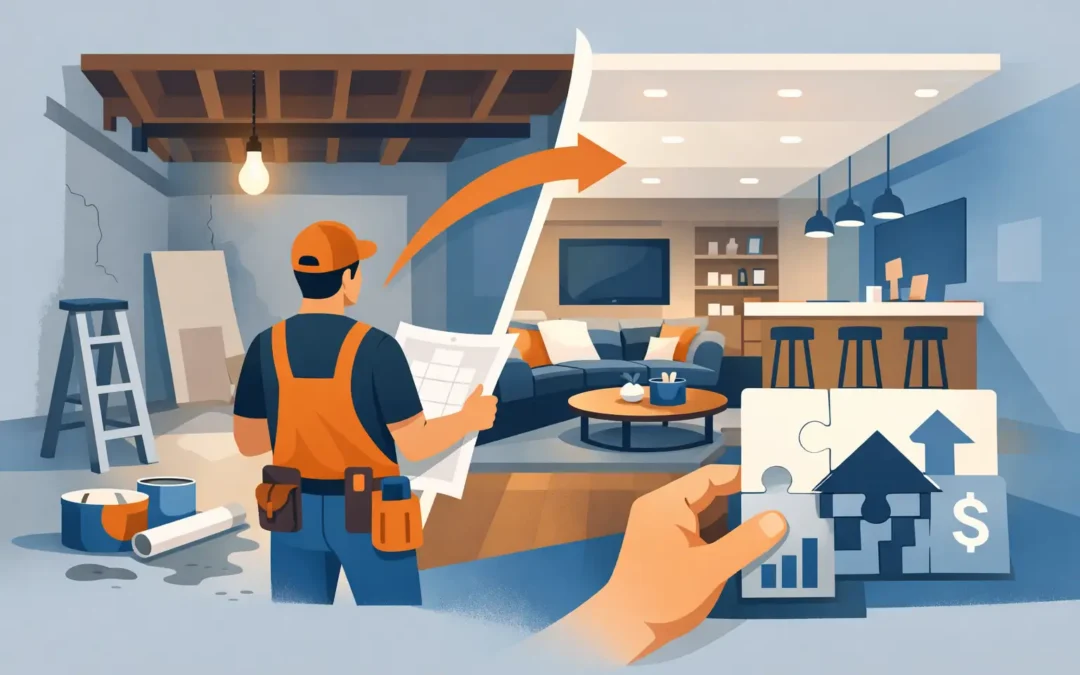
A basement renovation can either become the most useful square footage in your home or the part of the project you end up redoing in a few years. The difference usually comes down to planning, moisture control, and how well the work is coordinated from framing through finishing. If you want the lower level to feel like real living space instead of an afterthought, the decisions made before drywall matter most.
For many homeowners, the goal is simple. You want more room without the cost and disruption of a full addition. A finished basement can give you a family room, guest area, home office, gym, rental potential, or better storage. It can also improve resale appeal, but only when the layout, materials, and construction details make sense for the house.
What a good basement renovation starts with
The first question is not paint colour or flooring. It is whether the basement is ready to be finished at all. Lower levels in Ontario homes deal with a different set of conditions than the rest of the house. Concrete holds moisture, temperature swings are common, ceiling heights can be limited, and older homes may have outdated framing, wiring, or insulation.
Before finishes are discussed, the space needs to be assessed for water entry, dampness, cracks, uneven floors, bulkheads, and mechanical access. If there is any sign of seepage, musty odour, or past flood damage, those issues should be addressed first. Covering a moisture problem with new drywall and flooring is one of the most expensive shortcuts a homeowner can take.
This is also where scope becomes important. Some basements need straightforward refinishing. Others need demolition, reframing, electrical upgrades, better insulation, sound control, and reworked plumbing before they are ready for a proper build-out. A contractor who can manage multiple trades under one scope usually makes this stage far more efficient.
Basement renovation goals should drive the layout
A basement works best when it is planned around how the space will actually be used. That sounds obvious, but many lower levels get built around leftover room instead of function. The result is often awkward circulation, poor lighting, and rooms that are technically finished but rarely used.
A family recreation space needs open sightlines, durable finishes, and enough electrical planning for entertainment, charging, and lighting. A guest suite needs privacy, a comfortable washroom arrangement, and proper egress where required. A home office needs quiet, stable lighting, and reliable climate control. A gym has different flooring needs than a media room. If the basement may become an in-law suite or income space later, that should be considered early, not after the walls are up.
Storage matters too. A well-planned basement renovation does not eliminate utility access or force seasonal items into every corner. Mechanical rooms, sump access, shut-offs, and service panels need to remain practical to reach.
The biggest cost drivers in a basement renovation
Square footage affects price, but it is not the only factor. The real cost shifts happen when the basement needs corrective work or when the new layout adds plumbing, custom millwork, a bathroom, specialty lighting, or soundproofing.
Bathrooms are one of the biggest budget variables. If plumbing rough-ins already exist, that helps. If new drainage or venting needs to be added, the job becomes more involved. Ceiling height is another factor. Bulkheads can often be worked into the design, but if headroom is already tight, every framing and finishing choice matters.
Material selection also changes the budget quickly. Basements should be finished with products suited to below-grade conditions, not simply whatever was used upstairs. That does not always mean higher-end materials, but it does mean smarter ones. Flooring, trim, insulation, and wall assemblies all need to perform well in a basement environment.
Then there is the question of open concept versus divided rooms. More walls can create function and privacy, but they also increase framing, electrical runs, doors, trim, and labour. The right answer depends on how the household uses the space and whether flexibility or separation matters more.
Moisture, insulation, and durability matter more than decor
Homeowners understandably focus on what they can see. Flooring samples, lighting fixtures, paint colours, and feature walls are the fun part. But long-term performance depends more on what sits behind the finished surfaces.
A basement that feels cold in winter or damp in summer will never feel fully finished, no matter how good it looks on day one. Proper insulation strategy, air sealing, and vapour control need to match the conditions of the home. The wrong assembly can trap moisture and lead to mould, odours, or material failure.
Flooring is another common mistake area. Some products handle occasional moisture or temperature shifts better than others. In a basement, durability and stability usually matter more than chasing the exact same look as the main floor. If comfort is a priority, subfloor systems or insulated underlayments may be worth considering, though they can affect finished floor height.
Good lighting also does a lot of heavy lifting. Basements usually have limited natural light, so fixture placement should be planned to avoid dark edges and low-ceiling glare. Pot lights can help, but relying on one type of lighting alone often leaves the space flat. Layered lighting with task, ambient, and accent use tends to produce a better result.
Permits and code are not optional details
One of the most common problems in basement work is treating permits and code requirements like paperwork instead of construction requirements. If the basement includes bedrooms, bathrooms, structural changes, electrical work, or suite potential, code compliance becomes a major part of the project.
That affects everything from ceiling height and insulation to smoke alarms, egress, and plumbing. Even when a homeowner is not building a legal secondary suite, many of the same practical concerns still apply. Safe access, proper ventilation, and code-compliant electrical work are not upgrade items. They are part of doing the job properly.
For homeowners in York Region, the GTA, and surrounding communities, permit requirements can vary by municipality. That is one reason it helps to work with an established contractor that regularly manages residential renovation scopes in the area. Experience with local approvals can save time and reduce costly revisions.
Why coordination matters in a basement renovation
Basements often look simple from the outside because the footprint already exists. In practice, they are coordination-heavy projects. Framing affects electrical paths. Plumbing affects layout. HVAC changes influence ceiling design. Drywall details depend on access panels, bulkheads, and sound control needs.
This is where fragmented contracting tends to create delays. If one trade finishes without full alignment with the next, rework starts to creep in. Small mistakes in a basement can have outsized consequences because the space is usually tighter, with less room to hide conflicts or correct them cheaply.
A design/build approach can make a noticeable difference here. When demolition, framing, drywall, finishing, and related construction trades are handled under one managed scope, the project tends to move with fewer handoff issues. For property owners trying to avoid juggling multiple crews, that level of coordination is often as valuable as the finish itself.
What adds the most practical value
The best return usually comes from creating flexible, well-finished living space that feels consistent with the rest of the home. That does not always mean adding every possible feature. It means putting the budget into the parts that improve daily use and long-term reliability.
A clean, bright family room with good storage and a well-built bathroom often adds more real value than an overdesigned basement bar that gets used twice a year. A quiet office or guest room can be a strong investment if remote work or extended family visits are part of your reality. In some homes, roughing in future features now is smarter than forcing them into the first phase.
It also helps to think about maintenance. Durable trim, accessible shut-offs, quality lighting, and finishes suited to below-grade conditions tend to pay off long after the project is complete. A basement should not just photograph well. It should work well in February, during a wet spring, and after years of regular use.
Choosing the right contractor for basement renovation work
The right contractor should be able to speak clearly about scope, sequencing, moisture management, permits, and finish options without overselling the project. Basement work requires practical experience, not guesswork. If a quote looks unusually low, it is worth asking what has been left out.
Look for a contractor that can assess the existing condition honestly, explain trade-offs, and manage the project from demolition to final finishing. If the home may also need related upgrades elsewhere, such as structural work, additions, exterior drainage improvements, or other interior construction, a broader-scope company can simplify the process.
Green Machine Inc. has built its reputation on full-service project delivery since 1999, and that kind of integrated construction experience matters when a basement has more moving parts than it first appears.
A well-executed basement should feel like space your home was always meant to have – dry, comfortable, useful, and built to last. If the plan is right from the start, the lower level stops being wasted square footage and starts carrying its share of the home.