
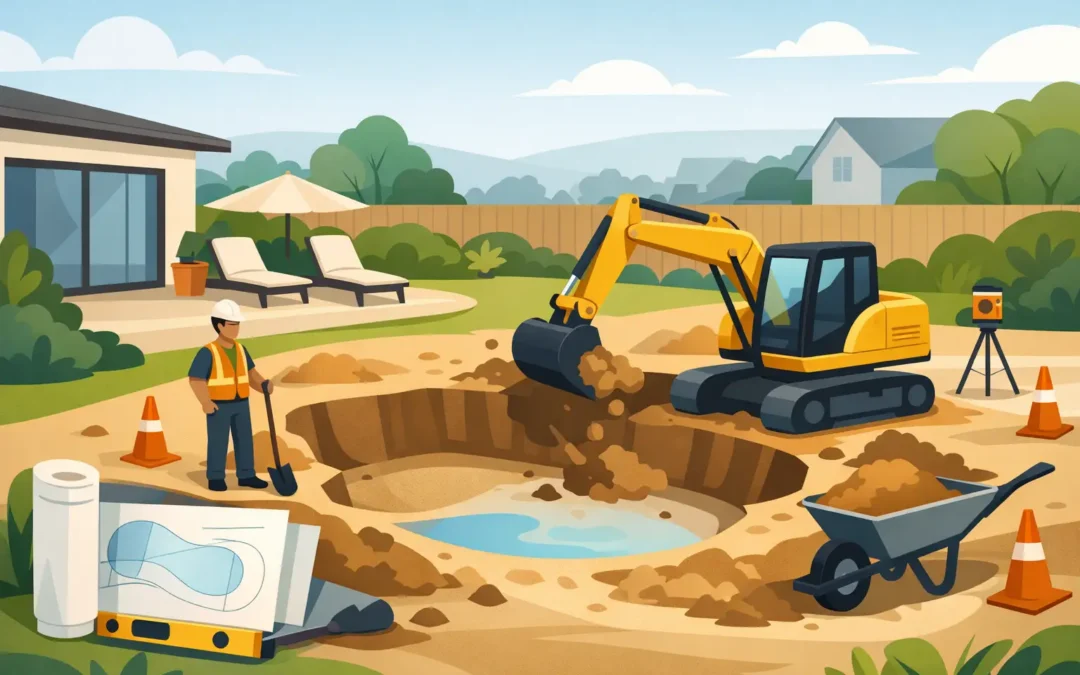
If you are planning a new backyard pool, excavation is the stage that makes the project feel real fast. It is also the point where a good plan matters most. A solid pool excavation process guide helps you understand what happens before digging starts, what can slow things down, and why experienced site management protects both your schedule and your property.
For homeowners, this is usually the first heavy-construction phase they see up close. Machines arrive, access routes are defined, grades are checked, and a clean lawn can turn into an active jobsite in a matter of hours. That can be exciting, but it can also raise questions about noise, soil removal, drainage, and how the rest of the pool build is affected.
What excavation actually includes
Pool excavation is more than digging a hole to match the shape of the pool. The work starts with confirming the layout, elevations, access path, and machine staging area. The crew also needs to account for over-dig, which is the extra space required around the shell or structure so the pool can be formed, installed, and backfilled properly.
That means the excavated area is often larger than homeowners expect. The final footprint has to accommodate structural requirements, plumbing runs, drainage considerations, and safe working room. If the project also includes landscaping, retaining walls, cabanas, fencing, or hardscaping, those elements should already be coordinated before excavation begins, not figured out after the fact.
Before the dig starts
The cleanest excavation jobs are usually the ones that were well planned before equipment ever reaches the property. Site access is one of the biggest variables. A wide side yard with a straightforward route is very different from a tight urban lot, a sloped backyard, or a property with mature trees, existing structures, or limited clearance.
In many Ontario neighbourhoods, access determines the equipment size, the time required, and how much manual work is needed. If a machine cannot easily reach the backyard, the excavation can become more complicated and more expensive. This is why early site review matters. It gives homeowners a realistic picture of what is possible and what site protection may be needed for driveways, lawns, walkways, and nearby structures.
Utility locates and permit requirements also have to be addressed before digging. This is not the stage to make assumptions. Marking underground services, reviewing municipal requirements, and confirming setbacks all help prevent costly mistakes.
Pool excavation process guide: step by step
The first visible step is layout. The pool shape is marked on the ground based on approved plans, and elevations are checked against the existing grade. This is where precision matters. If the layout is off, every stage that follows can be affected, from structural installation to surrounding patio heights and drainage slopes.
Once the layout is confirmed, the crew prepares the access route and staging area. In some cases, protective materials are placed to reduce damage to driveways or finished surfaces. Equipment is then brought in, and excavation begins in layers rather than one aggressive pass. That approach gives the operator better control over depth, shape, and soil handling.
As material is removed, the crew monitors the cut carefully. Soil conditions can change quickly from one section of the yard to another. What looks straightforward at the surface may include clay, loose fill, buried debris, rock, or groundwater issues below grade. Those conditions can affect the pace of the dig and the next construction steps.
After the main excavation is complete, the area is trimmed and refined to match the engineering or pool design requirements. Spoil is either hauled away or managed according to the site plan. From there, the base can be prepared for the next phase, whether that is a vinyl, concrete, or fibreglass pool installation.
Soil conditions can change the entire job
One reason no two excavation projects are exactly alike is soil. In Ontario, soil conditions can vary widely, even within the same community. Dense clay may hold shape well but can be heavy and difficult to manage. Sandy soil may excavate faster but can require more stabilization. Rock adds another layer of cost and time, especially if breaking equipment or specialized removal is needed.
Fill left from previous construction can be another issue. If a property has been altered in the past, the excavation may expose inconsistent material that is not suitable for supporting the pool as planned. When that happens, additional prep or structural adjustment may be required.
This is where experience matters more than speed. A fast dig is not the same as a controlled one. The right crew knows when to keep moving and when site conditions call for a pause and reassessment.
Drainage, groundwater, and why grade matters
Homeowners often focus on the pool itself, but water management around the pool is just as important. Excavation is the stage where drainage planning starts to show up in a practical way. Existing grades, runoff paths, and groundwater conditions all influence how the site should be built.
If the yard already has drainage issues, the pool project should address them, not make them worse. In some cases, groundwater can enter the excavation during digging, especially after rain or in lower-lying areas. That does not always stop the project, but it may require dewatering, revised sequencing, or added drainage measures.
Finished elevations also matter. The pool, patio, and surrounding landscape need to work together so water moves away from structures and does not collect where it should not. This is one reason integrated design/build planning has value. Excavation should support the full property plan, not just the shell installation.
What can affect timeline and cost
The actual digging may happen quickly, but the full excavation stage is influenced by more than machine hours. Access limitations, haul-out distance, weather, soil conditions, and permit timing all play a role. Wet weather is a common factor in Ontario. Rain can soften access routes, slow haul-out, and make it harder to maintain a clean excavation.
Neighbourhood conditions can matter too. On tighter lots, truck movement, machine placement, and material removal need to be managed carefully. If tree protection, fence removal, or temporary site adjustments are required, that should be built into the plan from the start.
The most avoidable cost increases usually come from assumptions. Assuming the access is easy, the soil is standard, or the grades will sort themselves out later is where projects get into trouble. A realistic site review gives a much better sense of what excavation will involve.
How to prepare your property
Homeowners can make excavation day easier by clearing the work area and discussing site logistics in advance. Gates may need to be removed, access points opened, and fragile items relocated. Outdoor furniture, planters, and anything close to the work route should be moved ahead of time.
It is also worth discussing what happens to affected lawn areas, irrigation lines, fences, and nearby landscape features. Some disruption is unavoidable during excavation, but it should never come as a surprise. Good communication before the work starts makes the site easier to manage and helps set realistic expectations.
If the pool is part of a larger backyard transformation, coordination becomes even more important. That is where a company such as Green Machine Inc. can bring value – not just by digging the site, but by planning how the pool, hardscape, grading, and supporting construction work together from the beginning.
Pool excavation process guide: common homeowner questions
One of the most common questions is how messy excavation gets. The honest answer is that it depends on access, weather, and soil, but this is a heavy-construction phase and some disruption should be expected. The goal is not to make excavation invisible. The goal is to manage it properly.
Another common question is whether the yard will look bigger or smaller once the dig starts. During excavation, the area often looks larger because of over-dig and open working space. That can be surprising at first, but it is normal.
Homeowners also ask whether excavation can reveal unexpected costs. Yes, it can, particularly with poor access, rock, buried material, or groundwater. That is not a sign of a bad project. It is a reminder that underground conditions are not always fully visible until work begins.
What a well-run excavation should look like
A professional excavation phase should feel organized, not chaotic. The site should be laid out clearly, the crew should know the sequence, and any issues should be explained directly. You should understand where machines are entering, where soil is going, and what the next step will be once the dig is complete.
The best result is not just a hole in the ground. It is an excavation that sets up the rest of the project properly, protects the property as much as possible, and avoids preventable corrections later. That is the standard homeowners should expect from any contractor handling a pool build.
If you are planning a pool, think of excavation as the foundation of every decision that follows. Get that stage right, and the rest of the project has a much better chance of moving the way it should.