
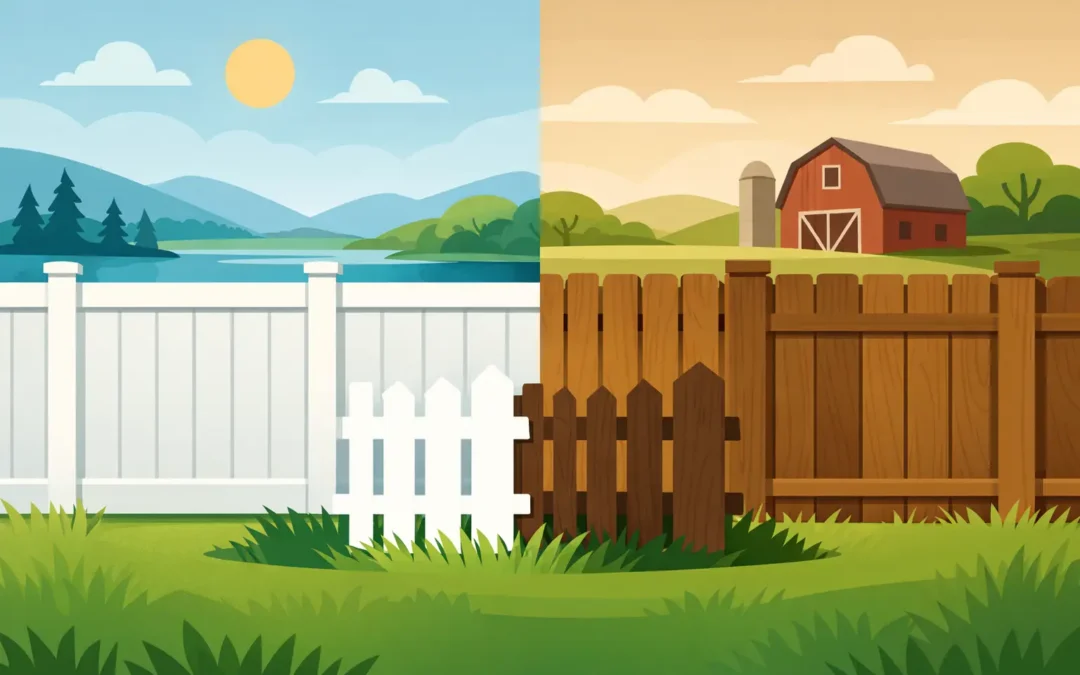
A fence does more than mark a property line. It sets the backdrop for a patio, pool, garden, driveway, or cottage lot, while providing privacy and helping define how an outdoor space works. When homeowners weigh vinyl versus wood fencing, the better choice usually comes down to maintenance expectations, site conditions, budget, and the look they want to live with for years.
For properties across York Region, the GTA, and Ontario cottage country, winter weather deserves serious consideration. Snow load, freeze-thaw cycles, high winds, moisture, and ground movement can all affect fence performance. The material matters, but proper post installation and drainage matter just as much.
Vinyl Versus Wood Fencing: The Core Difference
Vinyl fencing is a manufactured material designed for a clean, consistent finish and low routine maintenance. It is commonly chosen for privacy fences, pool enclosures, and formal landscape designs where homeowners want a uniform appearance without regular staining or painting.
Wood fencing offers a more natural, adaptable look. Pressure-treated lumber, cedar, and other wood options can suit everything from a simple backyard privacy fence to a custom screen integrated with a deck, cabana, or stone patio. Wood can be painted, stained, trimmed, and modified more easily than vinyl, which gives it a major advantage for custom work.
Neither is automatically the right answer. A well-built wood fence can be an excellent long-term feature, while a poorly installed vinyl fence can shift, crack, or look out of place. The decision should consider the full project, not just the panels shown in a sample display.
Upfront Cost and Long-Term Ownership
Vinyl fencing generally carries a higher initial material cost than a standard pressure-treated wood fence. The final price depends on fence height, style, gates, post depth, access to the yard, demolition of an existing fence, and the number of corners or elevation changes involved.
Wood is often the more economical route at installation, particularly for straightforward privacy fencing. It can also make sense when a property owner wants a custom design without paying for specialized vinyl components. However, the lower initial price should be weighed against future maintenance and eventual replacement of weathered boards, rails, or posts.
Vinyl’s value proposition is reduced upkeep. It does not require painting, staining, or sealing, and routine cleaning is usually limited to rinsing dirt, pollen, and surface mildew with water and a mild cleaner. Over a long ownership period, that can offset part of the initial premium.
That said, low maintenance is not no maintenance. Vinyl panels can become scuffed, stained, or damaged by lawn equipment, impacts, and severe weather. Repairs may require matching a particular manufacturer, colour, and profile. If a product line has been discontinued, a perfect match may not be available.
Appearance and Design Flexibility
For homeowners planning a polished, contemporary backyard, vinyl offers crisp lines and consistency. White remains common, but many systems are available in neutral colours, privacy styles, lattice-top designs, and simulated wood textures. Vinyl can work especially well beside a pool, interlock patio, or modern outdoor kitchen where a clean finish is the priority.
Wood has more character from the start and can evolve with the property. Cedar has natural warmth and a refined appearance, while pressure-treated wood provides a practical, familiar option. A wood fence can be built with horizontal boards, vertical privacy panels, decorative tops, framed sections, trellises, or integrated screening around equipment and service areas.
This flexibility becomes valuable on complex sites. If a fence needs to meet an existing deck, step along a grade change, screen a pool pump, or connect with a custom gate, wood is often easier to tailor on site. Vinyl systems are more modular. They look best when the layout fits the available components and the ground conditions allow for clean, even runs.
Ontario Weather and Seasonal Movement
Ontario winters are demanding on every exterior material. Wood absorbs and releases moisture through the seasons. As a result, boards can shrink, swell, twist, check, or cup over time. Cedar is naturally more stable than many other wood options, but it still requires reasonable maintenance and should not be expected to remain unchanged outdoors.
Vinyl will not rot, splinter, or absorb water in the same way. That is a meaningful advantage in wet locations and around pools. Quality vinyl products are designed to handle outdoor exposure, but extreme cold can make some materials more susceptible to cracking if struck. Snow clearing, moving patio furniture, and impacts from equipment all require care.
Posts are the real foundation of either system. In frost-prone ground, fence posts must be installed at the correct depth, aligned properly, and supported with an approach suited to soil conditions and the selected fence system. A fence can have premium panels and still fail early if posts are shallow, poorly set, or unable to manage wind load.
Drainage also deserves attention. Constantly saturated soil shortens the life of wood posts and can contribute to movement around any fence. On sloped lots, near downspouts, or around new patios and pool areas, grading should direct water away from structures and avoid concentrating runoff at the fence line.
Privacy, Strength, and Everyday Use
Both materials can provide excellent privacy, but the intended use matters. A tall solid fence catches more wind than an open picket style, especially on exposed lots. Gates introduce additional stress because they are opened, closed, leaned on, and often subject to snow buildup or uneven settlement.
For a busy family yard, consider where gates will be located, how wide they need to be, and whether they must accommodate lawn equipment, pool service access, or a future renovation. A narrow decorative gate may look right initially but create unnecessary problems when a contractor needs access to the backyard.
Wood is generally easier to repair after localized damage. A broken board, loose rail, or damaged section can often be replaced without dismantling a large portion of the fence. Vinyl components can also be repaired, but the process may be more involved depending on the system. Damage to a vinyl panel can be more noticeable if replacement parts do not match the existing finish.
For pool properties, fence selection must also account for applicable municipal requirements, gate hardware, latch placement, and pool enclosure rules. Do not assume a standard privacy fence automatically meets the requirements for a pool enclosure. Confirm the local requirements before materials are ordered.
Maintenance: What Each Fence Actually Needs
A wood fence should be inspected at least once a year, ideally after winter. Look for loose fasteners, leaning posts, damaged boards, splitting, and areas where soil or landscaping is holding moisture against the wood. Depending on the material and finish, staining or sealing may be required every few years to protect appearance and help manage moisture exposure.
Vinyl needs less finishing work, but it benefits from seasonal cleaning and inspection. Check for loose caps, cracked components, shifted posts, and gate alignment. Avoid harsh solvents or abrasive tools that can dull the surface. Keep garden beds, shrubs, and stored items from pressing against the fence, since trapped moisture and restricted airflow can leave marks and encourage surface buildup.
If maintenance is unlikely to happen consistently, vinyl is usually the more forgiving choice. If the owner is willing to maintain the fence and values a natural finish or custom design, wood remains a strong option.
When Vinyl Makes More Sense
Vinyl is often a practical fit for homeowners who want a uniform privacy fence with minimal seasonal upkeep. It works well where the landscape design is clean and structured, and where the fence line is relatively straightforward. It is also worth considering around pools and low-maintenance outdoor living spaces, provided the enclosure design meets local requirements.
Choose a quality system rather than making the decision on price alone. Panel thickness, post construction, rail design, hardware, and warranty coverage vary significantly. A light-duty product may not be appropriate for a windy site, a tall privacy fence, or a high-use gate.
When Wood Is the Better Investment
Wood makes sense when the project needs custom sizing, a natural aesthetic, or detailed integration with other features. It is often the right material for properties with mature trees, uneven grades, distinctive architecture, or outdoor structures that already use wood framing and finishes.
It can also be the better choice when future changes are likely. If a homeowner expects to add a deck, shed, garden enclosure, or expanded patio later, wood is typically easier to modify and match. The key is accepting that wood is a finish material that needs periodic care, not a one-time installation.
Before selecting either material, view the fence as part of the entire property plan. Consider sightlines from the house, drainage, gates, landscaping, pool safety, neighbour coordination, and the work that may follow. An experienced design/build contractor can help make sure the fence supports the yard you are building, rather than becoming an obstacle to the next phase of it.