
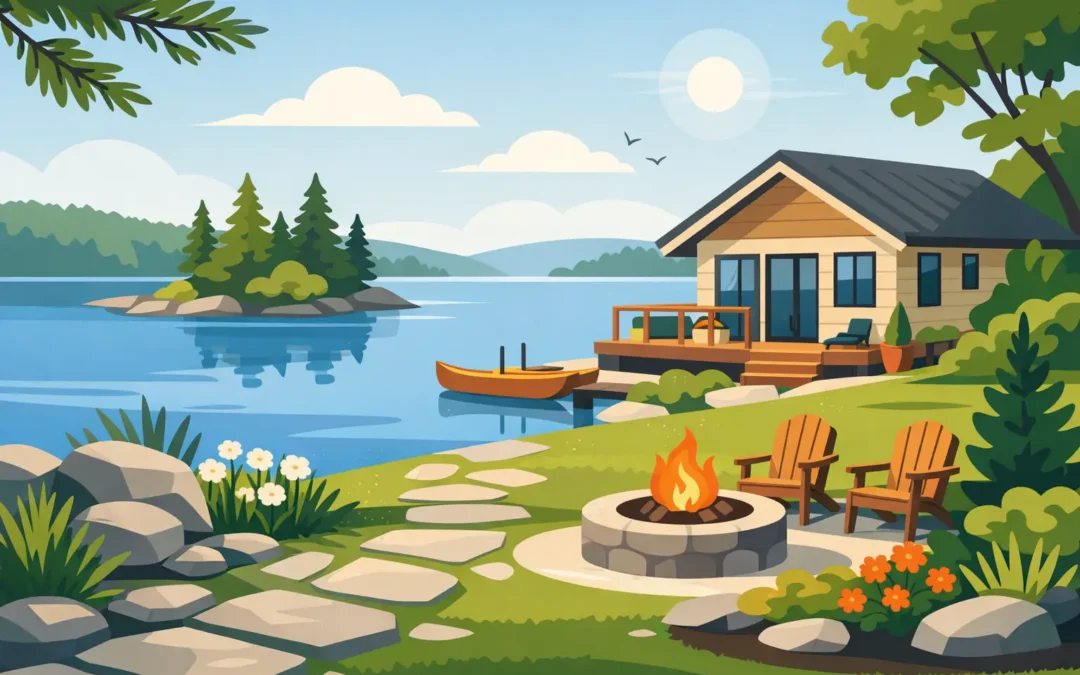
A cottage lot can look easy on the surface – trees, water, rock, and open space – but anyone who has owned one knows how quickly those conditions turn into real construction and maintenance issues. Ontario cottage property landscaping has to do more than look good in July. It needs to handle spring runoff, uneven grades, exposed roots, shoreline rules, limited access for equipment, and long stretches when nobody is on site.
That is what makes cottage landscaping different from a typical suburban backyard. The right plan is not about filling the property with features. It is about building something that fits the land, holds up over time, and reduces the amount of seasonal repair work you deal with every year.
What Ontario cottage property landscaping really needs to do
At a cottage, landscaping is doing several jobs at once. It should improve access from the driveway to the cabin, make waterfront areas safer, control drainage, protect the soil, and create usable outdoor space for family and guests. If the property is steep or rocky, those goals become even more tied to grading, retaining, and hardscape construction.
That is why a cottage project usually starts with function, not plant selection. Before thinking about gardens or decorative finishes, you need to know how people move through the site, where water is collecting, what areas are washing out, and which surfaces become slippery or unstable after rain. A good-looking result comes from solving those site problems first.
Start with the land, not the wish list
A lot of cottage owners begin with a picture in mind – a larger patio, better stairs to the water, a fire pit area, maybe a dock approach or outdoor kitchen. Those features can work well, but only if the site can support them properly.
The first question is grade. Many Ontario cottage properties have elevation changes that affect everything from drainage to material delivery. A flat lawn solution often does not make sense. You may need armour stone retaining walls, stepped walkways, reinforced landings, or terraced outdoor spaces instead of one large level area.
The second question is drainage. Water will always find the weak point on a cottage lot. It may run off the driveway, pool near the foundation, cut through pathways, or carry soil toward the lake. If drainage is ignored, even expensive stonework can shift, settle, or fail early. Swales, proper base prep, grading corrections, and runoff management are often the difference between a project that lasts and one that needs constant repair.
The third question is access. Some cottage properties are easy to build on. Others are tight, remote, tree-covered, or difficult to reach with full-size equipment. That affects project planning, labour, timing, and material choice. It also affects cost, which is why realistic site evaluation matters early.
Shoreline areas need a practical approach
The shoreline is usually the most valuable part of the property and the most vulnerable. People want clean access to the water, a place to sit, and a shoreline that looks natural. At the same time, wave action, runoff, and foot traffic can wear that area down fast.
In many cases, the right move is a balance of softscape and structural work. Naturalized planting can help stabilize soil and reduce erosion, but there are situations where you also need stone steps, retaining features, shoreline reinforcement, or a better transition from upper grade to dock level. It depends on the slope, soil condition, water movement, and how heavily the shoreline is used.
This is also where compliance matters. Work near the water may involve conservation rules, local permitting requirements, or restrictions on what can be altered. A cottage landscaping plan should respect those limits from the start rather than treating them as a problem to fix later.
Hardscape usually carries more value at the cottage
On many cottage properties, hardscape does more heavy lifting than planting beds. Patios, pathways, steps, retaining walls, driveways, and gathering areas create the actual function of the site. Without them, the property may look natural but still feel difficult to use.
Interlock and natural stone are common choices, but material selection should match the conditions. Freeze-thaw cycles, moisture, and slope all matter. A surface that works well in an urban backyard may not be the best fit near a lakefront path or a shaded stair run under heavy tree cover.
Slip resistance matters too. Smooth finishes can become a problem near pools, docks, or waterfront entries. Wider treads, solid base work, and durable edging are not glamorous decisions, but they are the kind that improve safety and reduce callbacks.
Retaining walls are another area where shortcuts tend to show up later. On a cottage property, a wall often has to manage both grade and drainage pressure. If it is undersized or built without proper support, the failure is not just cosmetic. It can affect access paths, patios, stairs, and nearby structures.
Planting should be low-maintenance and site-appropriate
A cottage is not usually the place for fussy landscaping that needs constant trimming, watering, and replacement. Most owners want the property to look clean and established without turning every weekend into maintenance time.
That is why native and hardy plant material often makes more sense than ornamental choices that struggle with rocky soil, irregular watering, or exposed wind. The best planting plans are usually simple. They stabilize slopes, soften hardscape, define spaces, and stand up to the local conditions.
Deer pressure, shade cover, and soil depth all need to be considered. A dense wooded lot creates different planting conditions than an open waterfront lot with full sun and shallow soil over rock. There is no one-size-fits-all cottage planting plan, and trying to force one usually leads to rework.
Mulch, river rock, and groundcover can all reduce upkeep, but each has trade-offs. Mulch looks finished and supports planting beds, though it may need topping up. Decorative stone can work well in some areas, but on slopes or near leaf drop it can become harder to maintain than expected. The right choice depends on where the material is going and how the property is used.
Build outdoor living spaces that suit cottage use
The best cottage landscapes make it easier to spend time outside without making the site feel overbuilt. That often means choosing a few well-planned features instead of trying to install everything at once.
A properly located patio can solve several issues in one move. It creates a stable place for dining, connects the cottage to the yard, and reduces wear on surrounding ground. Add defined steps, lighting, and a clear route to the waterfront, and the property becomes more usable right away.
For larger projects, it may make sense to combine landscape work with structures such as decks, cabanas, outdoor kitchens, docks, or upgraded entrances. That kind of coordination matters because these features affect grade, utility routing, drainage, and material transitions. When separate trades work in isolation, details get missed. On a cottage property, those missed details tend to show up as drainage problems, awkward elevations, or disjointed finishes.
Phasing the work can be the smart move
Not every cottage property needs a full transformation in one season. In fact, phased work is often the more practical approach, especially when the site has major grade issues or access limitations.
The first phase may focus on drainage, shoreline stability, stairs, and retaining. The second might add patios, planting, and gathering areas. A later phase could include a driveway upgrade, dock integration, or outdoor structures. Done properly, phased work still follows one long-term plan, so the finished property feels cohesive instead of pieced together.
This approach also lets owners prioritize what affects safety, access, and site protection first. That tends to be money well spent because it protects every aesthetic improvement that comes after.
What to look for in a contractor
Cottage landscaping is not just a design exercise. It is a construction project with real site demands. You need a contractor who understands excavation, grading, drainage, hardscape installation, and structural landscape elements, not just surface-level improvements.
That experience matters even more when a project overlaps with docks, decks, driveways, retaining walls, or outdoor living construction. A full-scope contractor can plan those connections properly and reduce the coordination issues that happen when too many trades are working off separate assumptions.
For Ontario cottage country properties, it also helps to work with a team that understands seasonal scheduling, material logistics, and the practical realities of building in harder-to-access locations. Green Machine Inc. approaches these projects with that design/build mindset – solving the land first, then building a finished space that works the way it should.
A cottage property should feel easier to use after the work is done, not harder to maintain. If your landscaping plan respects the site, handles drainage properly, and focuses on durable outdoor living, you get more than a better view. You get a property that works with the land instead of fighting it.