
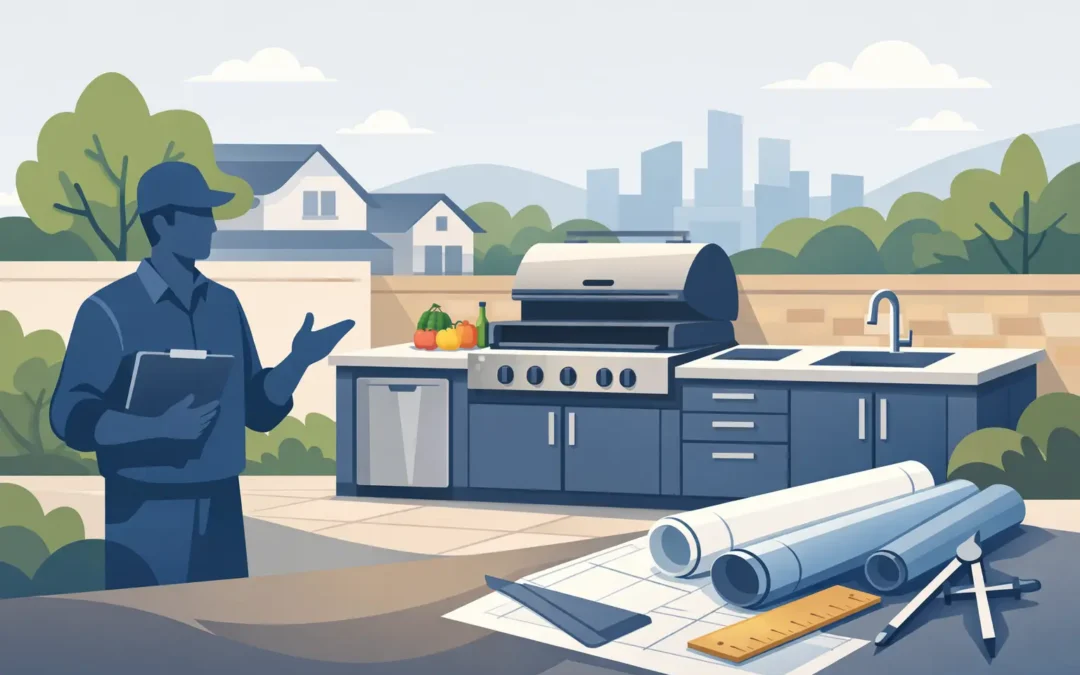
A backyard kitchen looks simple when you see the finished stone, grill, and counter. The hard part is everything underneath it – grading, drainage, gas, electrical, structure, clearances, and materials that can handle Ontario weather without becoming a maintenance problem two seasons later. If you are looking for a Markham outdoor kitchen contractor, that is the difference that matters most.
An outdoor kitchen is not just a BBQ on a patio. Done properly, it becomes part of the property’s layout, traffic flow, and long-term value. Done poorly, it becomes a collection of expensive components that never quite work together. Homeowners usually feel that gap after the first full summer, when storage is awkward, prep space is too tight, smoke blows toward the seating area, or winter has already started to affect finishes and fixtures.
What a Markham outdoor kitchen contractor should handle
A serious outdoor kitchen project involves more than appliance installation. The contractor should be able to assess the full site and build around the realities of your property, not around a generic showroom layout.
That starts with the base. If the patio shifts, settles, or drains poorly, the kitchen above it will eventually show it. Cabinet frames can move, countertop joints can open, and surrounding stonework can heave during freeze-thaw cycles. In Markham, where seasonal temperature swings are a real construction factor, the base and drainage plan are not secondary details.
Utilities are the next major issue. Gas lines, dedicated electrical circuits, task lighting, refrigeration, and water service all need to be planned before finishes go in. If a contractor only talks about finishes and appliances but not about trenching, load requirements, shutoffs, or service routing, you are not getting the full picture.
The stronger approach is design/build. One contractor manages the layout, preparation, trades, and construction sequence so the kitchen works with the patio, pool area, deck, cabana, or retaining features around it. That saves clients from trying to coordinate a mason, electrician, gas technician, carpenter, and landscaper separately while hoping everyone interprets the same plan the same way.
Good outdoor kitchens start with the way you actually use the yard
The best layout is not always the biggest one. It depends on how you entertain, how many people use the space, and what else is happening in the backyard.
Some properties need a compact kitchen tied tightly to a dining patio. Others need a larger setup with bar seating, refrigeration, storage, and enough clearance for multiple people cooking at once. If you have a pool, sightlines and circulation become more important. If the yard is exposed, wind direction and sun angle may shape the placement of the grill and seating more than the house wall does.
This is where experience shows. A contractor who builds full outdoor spaces understands that the kitchen cannot be treated as an isolated feature. It needs to relate to the rest of the landscape. The route from the house to the kitchen should be practical. The cooking zone should not block access to the yard. Seating should feel close enough for conversation but not so close that guests stand in the work area.
There is also a cost trade-off here. Many homeowners start with a wish list that includes a grill, side burner, sink, fridge, pizza oven, ice maker, warming drawer, and oversized island. That can make sense on some properties. On others, it adds cost without improving how the space gets used. A better contractor helps narrow the build to what will actually earn its footprint and budget.
Materials matter more outside than they do indoors
Outdoor kitchens fail early when indoor thinking gets applied outside. Materials that look good at handover may not age well through rain, heat, snow, and freeze-thaw exposure.
Countertops are a good example. Some stones perform well outdoors, while others stain, crack, or weather unevenly. Cabinet construction also matters. Weather-resistant systems, masonry bases, and properly selected hardware hold up far better than products chosen mainly for appearance. Even the finish on a fixture or appliance can make a difference after repeated exposure to moisture and temperature swings.
Surrounding hardscape materials deserve the same attention. Interlock, natural stone, concrete, and jointing systems all behave differently over time. The right choice depends on the design, drainage, and how the space will be used. A property with heavy foot traffic, a pool, and regular entertaining needs a different level of planning than a smaller grilling station off the back door.
Maintenance should be part of the conversation too. Some clients want the richest natural materials possible and accept the upkeep that comes with them. Others want a cleaner, lower-maintenance build. Neither choice is wrong, but the contractor should be direct about what ownership looks like after the project is complete.
Permits, safety, and code are not side issues
Outdoor kitchens can involve structures, gas, electrical work, and proximity concerns that need to be reviewed carefully. Clearances to combustibles, ventilation, proper service installation, and load planning are part of doing the job properly.
This is another reason homeowners benefit from working with a contractor that understands broader construction, not just decorative landscaping. Once an outdoor kitchen includes roof structures, attached features, privacy walls, cabanas, or integrated lighting and heating, the project moves well beyond surface work. The contractor should be comfortable managing that scope.
If your project includes a deck connection, covered structure, or nearby pool equipment, coordination becomes even more important. Separate trades can each do acceptable work and still leave you with a layout that feels compromised because nobody managed the whole build as one environment.
Questions to ask a Markham outdoor kitchen contractor
Before you commit, ask how the contractor approaches site preparation, drainage, utility planning, material selection, and winter durability. Ask who manages the trades and whether the company routinely handles larger landscape and construction scopes.
You should also ask how the kitchen integrates with the rest of the property. That answer tells you a lot. A contractor focused only on the appliance wall may miss grading issues, traffic flow, or the relationship between the kitchen and nearby features. A contractor with deeper design/build experience will usually talk about the yard as a system.
Past work matters, but the conversation around that work matters just as much. You want clear explanations, realistic pricing, and practical recommendations. Be cautious if every project is presented as needing the highest-end option. A good contractor knows where premium upgrades make sense and where they do not.
Timeline is worth discussing early. Outdoor construction often depends on weather, material lead times, inspections, and trade scheduling. Straight answers are better than fast promises. A company with established crews and a broad service background is usually better equipped to manage sequencing without losing control of quality.
Why full-scope capability makes a difference
Many outdoor kitchens end up connecting to larger upgrades. The client starts with cooking space, then adds a patio expansion, seat walls, lighting, a pergola, privacy screening, or a poolside entertaining area. That is where a full-service contractor becomes valuable.
Instead of treating each addition as a separate project with separate vendors, one team can manage the design intent and construction sequence from start to finish. That is more efficient, but more importantly, it usually produces a better result. Materials coordinate. Elevations make sense. Utilities are planned once instead of reworked later.
For homeowners in Markham investing in a long-term backyard upgrade, that level of coordination is often what turns a good feature into a complete outdoor living space. Green Machine Inc. has built its reputation around that kind of full-scope delivery, combining landscape, construction, and renovation capability under one contractor rather than pushing clients to assemble their own trade list.
Budgeting for the right result
Outdoor kitchens vary widely in cost because scope varies widely. A straightforward built-in grill station with durable finishes is a different project from a fully serviced cooking and entertaining area with refrigeration, custom stonework, lighting, shelter, and integrated seating.
The right budget is not just about what you can spend. It is about what the property supports and what the space needs to do. In some yards, investing more in the patio base, drainage, and utility infrastructure is the smartest move. In others, it makes sense to keep the kitchen simpler and put more of the budget into surrounding comfort and function.
That is why early planning matters. It helps avoid expensive revisions and keeps the project grounded in how the space will actually be used. A contractor who is honest about trade-offs will save you more than a contractor who agrees to every idea without challenging the layout.
A well-built outdoor kitchen should feel like it belonged on the property from the start, not like a feature that was dropped into leftover space. When the structure is sound, the utilities are planned properly, and the layout fits the way you live, you notice it every time the yard gets used.