
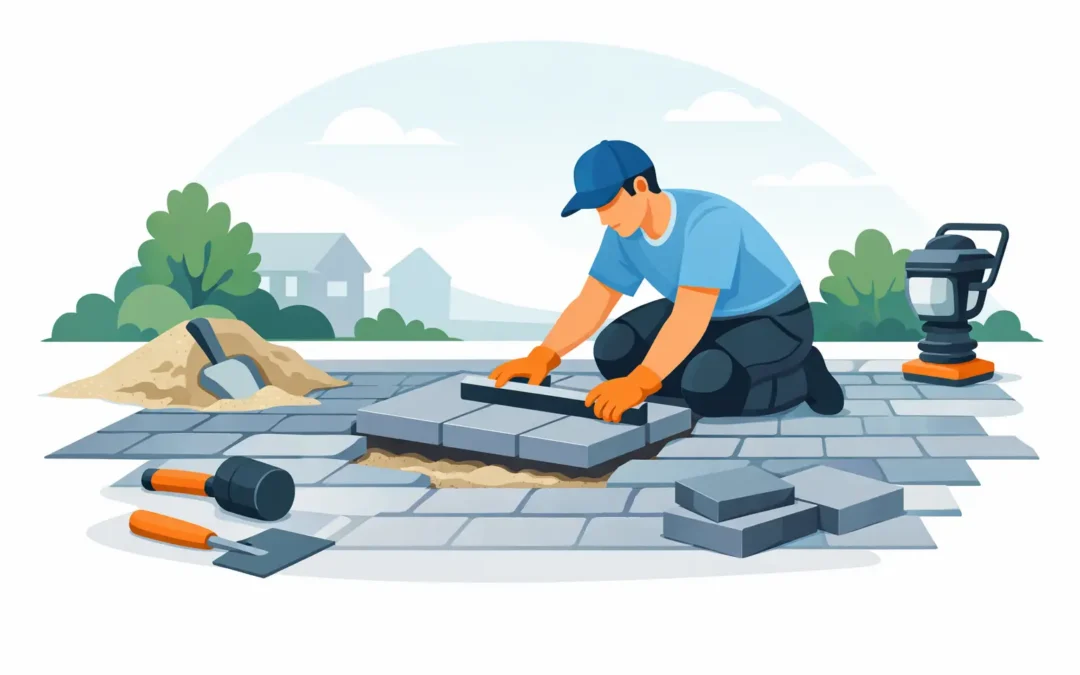
A low spot in your interlock usually shows up after a hard rain, a spring thaw, or the first time you notice water sitting where it should be draining away. It is not just a cosmetic issue. If you are wondering how to repair sunken interlock, the real job is not pushing the pavers back into place. The real job is fixing the reason they dropped in the first place.
Sunken interlock can happen in a driveway, walkway, patio, or pool surround. In Ontario, freeze-thaw cycles, poor base preparation, drainage issues, and edge movement are common causes. The right repair depends on how deep the settlement is, how large the affected area is, and whether the surrounding structure is still stable.
How to repair sunken interlock without a short-term patch
The biggest mistake property owners make is treating a settled section like a loose stone problem. If the base underneath has washed out, compacted unevenly, or shifted from water movement, simply adding sand under a few pavers will not last long. It may look fine for a few weeks, then drop again.
A proper repair starts by lifting the affected pavers carefully so they can be reused. Once they are removed, the bedding layer and base material underneath need to be checked. If the bedding sand is soft, wet, missing in spots, or mixed with soil, it has to be replaced. If the granular base below is thin, unstable, or holding water, that layer needs attention too.
The repair becomes larger when the sinking is tied to drainage or structural movement. For example, if downspouts are discharging near the interlock or if the grade slopes water into the paved area, fixing only the surface is a temporary move. In those cases, the drainage issue should be corrected at the same time.
What causes interlock to sink?
In most cases, settled interlock comes back to one of four issues. The first is inadequate base depth or poor compaction during installation. A patio and a driveway do not require the same base build-up, and if the original install cut corners, the surface can settle under traffic or seasonal movement.
The second is water. Water is hard on interlock systems when it cannot drain properly. It can wash out bedding sand, weaken the base, and create voids under the pavers. This is especially common beside eavestrough downspouts, hose bibs, or areas where snowmelt collects.
The third is edge failure. Interlock relies on confinement. If the edge restraint breaks, shifts, or was never installed well, the pavers can begin to spread and sink. The fourth is underground disturbance, which can include tree roots, utility work, animal burrowing, or trench settlement from previous construction.
That is why there is no one-size-fits-all answer to how to repair sunken interlock. A small dip in a walkway calls for a different repair than a depressed section in a driveway where vehicles are loading the surface every day.
Step-by-step approach to repair sunken interlock
Start by marking the full area that has settled, plus a small perimeter around it. You rarely want to lift only the lowest pavers. Removing a slightly larger section gives you room to blend the repair into the surrounding surface and avoid creating a visible patch.
Next, remove the joint sand and lift the pavers. This should be done carefully to avoid chipping edges, especially if the pavers are older or tightly locked. Keep the pavers in order if the pattern matters. That makes reinstallation cleaner and faster.
Once the pavers are out, inspect the bedding layer and base. Loose sand alone is not enough to support the surface. The base should be made of properly compacted granular material, stable and consistent across the repair area. If you find soft spots, organic material, mud, or standing water, that material needs to come out.
Rebuild the base in lifts rather than dumping in one thick layer. Each lift should be compacted before the next one goes in. This is the difference between a repair that holds and one that settles again. After the base is rebuilt to the correct height, add a fresh, screeded bedding layer and reset the pavers to match the original pattern and grade.
The final step is compaction and jointing. After the pavers are placed, they should be compacted into the bedding layer and the joints filled properly. Polymeric sand is often used, but whether it is the best option depends on the application, the condition of the existing surface, and exposure to moisture.
When a small repair is enough and when it is not
A localized repair can work well when the sinking is limited to one contained section and the surrounding interlock is stable. This is often the case near a gate, a single step, or one corner of a patio where runoff has caused a washout.
A wider reset is usually the better move when there are multiple low spots, widespread heaving, poor drainage across the whole area, or visible shifting along edges. If one section has failed because the entire base was undersized or poorly graded, patching only the worst spot is not cost-effective over time.
Driveways deserve extra caution. Vehicle loads expose weak base preparation quickly. If a driveway has rutting or repeated settlement, the repair may need to extend farther than the visibly sunken area so the surface can distribute weight properly.
Tools and materials that matter
For a lasting repair, the right tools matter almost as much as the right method. A plate compactor is essential for rebuilding the base and seating the pavers. Hand tamping may work for very small touch-ups, but it is not enough for most sunken sections.
You will also need the correct granular base material, clean bedding sand, replacement edge restraint if needed, and jointing sand suited to the application. A straightedge, screed rails, rubber mallet, and paver extractor help keep the repair accurate and reduce damage to existing units.
Using the wrong material is a common problem. Masonry sand, topsoil contamination, or leftover aggregate from another job can lead to uneven support and moisture retention. Interlock systems perform best when each layer does its own job properly.
Drainage is often the real repair
If interlock keeps sinking in the same place, look beyond the pavers. Water may be spilling from a downspout, flowing off a roof valley, running from a higher grade, or getting trapped between structures. In those cases, the surface repair and the drainage correction should happen together.
This might mean extending downspouts, adjusting the slope, improving swales, or rebuilding the area with better runoff control. Around pools, garages, and entrances, drainage becomes even more important because standing water creates both structural and safety concerns.
For larger properties or more complex hardscape layouts, this is where an experienced design/build contractor can make a difference. A repair should fit the site as a whole, not just the one area that failed.
Should you repair sunken interlock yourself?
It depends on the size of the area and the reason it sank. A small patio dip with easy access and no drainage problem may be manageable for a capable homeowner with the right tools. The challenge is that most people can reset the pavers, but fewer can diagnose the base issue correctly.
For driveways, pool decks, front entries, or larger settled sections, professional repair is usually the safer choice. Matching the existing grade, pattern, and compaction level takes experience. So does spotting the signs of bigger problems like edge failure, base contamination, or runoff damage.
If the interlock is tied into steps, coping, retaining walls, or adjacent concrete, the repair also gets more technical. Those connections need to stay aligned, and a bad reset can create trip hazards or direct water where it should not go.
Getting a repair that lasts
A good interlock repair should not stand out when it is done. The surface should look even, feel solid underfoot, and drain properly. More importantly, it should stay that way through weather changes and regular use.
Since 1999, Green Machine has worked on hardscape and construction projects where surface issues are often tied to larger grading, drainage, and structural conditions. That broader view matters because the best repair is usually the one that addresses the whole cause, not just the visible symptom.
If your interlock has dropped in one spot, treat it early. Small settlement is easier and less expensive to correct before it spreads, holds water, or starts affecting nearby sections. The best time to fix it is when it is still a repair, not a full rebuild.
And if you are unsure whether you are dealing with a simple reset or a larger base problem, that uncertainty is usually the sign to have it looked at properly. A level surface is good. A level surface with the right support underneath is what keeps it that way.