
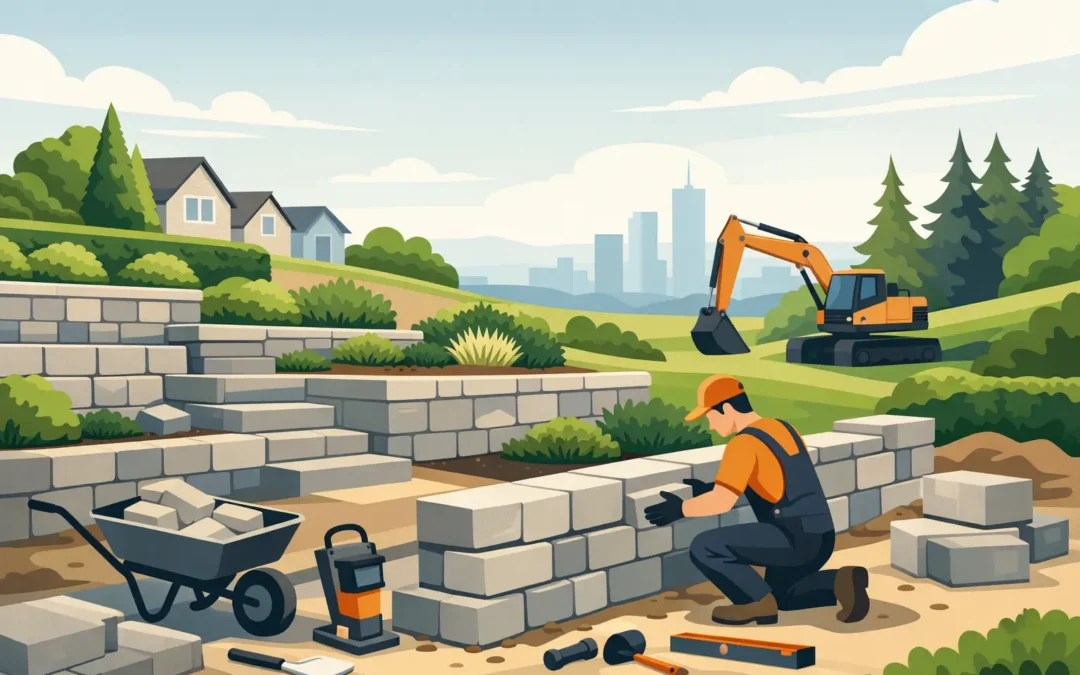
A retaining wall usually becomes urgent right after a problem shows up – soil slipping onto a driveway, a backyard that stays unusable after rain, or a slope that keeps pushing against a fence or patio. If you are looking for a Richmond Hill retaining wall contractor, the real question is not just who can stack stone or block. It is who can build a wall that manages grade, drainage, appearance, and long-term stability without creating bigger issues later.
In Richmond Hill, retaining walls are rarely just decorative. Many properties deal with elevation changes, tight lot layouts, water movement, and nearby hardscape features that all need to work together. A wall that looks good on day one but fails to control pressure behind it is a costly mistake. That is why planning matters as much as installation.
What a Richmond Hill retaining wall contractor should handle
A proper retaining wall project starts with understanding the site. That includes the height and length of the wall, the slope it is supporting, the type of soil, drainage conditions, and what sits above or below the wall. A wall beside a driveway, pool area, walkway, or foundation carries different demands than one used to shape a garden bed.
An experienced Richmond Hill retaining wall contractor should look beyond the wall face itself. Excavation depth, base preparation, compaction, drainage stone, pipe placement, and backfill strategy all affect performance. If any of those parts are rushed, even a premium wall system can shift, bulge, or settle.
This is also where design/build experience adds value. On many properties, the wall is tied to a larger project such as interlock, steps, grading corrections, fencing, or full landscape construction. Coordinating those elements under one contractor reduces gaps between trades and makes the finished space work as a whole.
Not every retaining wall is the same
Homeowners often start by asking about materials, but the better first question is what the wall needs to do. A low garden wall meant to define a planting area is different from a structural retaining wall holding back a slope. The build method, reinforcement, and drainage details will change depending on the load and conditions.
Segmental retaining wall blocks are common because they offer a clean appearance and solid performance when installed correctly. Natural stone can suit higher-end landscapes and certain architectural styles, but it depends on the application and the budget. Poured concrete may make sense in some structural situations, though it does not fit every property aesthetically.
There is always a trade-off. Some materials offer a more refined finish, while others are more economical or easier to integrate with existing hardscaping. The right choice depends on function first, then appearance, then cost. When those priorities are reversed, projects tend to run into trouble.
Drainage is where many wall problems begin
Most retaining wall failures are not really about the face material. They are about water. When water builds up behind a wall, pressure increases. In freeze-thaw conditions, that pressure gets worse. Over time, the wall can lean, crack, or separate.
That is why drainage should never be treated as an extra. A well-built wall needs the right base, clear drainage stone, proper backfill, and a way for water to move away from the structure. In some cases, grading around the wall is just as important as the wall itself. If runoff from a neighbouring area or roofline is directed toward the wall, the design needs to account for that.
This is one reason a low quote can become expensive later. If a contractor prices only the visible portion and cuts corners on excavation or drainage, the wall may look finished while the hidden parts are already compromised.
Signs a property may need more than a simple wall replacement
Some retaining wall projects are straightforward. Others point to broader site issues. If the existing wall is failing, it is worth asking why. The answer may involve poor drainage, improper grading, frost movement, inadequate footings, or pressure from added loads such as parked vehicles, sheds, or patios installed after the original build.
You may also need a more complete scope if the wall failure has affected nearby surfaces. Sunken interlock, cracked steps, leaning fences, and soft ground behind the wall often signal that the site needs more than a cosmetic fix. In those cases, it makes sense to work with a contractor that can handle excavation, hardscape rebuilding, drainage correction, and related construction in one plan.
Permits, engineering, and code considerations
Not every retaining wall requires the same approvals, but homeowners should never assume a wall is too small to matter. Height, location, grading impact, and proximity to structures can all affect whether engineering or municipal review is needed. This is especially relevant on sloped lots or when the wall supports a large change in grade.
A reliable contractor will flag those requirements early instead of leaving them for the homeowner to discover mid-project. That matters for safety, but it also matters for scheduling and budget. A wall that requires engineered input should be priced and planned that way from the start.
The best approach is practical: treat retaining walls as structural landscape features, not just visual upgrades. That mindset avoids shortcuts.
How retaining walls affect the rest of the property
A retaining wall can solve a problem, but it can also create usable space. On many Richmond Hill properties, a well-placed wall helps turn a sloped or uneven yard into a functional area for patios, planting beds, walkways, outdoor kitchens, or pool surrounds. It can also improve access and define traffic flow across the property.
That broader value is often missed when people compare quotes line by line. One contractor may be pricing a basic wall. Another may be thinking about how the wall ties into stairs, drainage, grading, and future landscape features. The second approach may cost more upfront, but it usually produces a better result and avoids rework later.
This is where an established full-scope contractor has an advantage. If your wall project connects to interlocking, stonework, fencing, driveways, or a larger backyard renovation, coordination matters. Green Machine Inc. approaches these projects with that bigger picture in mind, which helps keep design and construction aligned from the start.
What to ask before hiring
A retaining wall quote should be detailed enough to show how the wall will be built, not just how long it is and what material is on the face. Ask what the excavation includes, how the base will be prepared, what drainage system is planned, and whether geogrid or other reinforcement is required. Ask how spoil removal, access, and restoration will be handled as well.
It also helps to ask about experience with similar sites. A wall on level ground with easy machine access is different from one built in a tight backyard with grade constraints and nearby structures. The contractor should be able to explain the approach clearly and without vague promises.
You are not just buying labour and materials. You are buying judgement. That is often the difference between a wall that stays put and one that needs repair after a few seasons.
Cost depends on more than wall height
People often expect a simple price per square foot, but retaining wall costs vary for good reason. Height matters, but so do excavation depth, soil conditions, access, drainage requirements, material choice, reinforcement, demolition of an old wall, and what must be protected or rebuilt nearby.
A site with difficult access may require more hand work. A wall near a driveway or structure may need extra care and engineering. A premium finish may raise material costs, while a larger integrated project may create efficiencies. There is no useful shortcut price that applies to every yard.
The practical way to look at cost is this: the cheapest wall is rarely the least expensive over time. If poor drainage, weak base prep, or underbuilt structure leads to movement, repairs can quickly outweigh any initial savings.
Choosing for durability, not just appearance
A good wall should look right for the home, but appearance alone is not enough. The best results come when the wall matches the property style and handles the site conditions properly. Clean lines, proper elevations, solid drainage, and integration with surrounding features all matter.
That is what homeowners and property managers should expect from a professional Richmond Hill retaining wall contractor – sound construction, practical design, and a clear understanding of how the wall fits into the larger property. When the work is done properly, the wall does more than hold back soil. It protects hardscaping, improves function, and gives the yard a finished, durable structure that makes sense for how the property is used.
If you are planning a retaining wall, treat it as a long-term building decision, not a quick landscape add-on. The right plan at the beginning usually saves the most time, cost, and disruption later.