
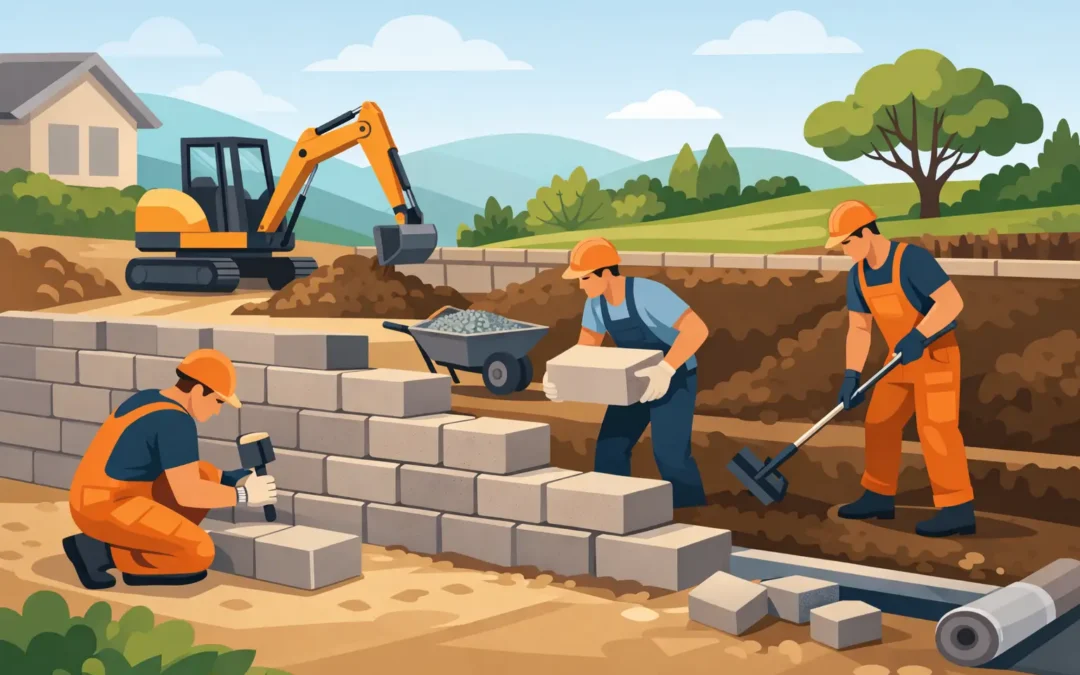
When a slope starts washing into your lawn, a driveway edge begins to creep, or a backyard project needs a level area to work, a retaining wall stops being a nice upgrade and becomes a practical fix. The problem is that many walls look solid on day one and start leaning, cracking, or draining poorly after a few Ontario freeze-thaw cycles. That is usually not a material problem. It is a design and installation problem.
If you are searching for retaining wall installation near me, the real question is not just who can stack stone or block. It is who can build a wall that suits the grade, handles water properly, fits the property, and lasts. On many sites, the wall also has to work with other elements such as interlocking, steps, fences, pool areas, driveways, or drainage corrections. That is where experience matters.
What retaining wall installation near me should include
A proper retaining wall installation starts well before any block or stone arrives on site. The first step is understanding what the wall needs to do. Some walls are mainly for grade control and erosion management. Others are there to create usable space for patios, garden beds, parking areas, or pool surrounds. In many cases, it is both structural and aesthetic.
That distinction affects almost every decision. A small garden wall may have more flexibility in material and layout. A taller wall holding back a heavy slope needs a different approach, including excavation depth, base preparation, drainage stone, backfill, and in some cases engineering or permits. If a contractor treats every wall like the same job, the risk goes up quickly.
A complete scope should also consider how the wall ties into the rest of the property. A retaining wall should not look like an afterthought. It should make sense with the grade transitions, planting areas, walkways, stairs, and hardscaping around it. For homeowners investing in a full exterior upgrade, this matters just as much as strength.
Why walls fail in Ontario yards
Most failed retaining walls come back to three issues: poor base work, poor drainage, or the wrong wall for the site. Water is often the biggest problem. When soil behind the wall gets saturated and pressure builds, even a wall that looks heavy enough can start moving.
Ontario weather adds another layer of stress. Freeze-thaw cycles, spring runoff, and shifting soils all test the structure. If the base is not compacted properly or drainage stone is missing, water has nowhere to go. It freezes, expands, and starts pushing materials out of alignment.
Height matters too. A low decorative wall and a wall retaining a significant grade change are not in the same category. Taller walls may require geogrid reinforcement, tiered construction, or engineered plans depending on the site and municipality. That is why the cheapest quote is not always the best value. If key structural steps are left out, the repair cost later is usually much higher than doing it properly the first time.
Choosing the right material for the property
There is no single best retaining wall material for every job. It depends on the grade, the look of the property, the intended lifespan, and the budget.
Concrete retaining wall blocks are a common choice because they offer consistent sizing, reliable performance, and a clean finish that works well with interlock and modern landscaping. Natural stone can deliver a more custom appearance, especially on high-end residential properties or cottage-country projects where the goal is a more organic look. Poured concrete may be suitable in some structural applications, but it gives a different visual result and is not always the right fit for landscaped outdoor spaces.
Wood tends to be a lower-cost option upfront, but it generally does not offer the same long-term durability as stone or concrete systems in Ontario conditions. For property owners thinking beyond the next few years, that trade-off usually matters.
The right contractor should walk through those options clearly. Good advice is not about pushing one material on every client. It is about matching the wall system to the site and the overall project.
Site conditions change the job
This is where local experience earns its keep. A retaining wall on a newer suburban lot in York Region may have very different site conditions than one on a rural property in cottage country. Access, drainage patterns, tree roots, soil type, slope stability, and nearby structures all affect installation.
On some sites, machine access is straightforward and excavation is efficient. On others, tight access means more labour and a different build sequence. If the wall is near a driveway, foundation, septic area, pool, or property line, planning becomes more important. In those cases, retaining wall work cannot be treated as a stand-alone service with no attention to the bigger picture.
That broader view is one reason many clients prefer working with a full-scope contractor. If the wall is part of a larger landscape or construction project, coordination gets easier when the same team can handle grading, hardscape integration, drainage, and related site work. For clients in East Gwillimbury, York Region, the GTA, and Ontario cottage country, that can save time and reduce miscommunication across trades.
What to ask before hiring a contractor
When comparing companies for retaining wall installation near me, ask direct questions. How will drainage be handled behind the wall? What base preparation is included? Is the wall engineered if required? Who is responsible for excavation, disposal, backfill, and final grading? If the wall connects to stairs, patios, or driveway edges, is that coordination included in the scope?
You should also ask about experience with similar jobs. A contractor who mainly handles simple garden walls may not be the right fit for a larger structural wall tied into a major renovation. Photos of past work help, but the conversation matters more. You want clear answers, not vague assurances.
Timing and warranty are worth discussing as well. A reliable contractor should be able to explain the schedule, site process, and what is covered after completion. Professional memberships, years in business, and regional experience also help separate established firms from short-term operators.
Cost depends on more than wall length
Many property owners start by asking for a price per square foot or per linear foot. That can be a rough benchmark, but it rarely tells the full story. Retaining wall pricing depends on height, excavation conditions, access, material type, drainage requirements, reinforcement, and whether the wall is part of a larger design/build project.
A wall that looks simple from the front may require significant excavation and base work below grade. Another wall may need to step with the slope, wrap around stairs, or integrate with existing hardscape. Those details affect labour, equipment, and material quantities.
It is also worth remembering that value is not just about the wall itself. A properly built retaining wall protects other parts of the property. It can preserve usable space, support surrounding hardscaping, manage runoff, and improve long-term function. When viewed that way, the right installation often pays for itself in avoided repairs and better site performance.
Design matters as much as structure
A retaining wall has a job to do, but it also changes how a property looks and works. The best walls do both well. They solve grading issues while making the yard feel intentional and finished.
That may mean adding steps instead of a long sloped walk, creating level entertaining space, framing a driveway, or separating planting beds cleanly from turf and patio areas. In more complex projects, the wall may support a poolscape, outdoor kitchen, fence line, or full landscape redesign. Proportion, colour, cap choice, and layout all affect the final result.
This is where a design/build approach helps. Rather than treating the wall as a stand-alone fix, the project can be planned as part of the wider property improvement. Green Machine Inc. has built its reputation on that kind of full-scope project delivery across landscape, pool, and construction work, which is often exactly what larger retaining wall jobs require.
When permits or engineering may be needed
Not every retaining wall requires permits or engineered drawings, but some do. Height, location, surcharge loads, and municipal rules can all trigger extra requirements. A wall near a driveway, structure, or slope with added load above it may need more formal review.
This is another area where assumptions can cause trouble. If a contractor skips the discussion and builds first, the owner may end up dealing with compliance issues later. It is better to address those questions up front and build to the right standard from the start.
A good contractor will tell you when a wall is straightforward and when it is not. That kind of honesty matters. Some projects are simple. Others need more planning. The point is to know the difference before work begins.
If you are looking for retaining wall installation near me, focus on the company behind the wall, not just the material in front of it. The right build should manage soil, water, grade, appearance, and long-term durability together. When those pieces are handled properly, the wall does more than hold back earth. It gives your property a stronger foundation for everything around it.