A backyard that looked impressive five years ago can feel dated fast if it was built around one feature and not around how people actually use the space. That is why outdoor living design trends are moving away from showpiece-only projects and toward complete, practical environments that work from spring through fall and stand up to Ontario weather.
For homeowners planning a major upgrade, the real question is not which trend looks best in a photo. It is which ideas will still make sense after a few seasons of use, maintenance, and changing family needs. The strongest projects balance appearance, comfort, durability, and construction quality from the start.
Outdoor living design trends are getting more functional
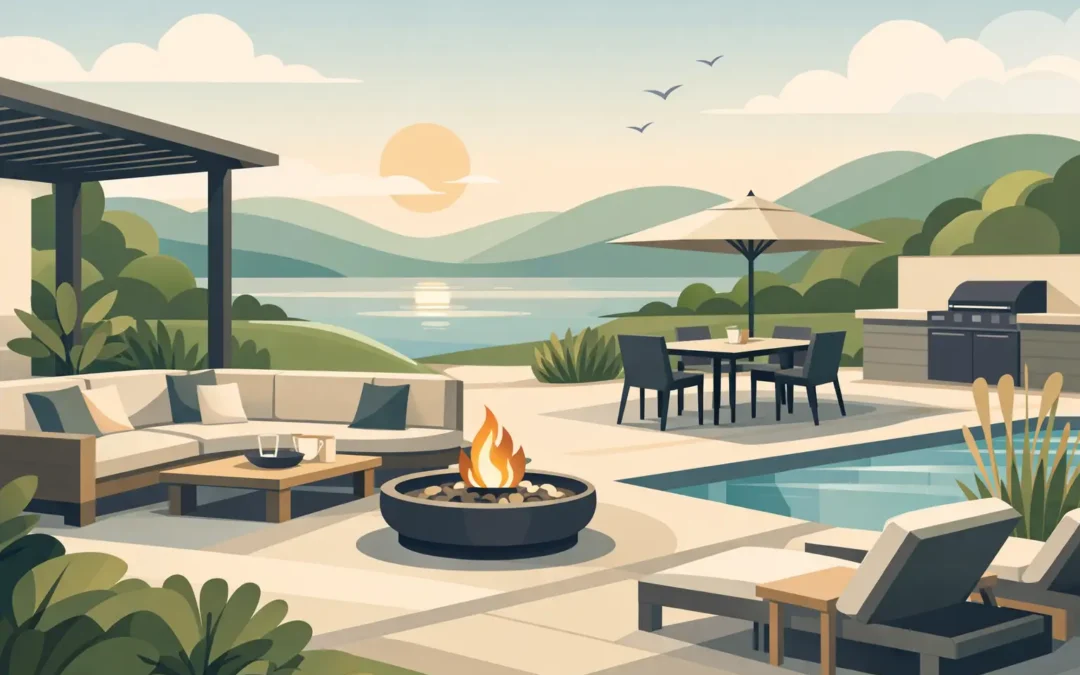
The biggest shift in outdoor design is simple. People want more from the space. A patio is no longer just a place for a table and a barbecue. It is often expected to handle dining, lounging, cooking, storage, shade, lighting, and at times a pool or hot tub connection.
That change has pushed design toward fully planned layouts instead of piecemeal additions. When a project is approached as one connected build, the finished space tends to work better. Traffic flow improves, grade changes are addressed properly, and details like drainage, retaining walls, gas lines, lighting runs, and material transitions are handled before they become expensive fixes.
This is especially true on larger properties and cottage-country sites, where elevation, shoreline conditions, access, and seasonal use all affect the right design direction. A trend may look good online, but the site always gets the final say.
Outdoor kitchens are becoming more realistic
Outdoor kitchens remain one of the most requested features, but the trend has matured. Homeowners are moving away from oversized setups packed with features they rarely use. In their place are practical cooking and serving zones built around real habits.
A good outdoor kitchen usually starts with a grill, durable counter space, and enough room to prep and serve comfortably. Refrigeration, storage, sinks, and pizza ovens can make sense, but only when they match the way the household entertains. If the space is used mainly for weekend family dinners, a streamlined layout often delivers better value than a full chef-style installation.
Material choice matters here. Freeze-thaw cycles in Ontario are hard on exterior finishes, especially around appliances, countertops, and masonry details. Trend-driven selections that look sharp at handover can become maintenance problems if they are not suited to the climate. That is one reason experienced design/build planning matters. A kitchen has to do more than photograph well.
Shade structures are now part of the plan, not an afterthought
One of the clearest outdoor living design trends is the rise of permanent shade. Pergolas, cabanas, covered patios, and pavilions are no longer optional extras for many projects. They are central to how the space is used.
This shift makes sense. A well-built shade structure extends the hours a yard can be enjoyed, protects finishes and furniture, and gives the project a stronger sense of purpose. It can also tie together multiple features such as an outdoor kitchen, lounge area, pool deck, or change room.
The right approach depends on the property. An open pergola can work well where filtered light is the goal. A solid roof structure may be the better investment where weather protection and privacy matter more. On some projects, adding motorized screens, heaters, or integrated lighting makes the structure useful well beyond peak summer.
The trade-off is budget and construction scope. Once a project includes roofing, electrical, footings, and finished architectural details, it moves into a more substantial build. That can be the right call, but it should be planned properly rather than added halfway through.
Low-maintenance materials are winning for a reason
Homeowners are more selective now about what they are willing to maintain. That has pushed demand toward durable pavers, composite decking, quality stonework, aluminum features, and planting plans that do not require constant upkeep.
This does not mean every project is becoming minimalist or stripped down. It means materials are being chosen with a longer view. If a surface stains easily, shifts, cracks, fades, or needs regular sealing to stay presentable, it is under more scrutiny than it used to be.
Interlock and stone remain strong choices because they handle heavy use well and suit a wide range of project styles, from contemporary backyards to more traditional landscapes. Composite decking continues to appeal where homeowners want the look of a finished entertaining area without the recurring work of staining and board replacement.
Still, low maintenance does not mean no maintenance. Even the best materials need proper base preparation, drainage, and installation. A premium product installed poorly will not outperform a mid-range product built correctly.
Lighting is being designed as a system
Outdoor lighting has moved well beyond a few fixtures near the back door. More projects now treat lighting as part of the overall design, with a mix of safety, function, and atmosphere built into the layout.
Step lights, path lights, accent lighting on stonework, subtle garden illumination, and task lighting around kitchens or seating zones all serve different purposes. When planned together, they make the yard more usable and more finished without feeling overlit.
The most effective lighting plans are restrained. Too many fixtures can flatten the space and create glare. Too few leave key areas unusable. Good design comes from understanding how the property will be used at night and which architectural or landscape elements deserve emphasis.
Pools are being integrated into full outdoor environments
Pool projects are no longer treated as stand-alone installations in the strongest designs. They are being integrated with patios, retaining walls, privacy features, outdoor kitchens, cabanas, and planting so the entire yard reads as one environment.
That shift is important because pools affect almost everything around them. Deck material temperature, drainage, fencing requirements, equipment placement, access routes, and how people move between the house and the water all need to be resolved early.
A clean, modern pool may still be the visual anchor, but it works best when the surrounding space is equally considered. On tighter suburban lots, that can mean keeping lines simple and avoiding overcrowding. On larger rural properties, there may be room for stronger zoning between active and quiet areas.
Privacy and shelter are becoming design priorities
As neighbourhood lots become more exposed, privacy is taking a larger role in backyard planning. This trend shows up through strategic fencing, retaining walls, planting, screen panels, and cabana placement.
The best privacy solutions do not make the yard feel boxed in. They define edges, block awkward sightlines, and create comfort where it matters most, such as around a lounge area, hot tub, or pool. In some cases, a modest structural element solves the issue better than heavy planting that will need years to fill in.
Wind protection is also part of this conversation, especially on open properties and waterfront sites. A space that looks attractive but cannot be used comfortably on a breezy day is not a complete design.
Smart layouts matter more than trendy features
One of the less visible but more important outdoor living design trends is better space planning. Homeowners are becoming more aware that successful projects are built on layout, grading, and construction logic, not just feature selection.
A yard can have a premium kitchen, a pool, beautiful stonework, and custom lighting, but still feel awkward if seating is cramped, circulation is poor, or drainage was treated as a secondary issue. On the other hand, a simpler project with fewer features can outperform a larger one if the layout is right.
That is where a full-scope contractor has an advantage. When one team can manage landscape design, hardscaping, structures, pools, and related construction, there is more control over how each piece fits together. For clients in York Region, the GTA, and cottage-country areas, that can reduce coordination issues and help larger projects move with fewer surprises.
What will hold up best over time
Trends come and go, but a few ideas are proving they have staying power. Flexible entertaining areas, integrated shade, durable materials, thoughtful lighting, and complete project planning are not short-term fads. They solve real problems and improve how a property functions.
The details will vary from one site to another. A family with young kids may prioritize open lawn, pool safety, and storage. Empty nesters may want a quieter space built around dining and low maintenance. A commercial property may need visual impact with tougher wear performance. The right design always depends on the property, the budget, and how the space will actually be used.
If you are planning an upgrade, the best starting point is not chasing every new idea. It is getting clear on what you want the space to do, what level of upkeep you are comfortable with, and which features deserve to be built properly the first time. That is usually where good outdoor spaces stop feeling trendy and start feeling right.