
A sinking driveway usually does not start with the stone you can see. It starts underneath it.
That is why interlocking services are not just about choosing a paver colour and laying a pattern. For homeowners and property managers, the real value is in the base preparation, grading, edge restraint, drainage planning, and installation standards that determine whether the surface still looks right a few winters from now. If you are investing in a new driveway, patio, pool surround, or front entrance, those details matter more than most people think.
What interlocking services actually include
At a basic level, interlocking services cover the design and installation of paver surfaces for driveways, walkways, patios, entrances, steps, and other hardscape features. In practice, the job is broader than that. A proper installation often includes excavation, base construction, compaction, grading, drainage correction, border work, cuts around curves or structures, and final joint stabilization.
On many properties, interlocking ties into other trades as well. A patio may need to connect cleanly to a deck, pool coping, retaining wall, cabana pad, or outdoor kitchen. A front entrance may involve steps, armour stone, garden walls, lighting, or porch reconstruction. That is where an experienced design/build contractor brings real value. The paving surface is only one part of the finished result.
Why the base matters more than the paver
Homeowners often spend a lot of time comparing product styles, and that makes sense. The surface is what you see every day. But if the base is underbuilt, even a premium stone can shift, settle, or hold water.
A proper interlock base is designed to support load and control movement through freeze-thaw cycles. In Ontario, that matters. Soil conditions, drainage patterns, and winter weather can punish poorly built hardscapes. A driveway has different structural needs than a backyard patio, and a pool surround has its own demands for drainage, slip resistance, and clean detailing.
This is also where cheap quotes can become expensive later. If excavation depth is reduced, sub-base material is light, compaction is rushed, or edge restraints are handled poorly, the finished surface may look fine at first and fail early. Good interlocking work is built from the ground up.
Interlocking services for driveways, patios, and walkways
The best design depends on how the space will be used.
Driveways
Interlocking driveways need to handle weight, regular traffic, snow clearing, and runoff. They should also frame the home properly. A wide suburban frontage may suit a clean, structured layout with contrasting borders, while a smaller property may benefit from a pattern that makes the area feel broader and more finished.
For driveways, durability comes first. The pattern, base thickness, and edge support all need to match the load. This is not an area to treat like a decorative patio.
Patios and backyard living spaces
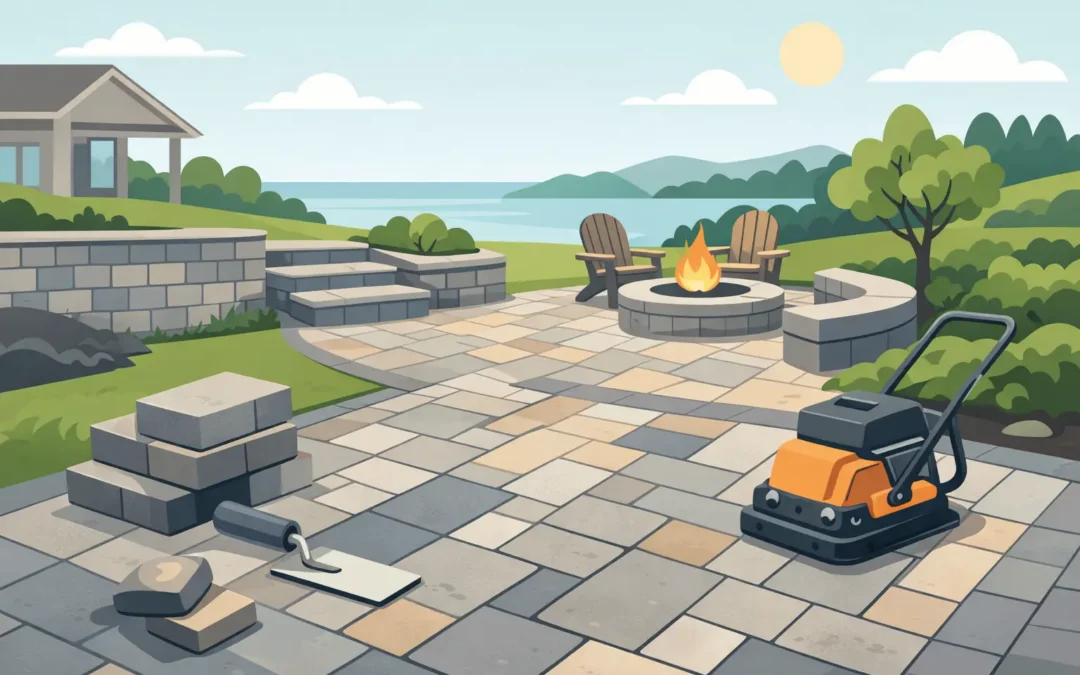
Patios have more flexibility in layout and material selection. This is where interlock can define seating areas, dining zones, poolside access, fire features, and transitions between the house and yard. The right design should feel integrated with the rest of the property rather than dropped into place as a separate surface.
Drainage is still critical. Water should move away from the home, not collect against the foundation or run into a pool area. A well-built patio should feel level underfoot without being flat in a way that traps water.
Walkways and entrances
Walkways do more than connect points on a property. They shape first impressions, improve safety, and make entrances easier to use in all seasons. Narrow or poorly graded walkways can become awkward quickly, especially around steps, side yards, and sloped lots.
The right width, border treatment, and elevation changes make a big difference. On many homes, front walkways work best when they are designed with the driveway and entrance steps as one coordinated project.
Design choices that affect both looks and performance
Good interlock design is not only about style. It has to suit the architecture of the property, the scale of the lot, and the way the space is used.
Colour matters, but restraint usually ages better than chasing a trend. A paver that looks dramatic in a sample yard may feel too busy across a full driveway. Mixed tones often wear better visually than very light stones, especially in areas with road dust, tire marks, and heavy use.
Pattern selection also matters. Some laying patterns offer better interlock and load distribution than others. Borders can sharpen the design, but they need to be installed cleanly and tied into the layout properly. Curves, inlays, and banding can elevate a project, but only if they suit the property. Extra detail for its own sake rarely improves the result.
Drainage and grading are not optional
A lot of hardscape problems are really water problems.
If water sits on the surface, runs toward the house, or washes out surrounding soil, the issue is not cosmetic. Over time, poor drainage can affect the interlock itself, nearby planting beds, steps, retaining walls, and even foundations. This is one reason interlocking services should be approached as part of the whole site, not as an isolated surface treatment.
Some properties need only straightforward grading correction. Others may require swales, catch basins, channel drains, retaining structures, or a more comprehensive redesign of elevations. It depends on the lot, the surrounding structures, and what is already happening with water during heavy rain or spring thaw.
On older properties, especially where several upgrades have been added over the years, drainage can be one of the most overlooked issues. Fixing it during an interlock project is usually far more practical than trying to correct it after the surface is complete.
What affects the cost of interlocking services
There is no reliable flat rate that applies to every project, because the visible square footage is only part of the job.
Excavation depth, access to the backyard, site grading, demolition of existing surfaces, drainage work, steps, wall integration, border complexity, stone selection, and finish details all affect pricing. A simple rectangular patio with open access is very different from a front entrance rebuild with tight cuts, elevation changes, and structural steps.
This is why comparing quotes line by line matters. One contractor may price a surface replacement. Another may be including proper excavation, base rebuild, drainage correction, and coordinated work with surrounding features. Those are not the same scope, even if the final square footage is similar.
The best quote is not the lowest number. It is the one that clearly reflects what the project actually needs.
Why full-scope project delivery makes a difference
Interlock work often touches more than one part of the property. A driveway can lead into front steps and retaining walls. A backyard patio may need to connect with fencing, decks, pool areas, cabanas, or landscape construction. When several contractors handle different sections, small coordination problems can turn into visible finish issues.
That is why many clients prefer one contractor who can manage design, hardscaping, construction, and related site work under the same scope. It reduces handoff problems and gives the project a clearer standard from start to finish.
For larger properties across York Region, the GTA, and Ontario cottage areas, this matters even more. Access, site logistics, grading, and sequencing can become complicated quickly when multiple outdoor features are being built at once.
Green Machine Inc. has been delivering this kind of full-scope landscape and construction work since 1999, which is often the difference between a surface that simply looks new and a property improvement that feels properly built.
How to tell if an interlocking contractor is the right fit
Experience matters, but so does relevance. You want a contractor who understands not just pavers, but drainage, grading, structural transitions, and how the interlock will connect to the rest of the property.
Ask practical questions. What depth of excavation is planned? What base materials are being used? How is compaction handled? What is the approach to edge restraint and water management? If steps, walls, or adjacent structures are involved, who is responsible for those details?
A strong contractor should be able to explain the work plainly. Not with sales language, but with a clear process and realistic expectations. Some projects are straightforward. Others need problem-solving before the first stone goes down. A dependable installer will tell you the difference.
If you are planning interlocking services, think beyond the pattern and product sample. The right project starts with a sound base, proper grading, and a layout that suits the property. When those fundamentals are handled properly, the finish has a much better chance of looking right for years, not just for the first season.