A hardscape project can look perfect on paper and still fail after two Ontario winters. That usually comes down to the parts homeowners do not see in the finished photo – base prep, drainage, grading, material choice, and how the layout fits the way the property is actually used. This hardscape design guide Ontario property owners can rely on is built around those practical decisions, because a good patio, driveway, wall, or outdoor living area needs to perform as well as it looks.
What hardscape design means in Ontario
Hardscape is the permanent built portion of your landscape. It includes patios, walkways, steps, driveways, retaining walls, stone landings, pool surrounds, fire features, outdoor kitchens, and other constructed surfaces. In Ontario, hardscape design is not just about appearance. It also has to account for freeze-thaw cycles, spring runoff, changing grades, snow clearing, salt exposure, and the way your family or customers move through the space.
That is why a design that works in a warmer climate may not hold up here. Wide open joints, poor edge restraint, weak base construction, and badly planned drainage tend to show problems fast. Shifting pavers, pooling water, heaving steps, and cracking can all start with decisions made before any stone is installed.
Start with function before materials
The most common design mistake is choosing the surface first and asking practical questions later. A better approach is to define how each area will be used. A front walkway has different demands than a backyard patio. A cottage-country fire pit area needs a different layout than a compact urban yard in York Region. A driveway carrying multiple vehicles needs a different base and material strategy than a garden path.
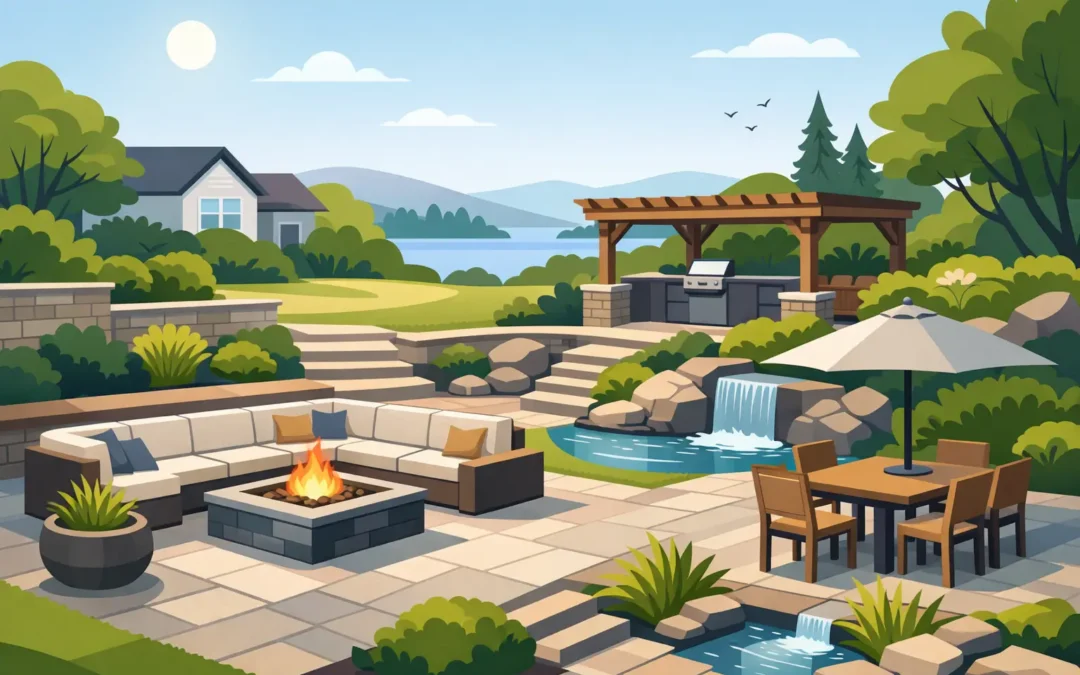
Think about traffic, furniture, storage, drainage routes, privacy, maintenance, and access to the house or garage. If the project includes a pool, cabana, deck, or outdoor kitchen, the hardscape should tie those elements together instead of feeling like separate add-ons. The best layouts create clear movement between zones and make the property easier to use every day.
This is also where budget control starts. If the footprint is too large or the layout is overbuilt for the way you live, the project cost climbs quickly. If it is undersized, you may end up redoing it sooner than expected. Good design finds the middle ground.
Site conditions will decide more than style
Any serious hardscape design guide for Ontario needs to start with the site itself. Slope, soil, water movement, exposure, and access all affect the final plan. A flat lot may seem simpler, but it can still have drainage issues if water has nowhere to go. A sloped lot can create strong design opportunities with terraces, walls, and steps, but those features need proper engineering and installation.
Clay-heavy soil, common in many parts of Southern Ontario, can hold water and contribute to movement. Areas near ravines, lakes, or seasonal high water may need a more careful drainage strategy. Cottage properties often bring extra challenges such as uneven terrain, tighter equipment access, and shoreline considerations.
Before finalizing any design, it makes sense to look at where water collects after rain, how snowmelt moves in spring, and whether nearby structures are already affected by poor grading. Hardscape should improve those conditions, not trap water against a foundation or send runoff where it creates a new problem.
The right material depends on the application
There is no single best hardscape material for every Ontario property. Interlocking concrete pavers are a strong choice for patios, walkways, and many driveways because they offer flexibility, a wide range of finishes, and easier repair if individual units need replacement. Natural stone brings a premium look and can work exceptionally well in patios, steps, and pool areas, but the type of stone matters. Some products handle our climate better than others.
Poured concrete can suit modern designs and large surfaces, though cracking risk and finish quality need to be considered carefully. Armour stone and segmental wall systems are both common for retaining walls, but the right choice depends on height, load, drainage, and overall design intent.
For poolscapes and outdoor living spaces, texture matters as much as appearance. A surface that looks sharp in a showroom may be too slippery, too hot, or too rough underfoot once installed. Driveways need special attention as well. Material thickness, base depth, and edge support all become more important when vehicles are involved.
Drainage is part of the design, not a separate fix
Water management is one of the main reasons some hardscapes last and others do not. That includes surface slope, base construction, swales, catch basins, and where runoff is directed once it leaves the paved area. If your patio drains toward the house or your driveway sheds water onto a walkway that freezes in winter, the design has missed a basic requirement.
A solid plan usually slopes surfaces away from structures while keeping them comfortable to walk on and easy to furnish. In some cases, permeable systems can help manage water, but they are not right for every property. They depend on soil conditions, maintenance, and the larger drainage plan.
This is one area where homeowners sometimes underestimate the value of an experienced design/build contractor. Drainage often crosses scopes. It can affect landscaping, steps, retaining walls, pool decking, driveways, and even interior moisture issues if runoff is not controlled properly.
A practical hardscape design guide Ontario clients can use for budgeting
Budgeting a hardscape job properly means looking past the surface material. Homeowners often compare projects based on the visible finish, but much of the value sits underneath. Excavation, disposal, granular base, compaction, drainage work, cutting, edge restraint, steps, wall reinforcement, and site access all affect cost.
Simple square layouts are usually more efficient than curved or heavily segmented designs. Tight backyards with limited equipment access often cost more to build than open lots. Integrating lighting, gas lines, electrical rough-ins, or outdoor kitchen services during the main build is usually smarter than retrofitting later.
There is also a trade-off between short-term savings and long-term performance. A lower quote may reflect thinner base preparation, weaker drainage planning, or less experienced installation. That can be expensive if the surface settles or shifts after a few seasons. In hardscape, rework tends to cost more than building it right the first time.
Permits, codes, and project coordination
Not every hardscape project needs a permit, but some absolutely do. Retaining walls, grading changes, structures, pool surrounds, drainage work, and projects close to property lines can raise permit or bylaw issues. Commercial sites may bring additional accessibility, safety, or site-plan requirements.
This is another reason full-scope planning matters. If the hardscape is tied to a larger project such as a pool installation, garage addition, cabana, fence line change, or major renovation, all trades should be working from one coordinated plan. Otherwise, you get conflicts in elevations, utility routing, access, and sequencing.
For many property owners, the real value is not just the finished patio or driveway. It is having one team manage the design, excavation, construction, and finishing details in the right order. That reduces delays, finger-pointing, and costly revisions.
Design choices that age well
Trends come and go faster than stonework should. A hardscape usually lasts long enough that it should be designed around the architecture of the home and the long-term use of the property, not just whatever detail is currently popular online.
Neutral stone tones, clean borders, balanced scale, and practical transitions tend to hold up well. That does not mean the design needs to be plain. It means the layout should have purpose. A feature wall, generous front entry, integrated lighting, or a well-built outdoor kitchen can add impact without making the space feel dated in five years.
It also helps to think seasonally. Ontario properties are used differently in May than they are in November. Shade, drainage, snow storage, and maintenance access all affect whether a space remains comfortable and functional throughout the year.
Choosing the right contractor for hardscape work
A good-looking portfolio matters, but it is not enough on its own. Ask how the contractor handles excavation depth, base preparation, drainage, edge restraint, compaction, and winter performance. Ask who is actually doing the work and whether the company manages related trades if the project includes pools, structures, fencing, electrical, or concrete.
For larger properties and multi-part projects, experience with complete design/build delivery can make a significant difference. Green Machine Inc. has built its reputation on managing that kind of scope since 1999, which is often what homeowners need when a patio, driveway, retaining wall, pool area, and structural improvements all need to work together.
The strongest hardscape projects in Ontario are not the ones with the most expensive stone. They are the ones planned honestly, built properly, and matched to the property. If you start with how the site works, how the space will be used, and how the build will hold up through real Ontario seasons, the finished result usually makes sense for years instead of just the first summer.