
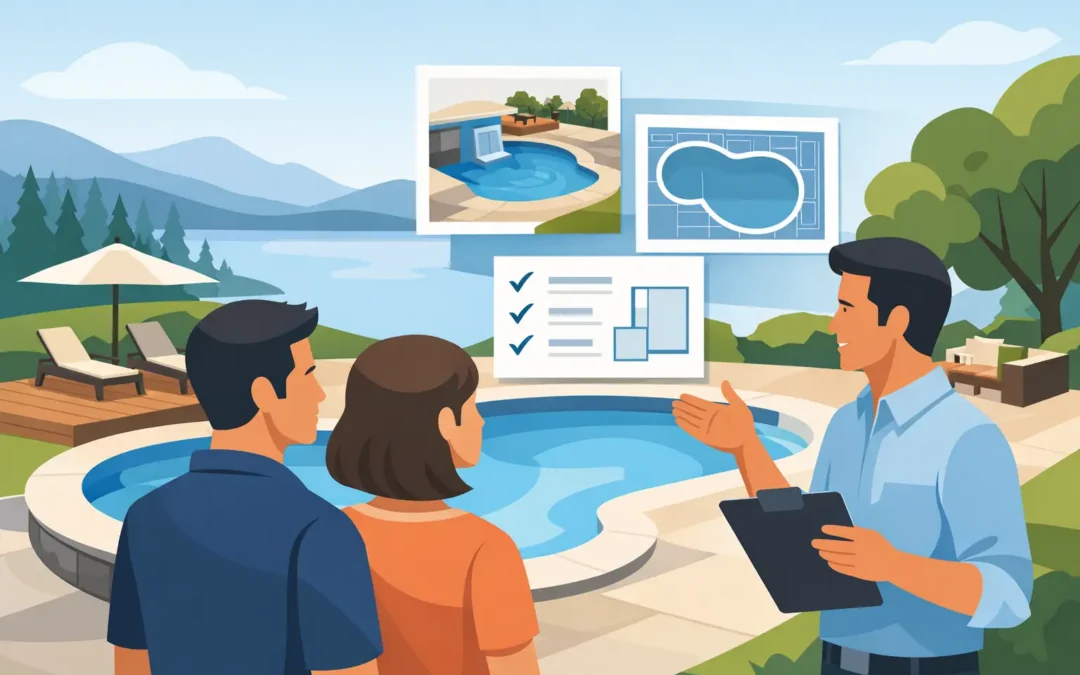
A pool project can look simple on paper. Excavate, install, finish the surround, and fill it up. In practice, it is one of the more coordination-heavy upgrades you can make to a property in Ontario.
That is why choosing the right custom pool builder Ontario homeowners can rely on matters as much as the pool design itself. The builder is not just installing a feature. They are managing excavation, grading, drainage, access, hardscaping, permits, inspections, utility awareness, and the final fit with the rest of your property.
If you are planning a pool in York Region, the GTA, East Gwillimbury, or cottage country, the right decision usually comes down to one thing – can the contractor handle the whole scope properly, not just the shell.
What a custom pool builder in Ontario should actually handle
A true custom pool project is rarely limited to the pool basin. Most homeowners are also thinking about patio space, retaining walls, fencing, lighting, drainage correction, planting, outdoor kitchens, cabanas, or deck integration. On some properties, there are elevation changes, narrow access points, or existing structures that affect how the pool can be built.
That is where experience in full-scope design/build work becomes a real advantage. A builder who understands both pool construction and surrounding landscape construction can plan the project as one system. That reduces the usual problems that show up when multiple contractors are working in sequence, each focused on their own piece.
For example, the pool placement affects grading. Grading affects drainage. Drainage affects the patio base, retaining walls, and how water moves away from the house. If these details are treated separately, the project can look good at handover and still create long-term issues.
A capable Ontario pool builder should be comfortable discussing site conditions, finish materials, access logistics, permits, and how the pool area will connect to the rest of the property. If the conversation stays too narrow, that is worth noticing.
Ontario conditions change the job
Pool construction in Ontario is not the same as building in a warmer climate with predictable soil and longer construction seasons. Frost, freeze-thaw cycles, drainage pressure, spring moisture, and varying municipal requirements all affect planning.
Some properties in the GTA and York Region have tighter lot lines and more permit considerations. Rural and cottage-country sites can bring slope challenges, rock, septic placement, shoreline concerns, or limited equipment access. Even two homes on the same street may have different soil and drainage conditions.
This is one reason custom work matters. A builder should not be forcing every property into the same layout or construction sequence. The best result usually comes from adapting the design to the site instead of trying to make the site fit a standard package.
What to look for before you request a quote
A quote is useful, but it should not be your first filter. Before pricing, look at whether the contractor has the depth to manage a project of this size.
Start with operating history. A company that has been working in design/build construction for years has usually dealt with the kinds of complications that can stall a project. That does not guarantee perfection, but it does tell you they are not learning on your property.
Next, look at service breadth. This matters more than many homeowners expect. If your pool project also needs interlock, stonework, fencing, retaining walls, lighting, a cabana, or drainage improvements, one contractor handling the full scope can simplify timelines and accountability.
Memberships and registrations also help. They are not a substitute for workmanship, but they do show that a company takes its business seriously. If a contractor is established, clearly branded, and visible in the regions they serve, that is often a better sign than flashy sales language.
Questions worth asking a custom pool builder Ontario homeowners often miss
The best questions are practical. Ask who handles design, excavation coordination, hardscape work, and final site finishing. Ask what parts are self-performed and what parts are subcontracted. Every contractor uses trade partners at times, but you want to know who is actually managing the day-to-day execution.
Ask how the builder approaches drainage around the pool and patio. Ask how they plan for setbacks, access limitations, and existing grade conditions. Ask what typically delays a project and how those delays are communicated.
You should also ask what happens outside the pool footprint. Many disappointing pool projects happen because the budget focused on the water feature and left the rest of the yard unresolved. A pool installed into an unfinished or poorly integrated backyard often ends up creating a second renovation phase that could have been planned properly from the start.
A strong contractor will be able to walk you through the entire property impact, not just the attractive parts.
Custom does not always mean bigger
Some homeowners hear “custom” and assume it means large, expensive, or highly elaborate. In practice, custom simply means the project is designed around your property, your use, and your priorities.
For one family, that may mean a clean rectangular pool with a practical patio and fence layout that is easy to maintain. For another, it may include multiple entertaining zones, a cabana, built-in cooking space, landscape lighting, and upgraded stonework. Neither approach is better by default. The right scope depends on how you live and how long you plan to stay in the home.
This is also where budget discipline matters. A good builder should help you separate must-haves from nice-to-haves. It is usually smarter to build a well-planned pool area with durable finishes than to overextend on features that add cost without improving how the space works.
Why integrated project delivery matters
Many pool problems are not really pool problems. They are coordination problems.
When one company handles the pool, another does the interlock, another builds the fence, and another addresses grading, there is often overlap, delay, or finger-pointing. If something does not line up, each trade may say it falls under someone else’s scope.
That is why many property owners prefer one experienced contractor to manage the project from design through construction. It creates a clearer chain of responsibility and a more practical schedule. It also helps with design consistency. The pool, patio, walls, steps, lighting, and structures should feel like one project, not a collection of separate jobs completed over time.
For homeowners who are already upgrading the full property, or for commercial clients managing exterior improvements alongside structural work, this matters even more. A contractor with broad construction capability can often coordinate surrounding improvements far more efficiently than a pool-only installer.
The value of local and regional experience
Ontario is a large market, but local knowledge still matters. Builders working regularly in East Gwillimbury, York Region, the GTA, and cottage areas tend to understand the practical differences from one type of site to another.
That affects everything from access planning to excavation timing to the way a finished outdoor space should hold up over time. It also affects expectations. A contractor familiar with the region is more likely to give realistic guidance on schedules, permits, and construction sequencing.
That practical experience is part of what homeowners are paying for. Not just labour, but judgement.
For clients looking for a contractor that can manage pools as part of a larger property improvement plan, Green Machine Inc. is built around that full-scope model, with landscape, construction, and renovation capabilities under one brand. You can see that approach at https://Www.Greenmachinedesignbuild.Ca.
How to tell if the fit is right
The right builder usually sounds clear, not theatrical. They should be direct about process, realistic about variables, and willing to discuss the property as a whole. If they avoid specifics or rush straight to pricing without understanding access, grade, drainage, or surrounding scope, that is a concern.
You are not just hiring someone to install a pool. You are hiring a company to alter how your property functions and how it looks for years. The right fit is a contractor that treats the project with that level of seriousness.
A well-built pool should feel like it belongs on the property, works with the landscape, and adds value beyond summer use. That only happens when the planning and construction are handled properly from the start.
If you are comparing options, look past the rendering and ask who can actually deliver the finished environment. That is usually where the best decision becomes clear.