A backyard that looks clean in April but turns patchy by August is a familiar problem in Ontario. Between spring runoff, summer heat, heavy foot traffic, pets, shade, and the usual wear from family use, natural grass does not always hold up the way homeowners expect. That is why artificial turf for backyard projects keeps coming up in renovation plans, especially when the goal is a low-maintenance yard that stays usable through the season.
Artificial turf is not the right answer for every property. But in the right setting, it can solve a lot of practical issues at once. It reduces mowing, cuts down on mud, creates a cleaner surface around patios and pools, and gives homeowners a more predictable finish than trying to nurse along difficult lawn areas year after year.
When artificial turf for backyard use makes sense
The strongest case for turf is usually not appearance alone. It is performance. If a backyard has poor drainage, dense shade, sloped sections, dog runs, or high-traffic zones where grass never fully recovers, turf can be a better long-term surface than natural lawn.
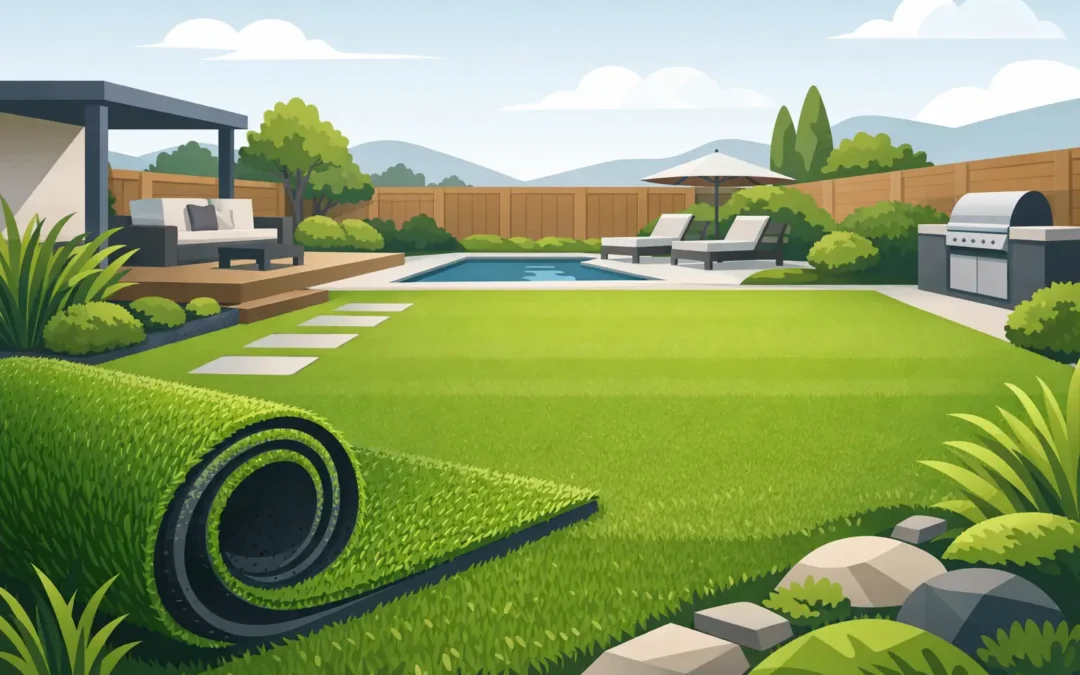
This is especially true in spaces built for living, not just looking at. If you have a pool, outdoor kitchen, fire feature, putting green, cabana, or large patio, the lawn areas around those features often become transition zones. People walk across them constantly. Furniture gets moved. Kids and pets wear paths into them. In those cases, real grass often becomes the highest-maintenance part of the whole yard.
Turf also makes sense where homeowners want a sharper finish with less seasonal work. You are not reseeding bare spots, dragging hoses around, or trying to figure out why one section stays soggy while another burns out. The surface stays consistent, which matters if you want the backyard to feel finished from edge to edge.
The benefits homeowners usually care about most
The first benefit is low maintenance, but that does not mean no maintenance. Turf removes mowing, edging, fertilizing, and most watering. That saves time and cuts ongoing yard work. For many homeowners, that is the main selling point.
The second benefit is drainage and cleanliness, if the system is built properly. A professionally installed turf base can move water efficiently, which helps reduce muddy areas and standing water. Around pools and hardscaped spaces, that can make the backyard easier to use after rain and easier to keep clean.
The third is durability. Good-quality turf can handle consistent use better than many natural lawns, particularly in compact urban yards or cottage properties where portions of the landscape take a beating. It also helps create cleaner access routes between decks, patios, sheds, and side yards.
There is also a design advantage. Turf can be integrated with interlock, armour stone, retaining walls, pool coping, gardens, and outdoor structures in a way that looks controlled and intentional. For design/build projects, that matters. A backyard should work as a complete space, not a collection of separate elements.
Where the trade-offs start
Artificial turf is a premium surface, not a shortcut. The biggest drawback is the upfront cost. A properly installed system involves excavation, grading, compacted base preparation, edging, joining, infill, and finishing. If the existing yard has drainage issues or poor access, the cost can increase further.
Heat is another factor. Turf can get hotter than natural grass in direct sun, especially in peak summer conditions. That does not mean it cannot be used in sunny backyards, but it does mean material choice, yard layout, and intended use all matter. If kids will be barefoot on it all day or if the area gets full afternoon sun, that should be part of the conversation before installation.
It is also not maintenance-free. Leaves, dust, and organic debris still need to be removed. Pet areas need regular cleaning. Infill may need topping up over time. A neglected turf surface can flatten, trap debris, or develop odour issues if it is not cared for.
Then there is the simple issue of preference. Some homeowners want real grass because they like the feel, smell, and natural variation. That is a fair point. Turf is practical, but it does not replace every quality of a living lawn.
Base prep matters more than the turf itself
A lot of turf problems are not really turf problems. They are installation problems.
If the base is not excavated correctly, compacted properly, and graded to manage water, you can end up with rippling, pooling, shifting seams, or uneven spots underfoot. This is where experience matters. Backyard surfaces do not perform well just because the top layer looks good on install day.
A proper installation starts with understanding the whole yard. Water movement, surrounding hardscape elevations, retaining conditions, and adjacent structures all affect how the turf area should be built. On a simple square section, that may be straightforward. On a backyard tied into patios, pool decks, drainage swales, and garden beds, it is more technical.
This is one reason homeowners often prefer working with a contractor who understands the full landscape and construction scope. Turf should not be treated as an isolated product if it is part of a larger outdoor renovation.
Choosing the right type of turf
Not all artificial grass products are built for the same use. A decorative turf product for a front feature area is different from a backyard surface built for pets, play, or entertaining.
Pile height, blade shape, face weight, backing quality, and infill choice all affect how the finished lawn looks and performs. Shorter, denser products can feel neater and may suit contemporary landscapes. Taller products can look lush but may show wear differently in high-traffic areas. Pet-friendly systems need good drainage and cleaning performance. Areas around pools benefit from surfaces that dry well and stay stable under use.
Colour also matters more than many people think. Overly bright green turf can look artificial immediately. Better products usually blend multiple tones and thatch layers to create a more natural appearance. In a well-designed backyard, the best turf is often the product you notice the least.
Artificial turf for backyard projects with pets and kids
For family yards, turf can be a practical upgrade. It reduces mud tracked into the house, creates a more consistent play surface, and stands up well in areas where children repeatedly wear out natural grass. For dog owners, it can eliminate the familiar dead patches and muddy runs that develop near fences and doors.
That said, the details matter. Pet installations should include materials and drainage systems intended for pet use. If waste is not cleaned regularly, odours can build up. If the base does not drain properly, the problem gets worse. For kids, cushioning and surface temperature should be part of product selection, especially in open-sun exposure.
A good backyard is not just attractive. It has to work for the people using it every day.
Cost depends on more than square footage
Homeowners often ask for a cost per square foot, and that can be a useful starting point. But with turf, square footage alone does not tell the whole story.
Access to the backyard affects labour and equipment. Existing grading problems affect excavation and base work. Curves, tree rings, edging, steps, and adjoining hardscape all add complexity. Removal of old sod, repair of soft spots, and drainage upgrades can also change the price.
That is why turf is best priced as part of the actual site conditions, not as a generic allowance. A small backyard with tight access and drainage correction can cost more per square foot than a larger open area with clean access and straightforward prep.
Best used as part of a complete backyard plan
Some of the best turf results happen when it is used strategically, not wall-to-wall by default. A backyard may benefit from turf between hardscape zones, beside a pool, in a dog run, under a play area, or in places where grass continually fails. In other cases, a mix of turf, planting beds, interlock, and natural lawn creates a better overall result.
That comes down to design. The goal is not simply to replace grass. The goal is to build a backyard that performs well and suits how the property is used. For homeowners planning a larger renovation, working with an experienced contractor such as Green Machine can help tie turf into the rest of the project so drainage, grading, hardscape, and finish levels all work together.
If you are considering artificial turf, the right question is not whether it looks good on day one. It is whether it makes your backyard easier to use, easier to maintain, and better suited to the way you live on the property year after year.