
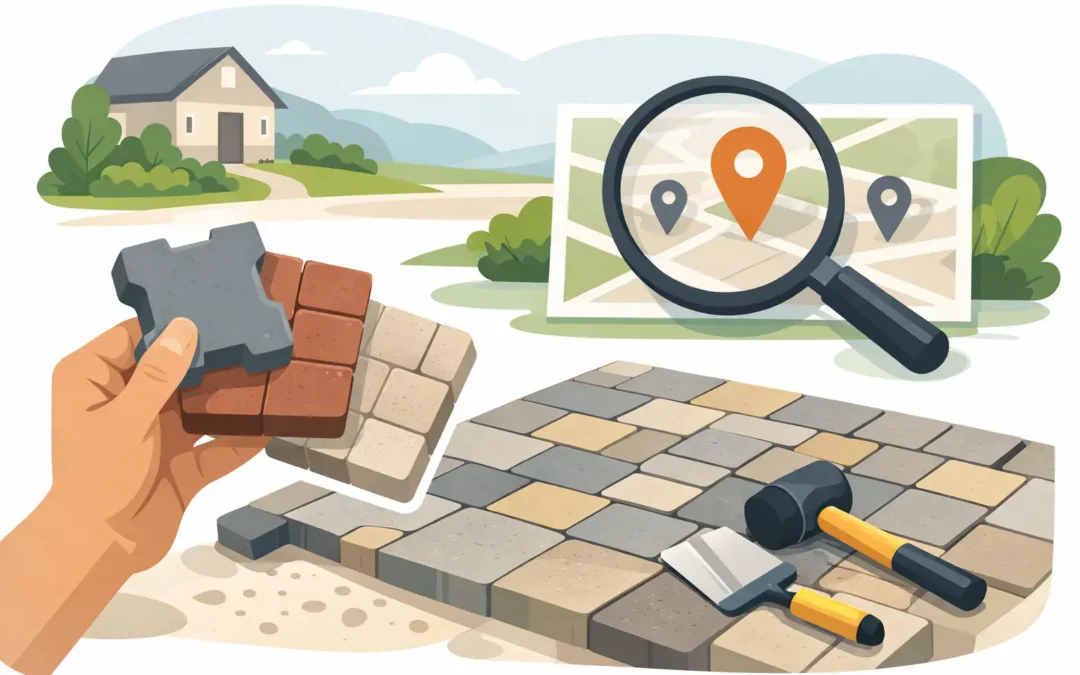
Type in interlocking pavers near me and you will get a long list of contractors, galleries, and ads that all seem to promise the same thing. The real difference is not who shows the nicest finished patio online. It is who can build a surface that stays level, drains properly, handles Ontario freeze-thaw cycles, and still looks right years from now.
If you are planning a driveway, patio, walkway, pool surround, or front entrance, interlock is one of the most practical upgrades you can make. It improves curb appeal, adds usable outdoor space, and gives you more design flexibility than poured concrete or basic asphalt. But the quality of the result depends heavily on design, base preparation, edge restraint, drainage, and installation experience.
What to look for when searching interlocking pavers near me
Most property owners start with style and colour. That makes sense, but it should not be the first filter. A good interlocking project starts below the surface.
The base matters more than the paver brand. If excavation is too shallow, if the wrong aggregate is used, or if the base is not compacted in proper lifts, the surface can shift, settle, or hold water. You may not notice the problem right away. Often, it shows up after one or two winters when low spots, heaving, or separated borders start to appear.
That is why contractor selection matters as much as material selection. When comparing companies, ask how they handle excavation depth, compaction, grading, and drainage. If the answers are vague, that is a warning sign. A reliable contractor should be able to explain the build process in plain terms and relate it to your specific property.
Not all interlocking installations are built the same
From the street, two driveways can look almost identical on day one. Six months later, one still looks sharp and the other starts to show movement. The difference usually comes down to workmanship and planning.
A proper installation has to account for load, water, and site conditions. A front walkway and a driveway do not need the same base construction. A pool deck has different slip, drainage, and comfort considerations than a backyard patio with a fire feature. Homes with slopes, clay-heavy soils, or poor drainage need a different approach than flat lots with ideal conditions.
This is where experience pays off. A contractor who handles full landscape and construction scopes can usually spot issues earlier, especially when interlock ties into retaining walls, steps, armour stone, pool coping, fencing, grading, or adjacent structures. That broader view helps avoid the common problem of building a nice-looking surface that does not work well with the rest of the property.
Choosing the right paver for your project
The best paver is not always the most expensive one. It is the one that suits the use of the space, the style of your home, and the maintenance level you are comfortable with.
For driveways, thickness and load rating matter. A paver that performs well on a patio may not be the right choice for vehicle traffic. For pool areas, texture and heat retention matter more. Some darker or denser surfaces can get hotter in direct sun, while smoother finishes may be less forgiving when wet.
Colour also deserves practical consideration. Lighter tones can help keep surfaces cooler and make small spaces feel larger. Darker tones often hide tire marks and certain stains better, but they can show salt residue or fading differently over time. Blended colours tend to age more naturally than very uniform shades.
Pattern matters too. Herringbone patterns are often preferred for driveways because they lock together well under traffic. Linear patterns can create a clean, modern look on patios and walkways, but they need to be installed carefully to maintain straight lines and consistent spacing.
Why drainage should never be an afterthought
A lot of interlock failures are really drainage failures. Water is what exposes weak prep work, poor grading, and rushed installation.
If water collects on the surface, you can end up with pooling, slippery areas, sand loss, and staining. If water gets under the system and has nowhere to go, freeze-thaw movement becomes more likely. If runoff is directed toward the house, garage, or foundation, the issue becomes larger than the patio or driveway itself.
A proper interlocking plan should consider slope, runoff direction, nearby downspouts, and surrounding grades. In some cases, additional drainage solutions make sense, such as channel drains, catch basins, or adjustments to neighbouring hardscape and softscape features. This is one reason integrated design/build work often produces stronger long-term results than treating interlock as a stand-alone surface.
Questions worth asking before you sign a quote
When homeowners compare quotes, the lowest number can look attractive. But if one proposal leaves out excavation depth, disposal, base material, edge restraint, polymeric sand, or drainage work, the prices are not really comparable.
Ask what is included and what is assumed. Ask whether removal and disposal of existing asphalt, concrete, sod, or old stone is part of the price. Ask how borders, steps, and transitions are handled. Ask who is responsible if hidden site conditions come up once excavation begins.
It is also worth asking whether the contractor manages related work in-house or coordinates it as part of the overall project. If your interlock is part of a larger backyard transformation, front entrance rebuild, or pool installation, coordination becomes a big part of the value. Working with one contractor across multiple scopes can reduce delays, finger-pointing, and design mismatches.
Interlocking pavers near me for driveways, patios, and pool areas
The right design depends on how the space will be used. A driveway has to perform first. It should handle traffic, direct water away properly, and frame the front of the home without looking overly busy. In many cases, a clean field paver with a defined border gives the best balance of function and curb appeal.
Patios have more flexibility. This is where homeowners can shape seating areas, dining zones, fire features, outdoor kitchens, or transitions to decks and lawns. Here, scale matters. A small paver can feel too busy in a large entertaining space, while oversized slabs can look out of place beside a traditional home. The layout should fit both the architecture and the way you plan to use the yard.
Pool surrounds need a little more thought. Comfort underfoot, drainage, slip resistance, and compatibility with coping and surrounding features all matter. It is not just about choosing a paver that looks upscale. It needs to work as part of a complete outdoor environment.
Local experience matters more than a polished gallery
Ontario weather is hard on exterior surfaces. Any contractor working with interlocking pavers in this region should understand frost depth, spring runoff, seasonal movement, and the realities of salt, snow removal, and heavy rain.
That local experience matters even more on properties with elevation changes, waterfront exposure, or mixed-scope renovations. Cottage-country work, suburban front entrances, and large custom backyards all come with different site demands. A contractor with broad construction knowledge is often better equipped to spot structural or grading issues before they affect the finished hardscape.
For property owners in York Region, the GTA, and surrounding communities, that usually means looking beyond simple installer listings and focusing on who has the depth to manage the full picture. A company like Green Machine Inc., with design/build experience across landscaping, pools, construction, and structural exterior work, can bring that broader project awareness to interlock installations where details matter.
The best result is usually the one planned as part of the whole property
Interlock works best when it is not treated like an isolated product. A driveway should connect visually to the front steps, garage, and planting beds. A backyard patio should work with grading, privacy features, lighting, and outdoor living elements. If you plan to add a cabana, retaining wall, fence, or pool later, those future phases should be considered before the first paver goes down.
That does not mean every project has to become a full property overhaul. It means the layout, elevation, and materials should leave room for the property to evolve without redoing finished work. Good planning saves money, prevents compromises, and usually leads to a cleaner final result.
When you search for interlocking pavers near me, try to look past the photo gallery and the sale price. Ask who is thinking about the base, the drainage, the long-term performance, and how the finished work fits the rest of your property. That is where the value is, and that is what you will still notice years after installation.