
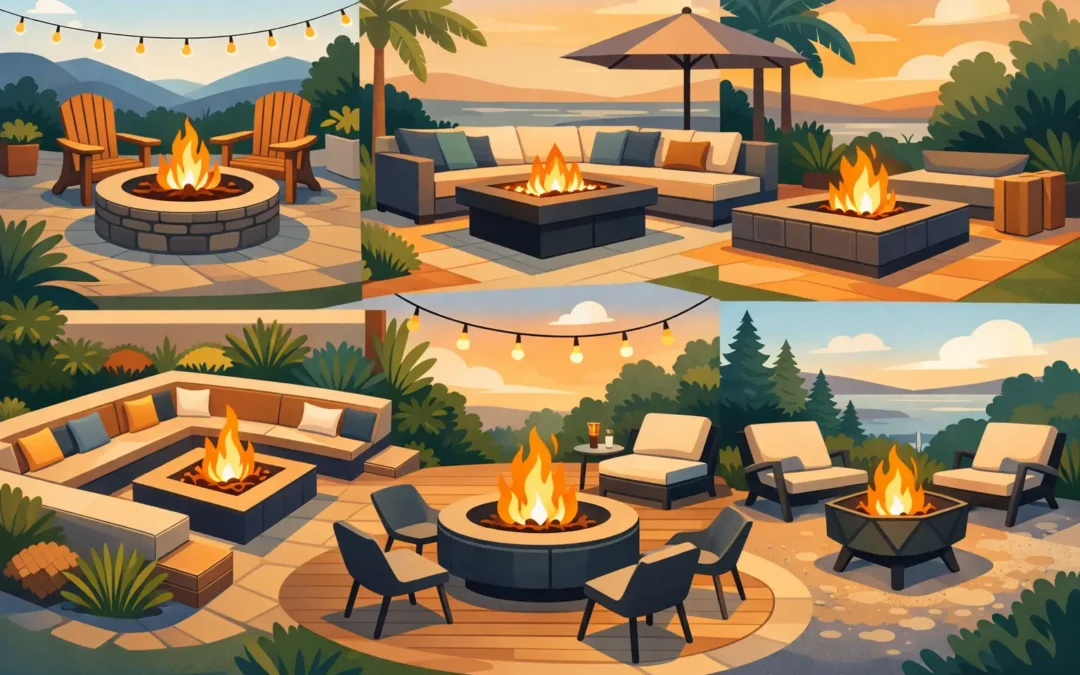
A fire feature changes how a backyard gets used. The right fire pit patio ideas do more than add warmth – they create a place people actually want to sit, stay, and use from spring through late fall. The challenge is getting the details right. Size, surface materials, seating layout, drainage, and wind exposure all matter just as much as the fire pit itself.
For Ontario properties, that planning matters even more. Freeze-thaw cycles, wet shoulder seasons, and real winter use can expose weak construction quickly. A good-looking patio is one thing. A fire pit area that still performs after several seasons is another.
Start with how you want the space to function
The best patios are built around use, not just appearance. Some homeowners want a casual zone for weeknight fires with a few Muskoka chairs. Others want a larger entertaining area tied into a pool, outdoor kitchen, or deck. Those two projects should not be designed the same way.
A small family-focused layout can work well with a simple gas or wood-burning fire pit and a compact circle or square of patio stone. If the goal is hosting, you need more room around the perimeter, clearer traffic flow, and a layout that does not force guests to cut through seating to move around. When the fire pit is part of a larger landscape plan, it should feel connected to the rest of the yard rather than dropped into empty space.
Fire pit patio ideas that suit different properties
1. The classic conversation circle
This is the most common setup for a reason. A circular patio with a centred fire pit creates balanced seating and keeps everyone facing the flame. It works especially well in open backyards where you want the fire feature to act as a destination.
The trade-off is space efficiency. Circles look clean, but they can leave awkward leftover areas if the surrounding landscape is very linear. On tighter suburban lots, a circle may need to be scaled carefully so it does not crowd fences, gardens, or other patio zones.
2. A square patio with built-in definition
Square and rectangular patios make sense when your home, pool, or property lines already follow strong straight edges. They are easier to integrate with walkways, steps, retaining walls, and dining areas. This style can also be more efficient to build and furnish.
If you want a more structured look, a square patio with a centred fire pit and low seat walls can feel finished without becoming overly formal. For many homes in the GTA and York Region, this approach fits the architecture better than a stand-alone round pad.
3. Sunken fire pit areas
A sunken space can make a fire pit feel more sheltered and intentional. It also creates a strong visual feature in larger backyards. When done properly, it can add privacy and wind protection while giving the yard more dimension.
This option does require more planning. Drainage is critical, especially in Ontario conditions. A sunken area that traps water will become a problem fast. It also needs safe, comfortable access with wide steps and proper lighting. Done well, it feels high-end. Done poorly, it feels inconvenient.
4. Fire pit patios connected to a pool or outdoor kitchen
If your backyard already includes major features, the fire pit should support them rather than compete with them. A fire lounge off the side of a pool patio gives the space a second function once swimming is over. Near an outdoor kitchen, it creates a natural place for guests to gather before and after meals.
The key here is separation. You want the fire feature close enough to feel connected, but not so close that smoke, heat, or crowding interfere with dining or pool circulation. This is where full design/build planning makes a difference, because the relationship between features matters as much as each feature on its own.
5. Cottage-style natural stone patios
For rural properties and cottage-country homes, a natural stone fire pit patio can suit the setting better than heavily uniform materials. Irregular stone, armour stone accents, and relaxed planting beds can make the space feel established and site-specific.
The trade-off is maintenance and installation complexity. Natural materials can require more careful base preparation and more skilled fitting than modular products. But if the property calls for a less manufactured appearance, this style often gives a stronger long-term result.
6. Modern minimalist fire pit zones
A clean-lined patio with large-format pavers, simple seating, and a linear or geometric fire feature works well on newer homes and contemporary renovations. This look depends on restraint. Too many finishes, textures, or feature walls can dilute the effect.
Minimalist design is less forgiving than it looks. Any inconsistency in grading, cuts, spacing, or finish quality stands out. If you want a modern result, workmanship has to be precise.
Choose the right fire pit first, not last
One of the most common mistakes is designing the patio and treating the fire feature as an add-on. That usually leads to awkward clearances, poor seating distances, or a pit that looks undersized for the finished space.
Wood-burning fire pits offer the traditional experience many homeowners want. They give off more natural heat and create that familiar campfire atmosphere. They also produce smoke, require storage for firewood, and may not suit every lot or neighbourhood.
Gas fire pits are cleaner and easier to use. They turn on quickly, require less maintenance, and fit well in formal entertaining spaces. They do, however, need proper gas line planning and can feel less rustic if that matters to you. The right choice depends on how often you will use it, how much maintenance you want, and what kind of experience you are after.
Materials matter more than most people think
Patio surfaces around a fire pit need to do three things well: handle heat, shed water, and stay stable over time. Interlock and concrete pavers are popular because they offer good durability, design flexibility, and repairability. If one section settles or gets damaged, it can often be corrected without replacing the entire patio.
Natural stone can be an excellent choice when the project calls for a more premium or organic look, but it needs to be selected carefully for climate performance. Some materials simply handle Canadian winters better than others. The same applies to coping, border stones, and seat wall caps near the fire area.
Base preparation is not the glamorous part of the job, but it determines whether the patio lasts. Proper excavation, compaction, and drainage are what separate a durable installation from one that starts moving after a couple of seasons.
Seating layout can make or break the space
A fire pit patio should feel comfortable without feeling crowded. If chairs are too close, the heat can be excessive. Too far, and the fire loses its purpose. Fixed seat walls can help define the patio and reduce furniture clutter, while movable chairs give more flexibility.
There is no single perfect layout. A family that wants to relax with kids and guests may benefit from a wider patio edge with flexible seating. A couple looking for a quiet retreat may prefer a tighter, more enclosed layout. It depends on how social or private the space is meant to be.
You also need to think about approach and circulation. People should be able to enter and exit the patio without stepping into the main seating zone. If the fire pit is part of a larger backyard renovation, walkways and transitions should feel natural from the house, deck, or pool.
Safety and bylaw considerations are part of the design
Good fire pit patio ideas always account for setbacks, surface materials, ventilation, and nearby structures. Trees, fences, deck edges, and roof overhangs all affect what is safe and what is practical. What works on a large rural lot may not be appropriate on a tighter in-town property.
Local rules can also affect whether a wood-burning feature is suitable. Before construction starts, it makes sense to confirm what is permitted and what clearances may apply. This is especially important if the fire feature is being added near other built elements such as cabanas, pergolas, or covered patios.
Think beyond the fire pit itself
The strongest projects treat the fire area as part of a complete outdoor living plan. Lighting extends use into the evening and improves safety on steps and walkways. Planting softens the hardscape and helps the patio feel established. Privacy screens, retaining walls, and grade changes can improve comfort and make the area feel more protected.
Storage is another detail worth planning early. If you are using wood, where will it go? If you want cushions or patio furniture nearby, is there a dry storage option that does not interrupt the design? These practical decisions have a big impact on how often the space actually gets used.
For homeowners planning a larger backyard upgrade, it often makes more sense to design the fire pit patio alongside the rest of the property rather than as a separate future phase. That helps with grading, material continuity, and budget control. It also avoids the common problem of rebuilding parts of the yard twice.
A well-built fire pit patio should feel easy to use, not just good to photograph. If the layout fits your property, the materials suit the climate, and the construction is done properly, the space becomes part of how you live outside. That is usually the difference between a feature you admire from the window and one you use all season. If you are planning a larger landscape or construction project, working with an experienced design/build contractor such as Green Machine can help tie every part of the space together from the start.