
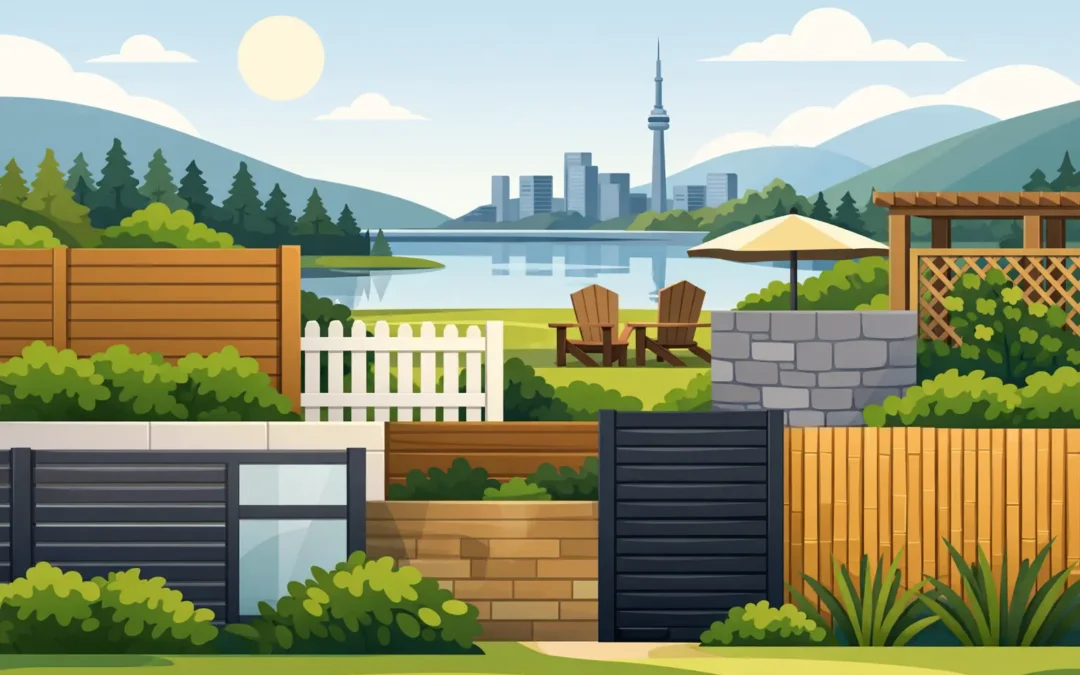
A privacy fence has to do more than block a neighbour’s view. In Ontario, it needs to handle freeze-thaw cycles, wind, snow load, drainage, and the way your yard is actually used. The best backyard privacy fence ideas balance screening with light, circulation, maintenance, and the overall design of the property – especially when a patio, pool, cabana, deck, or garden is part of the plan.
A solid six-foot wall around every boundary is not always the right answer. It can make a compact yard feel closed in, create shade where you want sun, and overlook practical details such as gate access and grading. Start by identifying the sightlines that matter most: a seating area beside the house, a hot tub, a pool deck, or a neighbour’s second-storey window. Then choose a fence solution that addresses those views without compromising the rest of the landscape.
Best Backyard Privacy Fence Ideas for Real Properties
1. Full-height cedar privacy fencing
Cedar remains a strong choice for homeowners who want a warm, natural fence with reliable privacy. Vertical boards with minimal gaps give a clean, substantial appearance, while a framed panel design adds structure and helps the fence suit both traditional and modern homes.
Cedar is naturally more resistant to decay than many untreated woods, but it is not maintenance-free. Expect colour change over time unless the fence is stained or sealed. In exposed York Region and GTA yards, good post installation, proper clearance from soil, and drainage around the base matter as much as the boards themselves.
2. Horizontal slat fencing
Horizontal boards create a contemporary look and can make a narrow yard appear wider. The spacing is adjustable: tight spacing provides near-complete screening, while small, consistent gaps allow air movement and a little filtered light.
This style requires careful construction. Long horizontal runs can show unevenness quickly, and boards may move seasonally if the frame and fasteners are not properly specified. It is a good option for a feature boundary or outdoor living area where the fence is part of the design, not simply a property-line divider.
3. Board-on-board fencing
Board-on-board construction uses overlapping vertical boards on alternating sides of the rails. It offers strong privacy even as wood naturally expands and contracts through changing seasons. Unlike a basic solid panel, it also looks finished from both sides, which can be a practical consideration between neighbours.
The trade-off is material use and cost. For homeowners who want a durable wood fence with fewer visible gaps over time, that investment is often worthwhile.
4. Louvered privacy screens
Louvered panels are useful where full enclosure would feel heavy. Their angled slats block direct views while allowing breezes to pass through, making them particularly effective around patios, decks, and outdoor kitchens.
They are not generally the first choice for a full perimeter fence in a highly exposed yard. As an architectural screen, however, louvres can define a private zone while preserving a more open overall landscape. They also pair well with built-in benches, planters, and pergolas.
5. Decorative screens with a solid fence behind them
Laser-cut metal, composite, or wood screens can add pattern and character to a backyard, but they rarely provide complete privacy on their own. The most successful approach is often to use them selectively in front of a solid fence, between posts, or as a focal backdrop behind planting.
This gives the yard depth rather than one uninterrupted wall of fencing. Choose a pattern with enough open area to avoid a bulky look, and consider how shadows will fall across the patio during the day.
6. Composite fencing for lower maintenance
Composite fence systems offer a clean, consistent finish and do not require staining in the same way wood does. They can be a sensible choice for homeowners who want a modern appearance and prefer less ongoing maintenance.
The cost is typically higher at the outset, and product quality varies. Composite materials can also expand and contract with temperature changes, so they need a system designed for the climate and installed according to the manufacturer’s requirements. Look closely at post strength, hardware, warranty coverage, and colour options before committing.
7. A privacy wall with masonry or stone piers
For a more substantial landscape project, combine wood or composite fence panels with stone, brick, or concrete piers. This approach gives the fence a permanent, built-in feel and ties it into interlocking, retaining walls, a driveway, or a pool surround.
Masonry elements require proper footings and drainage to manage Ontario frost conditions. They cost more than standard fence posts, but they can elevate the entire property and create a durable framework for gates, lighting, and screening panels.
8. Layered evergreen planting
A living privacy screen can soften hard boundaries and improve the view from inside the house. Cedar hedges, yews, spruce, and other suitable evergreens can create year-round coverage when the site, soil, and sun exposure are right.
Planting is not an instant fence. It needs time, watering, pruning, and enough root space to mature properly. It is often most effective when paired with a lower fence, which provides immediate privacy while the planting establishes. Avoid placing large shrubs where they will interfere with drainage, fences, or future access for maintenance.
9. Raised planters with screening above
Where the privacy concern is seated eye level rather than the entire yard, raised planters can do a lot of work. A planter wall topped with lattice, slats, or a screen provides separation around a lounge area without making the garden feel boxed in.
This option works particularly well on patios and pool decks. The planter introduces greenery at eye level, while the screen blocks the direct sightline. Use durable materials and ensure the planter has proper drainage, particularly if it is integrated with hardscaping.
10. Pergolas with side screens or curtains
A pergola will not replace a perimeter fence, but it can create privacy exactly where you need it. Fixed side slats, retractable screens, or outdoor-rated curtains can shield a dining table, hot tub, or seating area from nearby views.
This is a good solution when the property has attractive open views in one direction and privacy concerns in another. It gives you control without closing off the entire backyard. Structural design is essential, particularly for wind exposure and snow load.
11. Lattice-top fencing
A solid lower fence with an open lattice top is a practical way to gain height visually while keeping the yard lighter than a fully solid wall. It is commonly used around gardens, patios, and side yards where a small amount of additional screening makes a significant difference.
Lattice alone offers limited privacy, especially in winter. It becomes more effective with climbing plants, though vines should be selected and managed carefully so they do not trap moisture or make future fence repairs difficult.
12. Mixed-material privacy zones
Large yards do not need one fence style from corner to corner. A solid boundary fence may make sense along a busy road, while horizontal slats can define the patio and planting can soften the rear lot line. This layered approach often looks more intentional and can direct budget toward the areas where privacy has the greatest value.
Plan the Fence Around Use, Not Just the Lot Line
Before selecting materials, stand in the yard at the times you use it most. Sit where the outdoor dining set will go. Look from the pool loungers, from the kitchen window, and from the neighbour’s vantage point if it is obvious. Privacy problems are often concentrated in a few locations, not spread evenly across the property.
Access deserves the same attention. A gate should be wide enough for lawn equipment and future construction needs, and it should not conflict with steps, grade changes, or a pool enclosure. If a fence is part of a larger renovation, install it in the right sequence with excavation, drainage, retaining walls, patios, decks, and planting. Rebuilding a new fence because a later project needs access is an avoidable expense.
Height, Permits, and Pool Safety
Fence rules vary by municipality, so confirm local zoning and fence bylaw requirements before work begins. Height limits can differ for rear yards, side yards, corner lots, and front-yard areas. A fence near a pool may also need to meet specific enclosure, gate, latch, and climb-resistance requirements under applicable regulations.
Do not assume a neighbour’s existing fence is on the property line or that a replacement can follow it without verification. A survey, clear discussion with adjoining owners, and a review of local requirements can prevent costly disputes. If the project includes a retaining wall, grade change, or significant structure, additional approvals or engineering may be required.
Choose for the Long Term
The right privacy fence should suit the architecture of the home, the exposure of the lot, and the level of maintenance you are prepared to take on. Wood brings warmth and repairability. Composite reduces routine upkeep. Masonry adds permanence. Planting provides softness but needs patience.
For a backyard renovation with several moving parts, a coordinated design/build approach helps ensure the fence works with the patio, drainage, pool area, and landscape rather than becoming an afterthought. Green Machine Inc. plans privacy features as part of the full outdoor environment, so the finished yard feels private, functional, and built to last.